
8 Smart Home Myths Arizona Homeowners Still Believe

Recording the wrong thing in Arizona is a class 5 felony, with a presumptive year and a half and fines that can reach $150,000.
A doorbell camera doesn’t get an exemption.
That’s one of several things Arizona homeowners assume their smart devices handle for them.
These are the smart home myths Arizona homeowners still believe.
Note: This is general information, not legal advice. Recording laws are subject to change.
1. Trusting Full Wi-Fi Bars
A full row of Wi-Fi bars on a kitchen phone tells an Arizona homeowner nothing about the signal reaching a video doorbell mounted by the front door.
The doorbell almost always has it worse.
Ring grades a doorbell’s connection with a number called the received signal strength indicator (RSSI).
That reading is measured at the doorbell itself, not by how many bars show up on a phone somewhere else in the house.
Ring calls a reading between 0 and -60 great, and anything from -60 to -70 okay, meaning the connection could be improved.
A reading from -70 to -80 counts as poor, and anything worse than -80 is very poor, the point where video calls freeze and the doorbell can fall offline entirely.
Thick block or stucco exterior walls, common across Arizona construction, weaken that signal even further between the router and the front door.
Distance is the main cause.
Moving the router closer to the entryway closes much of the gap Ring’s numbers describe.
A mesh point or a dedicated doorbell chime extender closes the rest, and no amount of bars on a kitchen phone does that job from across the house.
2. Assuming Every Recording Is Legal
Arizona’s one-party-consent law doesn’t disappear just because a doorbell did the recording instead of a person.
Consent must come from somewhere.
Recording a conversation a homeowner isn’t part of, without any participant’s consent, can be prosecuted as a felony rather than shrugged off as a security feature.
A doorbell picking up a homeowner’s exchange with a delivery driver is fine, since the homeowner is a party to that conversation.
The trouble starts when the microphone catches two neighbors talking on a shared driveway or the sidewalk.
That’s a conversation the homeowner never joined, and nobody agreed to record it.
What Makes a Doorbell Recording Legal
An Arizona homeowner clears the one-party-consent test the moment they’re part of the conversation their doorbell catches.
A conversation between visitors or neighbors that the homeowner never joins needs a different participant’s consent, or the recording can cross into illegal interception.
The charge itself is a class 5 felony, carrying a presumptive sentence of a year and a half and fines that can reach $150,000.
3. Betting on Rolling Codes Alone
A security researcher’s $32 device proved rolling codes aren’t the unbreakable lock many Arizona homeowners assumed their garage door opener had become.
The lock had a gap.
Rolling codes did solve the older problem, where a thief’s code grabber could simply record a fixed signal and replay it later.
That researcher’s device, called RollJam, was demonstrated at Defcon, an annual hacker conference, in 2015.
It jams a remote’s signal, captures the still-usable code underneath, and lets a thief return later to open the door.
It worked on openers from several major brands, not one brand alone.
Manufacturers have since tightened defenses against that jam-and-capture trick.
An opener that’s never had its firmware updated, or a secondhand opener with an older receiver, can still have the vulnerability RollJam exposed.
4. Expecting an Automatic Rebate
Arizona Public Service (APS) customers who buy a smart thermostat often expect a rebate check to show up simply because the box says “smart.”
Nothing arrives automatically.
That assumption skips a step: APS pays through a program called Cool Rewards, and only a thermostat a customer actively enrolls ever qualifies for a credit.
A thermostat sitting unenrolled on the wall never qualifies, no matter how smart it is.
Enrolling can add up to $85 in bill credits during the first year.
Skipping that signup step still leaves a homeowner owning the identical thermostat as an enrolled neighbor.
The homeowner who skipped it just never collects any of the credit.
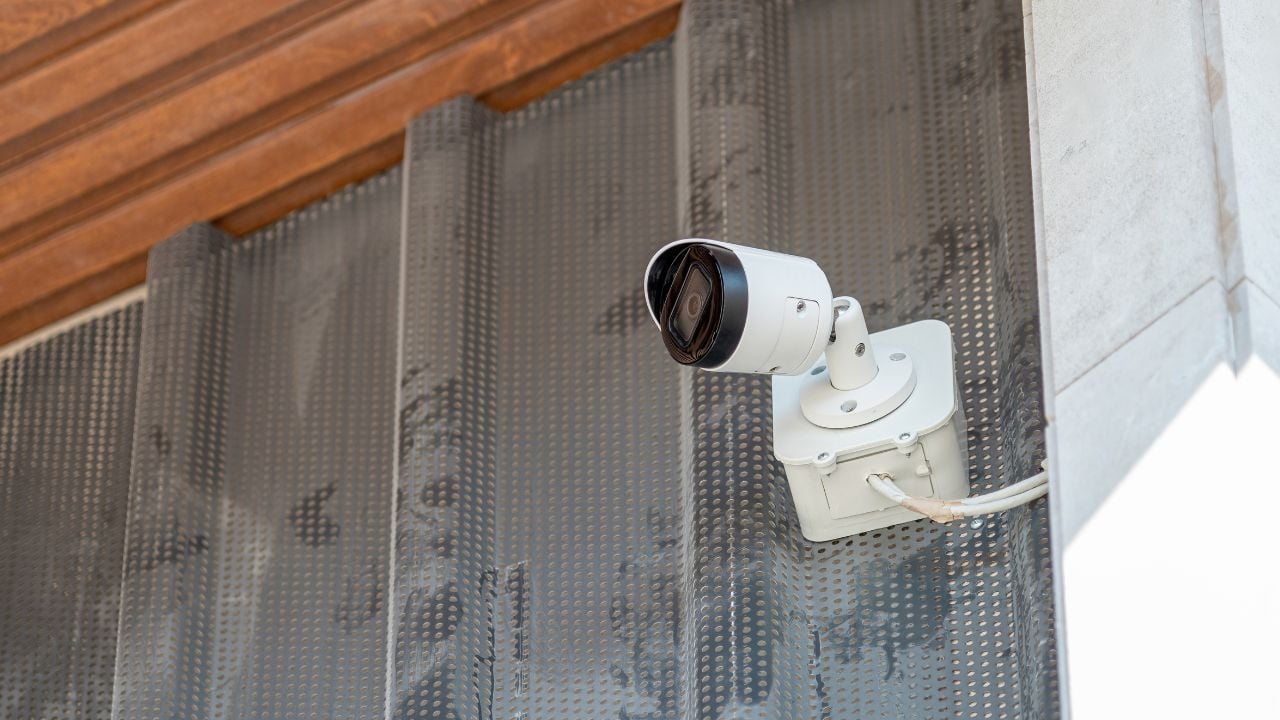
5. Doubting a Visible Camera
Burglars change their plans the moment they spot a visible security camera, more often than many Arizona homeowners think.
The numbers say so.
A University of North Carolina at Charlotte survey of 422 incarcerated burglars found that nearly 60% said a visible camera factors into which house they target.
More than 40% said a camera on the property would send them looking for a different target entirely.
The same survey found that 83% of burglars try to spot an alarm before committing to a target at all.
Half said they’d abandon a break-in the moment they noticed an alarm.
A camera doesn’t have to catch anyone in the act to do its job.
6. Fearing a Dead Landline
An old landline-based alarm system doesn’t die the moment an Arizona homeowner cuts the phone line, despite the common fear that it will.
The fear is outdated.
Modern security systems typically communicate over a cellular radio or the home’s internet connection.
A monitoring center still hears from the panel even without a dial tone anywhere in the house.
That shift matters more by the year.
Phone carriers nationwide are retiring old copper landline service, and the Federal Communications Commission (FCC) eased that process further with a March 2026 order.
The system at risk is the old panel still wired to a phone jack, not the cellular panel many homeowners assumed needed a landline in the first place.
7. Counting on Battery Backup Alone
A charged battery inside a smart lock or camera doesn’t mean the whole smart home setup keeps running once Arizona’s power drops.
The device stays alive.
The connection doesn’t.
Many Wi-Fi-connected doorbells, cameras, and thermostats go silent the moment the home’s router and modem lose power.
The device itself can still have a charge, but there’s no network left to reach it on.
Arizona’s monsoon season runs through September 30.
An overnight storm this past August cut power to roughly 17,000 Salt River Project customers in Maricopa County alone.
Every app-connected doorbell and thermostat on that grid went offline along with the lights.
A separate battery backup for the router and modem, not just the smart device, is what keeps a smart home connected through an outage.
Psst! How many of these smart-home claims can you sort correctly on the first guess? Tap each card and see how many you get right.
8. Believing Every Gadget Pairs
Not every device labeled “smart” will talk to whatever speaker or hub is already running an Arizona home, no matter how the box makes it sound.
Not every label means the same thing.
Cross-brand compatibility now runs through Matter certification, a standard from the Connectivity Standards Alliance.
The badge means something now.
A certified device carries a device attestation certificate, logged in the alliance’s compliance ledger, so a shopper can check its status before buying it instead of after.
A certified device works across Apple, Google, Amazon, and Samsung’s smart-home apps instead of being locked to a single platform.
A device that hasn’t gone through that certification is often an older or budget model still sitting on a shelf.
It only works through a separate app, no matter what the packaging promises.
Checking for the actual Matter logo before buying saves a homeowner from ending up with four different apps to open before anyone can turn off a single porch light.
The same certification already covers door locks, lighting, and security sensors, while cameras, smoke and carbon monoxide alarms, and robot vacuums are still being added to the list.
8 Arizona Water Rights Rules Rural Property Owners Get Wrong

A well permit isn’t a water right, and Arizona still sorts out who owns what underground using rules that predate the car.
Rural owners who assume drilling equals owning get the expensive surprise instead.
8 Arizona Water Rights Rules Rural Property Owners Get Wrong
8 Arizona Towns That Feel Like They Belong in Another State

One Arizona hillside carries 155 stairs and no street at all, built by mining families a century ago just to reach the grocery store and the bank.
It’s one of several Arizona towns that seem to belong to a different state entirely.
