
8 Things Iowans Change About Their Week Once the Combines Are Out

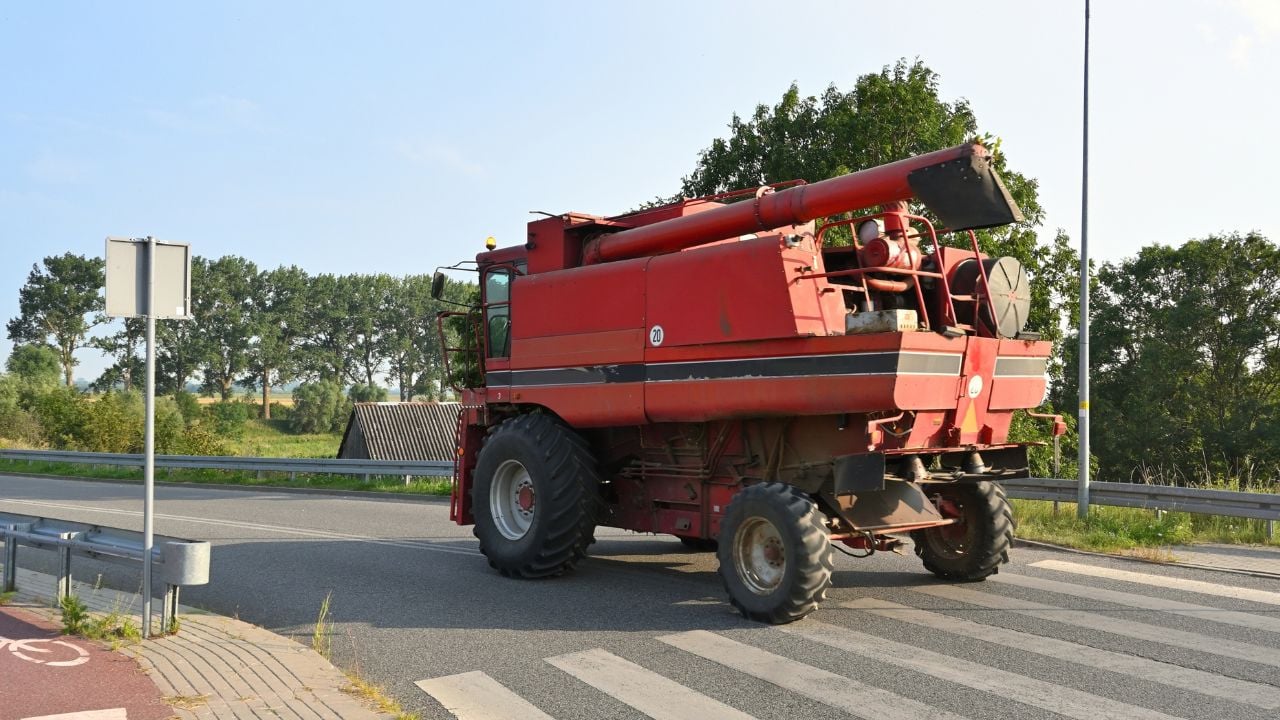
Have you tried passing a combine on a two-lane road going 55 this fall?
That combine wasn’t there in July.
These are the things Iowans change about their week once the combines are out.
1. Blind Spots at Field Drives
Drivers slow down harder near farm driveways and rural intersections once harvest gets underway.
Watch every driveway.
Standing corn can block the sightline at a crossroads until a truck or tractor pulls out.
Equipment also turns into a field entrance without much warning.
Scott County’s sheriff’s office reminds drivers every fall that farm equipment can turn at unpredictable spots into a field or pull slowly back out onto the road.
A driveway that sat empty all summer suddenly matters.
2. Two-Lane Passing Patience
Drivers on rural two-lane roads slow down the moment a combine or grain cart appears ahead of them.
Farm equipment on the road typically moves 15-20 mph.
A car doing 55 closes that gap fast.
Not fast.
That same guidance from Iowa State University Extension points to unsafe passing as one of the primary factors behind fall motor vehicle accidents in the state.
So the habit that changes is simple: Don’t crowd the bumper, and give the trip five extra minutes.
3. Sharper Deer Watch
People start scanning the ditches harder once harvest strips the cover deer had been using all summer.
An Iowa State University Institute for Transportation study of crashes from 2013 to 2022 found that 21% of Iowa’s deer collisions happened in November.
October ranked second, at 13%.
Harvest is a big part of the reason.
Once combines clear out the crop cover deer were hiding in, they move into new ground.
Cooler weather and the fall rut get them moving even more.
So the drive to work starts including a wider scan of the tree lines, longer following distances, and a firm rule against swerving if something runs out.
4. Checking for Lights After Dark
Drivers keep an eye out for slow-moving-vehicle triangles and flashing amber lights well after sunset once harvest speeds up.
That equipment isn’t out there in June.
Traffic doesn’t thin out at dusk anymore.
Combines and grain trucks run before dawn and after dark more often as harvest activity builds each fall.
A good weather window means farmers keep going as long as they safely can.
Even after dark.
Sheriff’s offices including Marshall County’s remind farm equipment operators to run their four-way flashers after dark.
A set of reflectors moving 15 to 20 miles per hour can show up on a dark stretch of highway with almost no warning.
5. Timing Around the Equipment
Farmers themselves change how they move equipment between fields once harvest is underway.
An Iowa State University Extension field engineer advises operators to be selective about timing, steering clear of busy commute times when they haul a combine down the road.
Not by accident.
That shifts things for everyone else, too.
A commute that’s easy the rest of the year can suddenly land right behind a grain cart pulling out of a field entrance.
Neighbors quickly learn which stretch of road to expect it on.
6. Weighing a Day Out of School
Farm families think harder about pulling a kid out of class once harvest starts.
Iowa Department of Education attendance guidance spells out that a student who misses school to help with planting or harvest is marked absent.
That absence still counts the same as any other on the record.
State law exempts a funeral or a wedding.
Hauling grain doesn’t count.
That distinction changes how a farm family plans the week, weighing a short-handed crew against a mark on the attendance record.
What Iowa Excuses
Iowa’s attendance law carves out a short list of exemptions: Religious observance, court orders like jury duty, and military processing or service.
A documented medical reason or an already-met graduation requirement clears the same bar.
Farm work never did, no matter how many acres are still standing in the field.
7. Extra Trips to the Elevator
Farms add a hauling shift to the week once a full combine hopper outpaces a single truck.
Somebody has to drive it.
Grain carts and trucks shuttle between the field and the local elevator all day once harvest gets moving.
That hauling job usually falls to whoever in the family isn’t running the combine.
The extra trip adds hours to a day that already started before sunrise.
The grain doesn’t wait for a convenient time to move.
8. Long-Day Schedule at Home
Farm households reset their whole schedule once the combines start.
One Mapleton farmer said his workdays run about six hours most of the year, then stretch to roughly 12 once harvest starts.
Twelve hours reshapes everything else.
Shifting Harvest Calendar
Combines don’t roll out on the same day every year.
The corn and soybean harvest typically runs from mid-September through November, matching what northwest Iowa news coverage has documented in recent falls.
In a recent season, corn for grain in Iowa was only 8% harvested by September 21, according to the U.S. Department of Agriculture (USDA).
That’s just the start.
Warm, dry stretches speed everything up.
A wet fall can push combines into fields well past Halloween.
Farmers keep watching the forecast until the last field gets cut.
Psst! How ready is your week for combine season? Run through this checklist and see where you stand.
Splitting Combine and Cart Duty
Farm households without a full hired crew split the equipment between two family members once harvest starts.
One spouse often runs the combine while the other handles the tractor and grain cart, a job that outside harvest usually falls to just one person.
Two drivers, two machines.
A Mapleton-area farmer named Emily Hamman described running the tractor herself while her husband ran the combine, since the two of them farm mostly by themselves.
Neither machine stops until the ground freezes.
10 Things That Instantly Give Away an Iowa Transplant Anywhere Else in the Country
Casey’s gas station pizza means something completely different to an Iowa native than it does to everyone else in the country.
An Iowa transplant gives themselves away with a handful of small habits, corn bragging rights included.
10 Things That Instantly Give Away an Iowa Transplant Anywhere Else in the Country
7 States That Won’t Touch a Penny of Your Retirement Income in 2026

Retire to the right state, and its tax collectors never touch a pension or a 401(k) withdrawal at all.
Some states go even further and leave every form of retirement income alone, Social Security included.
7 States That Won’t Touch a Penny of Your Retirement Income in 2026
