
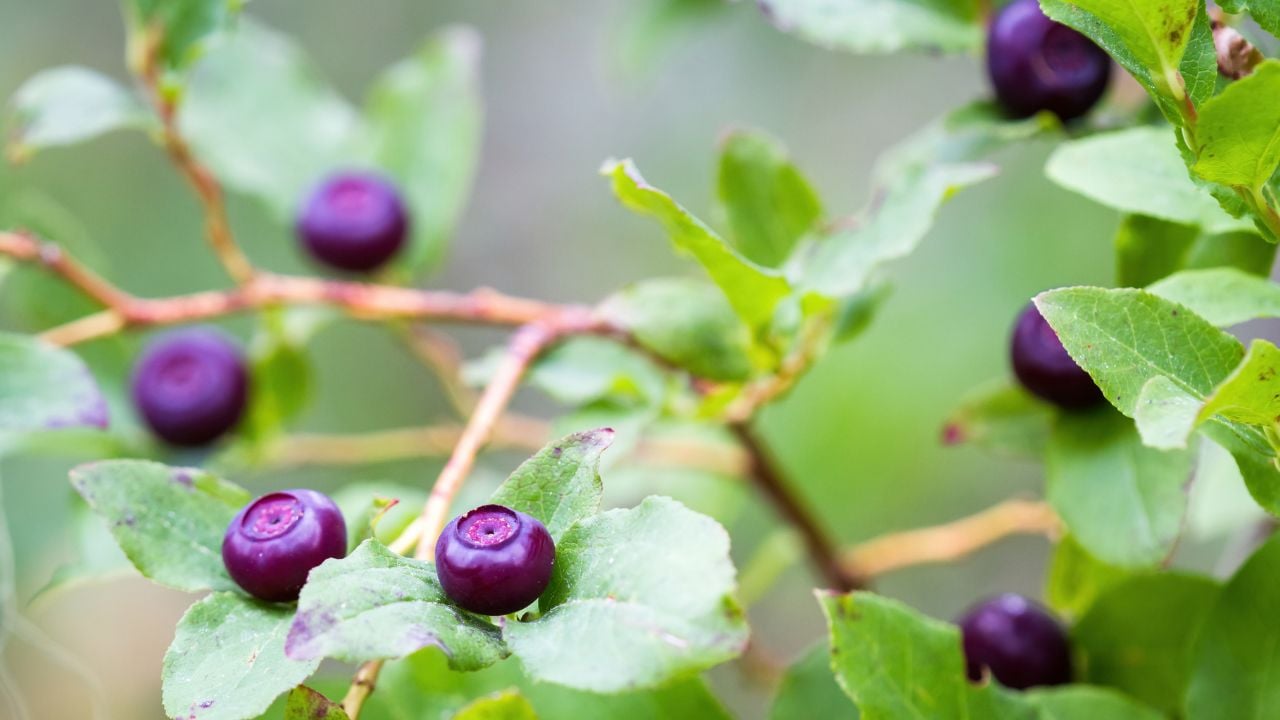
8 Things Montanans Know About Huckleberries That Out-of-Staters Get Wrong

Picking huckleberries in Glacier National Park? You can take one quart per person, per day.
It’s not the same limit everywhere in northwest Montana.
Here’s what Montanans know about huckleberries that out-of-staters get wrong.
1. Wild Harvest
Huckleberries are a wild harvest, and the Flathead Beacon reported in 2020 that decades of research had yet to change that.
If you’re picturing rows of huckleberry bushes in a field, you’d better picture a mountainside instead.
A Montana law from 2007 said a label with the words Montana and huckleberry on it meant berries picked in the wild from a designated area in the state.
Lawmakers repealed it in 2023.
2. Bears in the Patch
Huckleberries make up as much as 15 percent of the diet of bears in Glacier National Park and the surrounding area, according to one estimate.
A 2020 Flathead Beacon report says a grizzly bear may eat up to 30,000 berries a day, or about 18 gallons.
That means you may be picking where a bear has been feeding.
The park’s safety page calls berry patches obvious feeding areas and asks you to stay extra alert in them.
Carry bear spray where you can reach it, and make noise whenever you can.
3. Blueberry Cousins
Huckleberries in Glacier National Park come in six different species, from the foothills into the high mountains.
The common huckleberry is a native plant, growing in cool coniferous forests.
The common huckleberry belongs to genus Vaccinium, the same genus as commercial blueberries.
Commercial blueberries can have as many as 10 berries to a cluster.
An Oregon State University berry researcher told Oregon Public Broadcasting that western huckleberries set one or two at the most.
Many Eastern berries called huckleberries are a different plant.
True huckleberries have 10 large seeds and are native only to Eastern North America.
4. Flathead Forest Limits
The Flathead Beacon reported in 2019 that visitors to the Flathead National Forest can pick up to 10 gallons of huckleberries without a permit.
That limit is for personal use only.
Willows HuckLand’s owner said some highly organized professional pickers sometimes bring in 10 to 15 gallons in a single day.
That can equal your whole year’s limit or more.
Keep a running tally.
Huckleberry Personal Use in the Flathead National Forest
The Flathead National Forest applies its personal-use limits to one adult per calendar year.
Gathering huckleberries to sell counts as commercial harvesting, not personal use.
Commercial harvests need different permits and fees.
5. Glacier’s Quart Rule
Glacier National Park’s 2026 compendium lets visitors gather edible berries by hand, up to one quart per person, per day.
The berries are for your personal use and consumption only.
Bush rakes and other harvesting devices are prohibited.
Leave the rake home.
Whitefish Mountain Resort asks pickers to use their hands too, since rakes can damage the plants.
6. Tribal Land Rules
Huckleberry picking on the Flathead Reservation falls under the Tribes’ 2026-27 regulations for non-members, which bar picking berries and mushrooms.
The Confederated Salish and Kootenai Tribes put the closure in place in March 2012.
A tribal member can bring a non-member spouse or children along to help pick, as long as those helpers have the required recreation licenses.
If you’re not a tribal member, you can look to national forest land instead.
7. Peak Season
Prime huckleberry picking season in northwest Montana typically runs from mid-August to mid-September, according to the Flathead Beacon.
That’s about a month.
Huckleberries ripen first at lower elevations, while those up high are still green.
Around 2015, a Glacier National Park newsletter article quoted U.S. Geological Survey ecologist Tabitha Graves saying huckleberries were showing big changes in when they flower.
If you’re planning a pick, you can start on the lower slopes early in the season and climb as the high berries ripen.
8. Buyers and Prices
Willows HuckLand’s huckleberries are sourced exclusively from Northwest Montana, the Flathead Beacon reported in 2019.
HuckLand’s owner typically buys from between 160 and 200 different sellers every year.
That year’s abundant crop had the owner paying $7.25 a pound.
A 2020 Beacon report put what Flathead Valley restaurants and other local buyers pay at $40 to $50 a gallon, a different measure from the owner’s per-pound price.
The owner of Whitefish Handcrafted Spirits goes through roughly 600 pounds of huckleberries a year.
Bumble Bee Pollinators
First-year data from a Glacier National Park newsletter around 2015 pointed to at least six bumble bee species pollinating the park’s huckleberries.
The same project checked four study plots of ten plants each, with a camera taking daily photos of one plant at each site.
When you pick your quart of berries in Glacier, bumble bees did part of the work.
What the Plants Need
Huckleberry growth mostly comes down to temperature, humidity, and rainfall, U.S. Geological Survey ecologist Tabitha Graves told a Helena television station in 2019.
Graves also found fewer huckleberry shrubs in drier, hotter areas.
If you’re scouting a pick, you’ll want cooler, wetter slopes over dry, hot ones.
She advised pickers to be careful not to damage the berry’s leaves.
Psst! How much do you know about Montana? Take our quiz and see how many you can get right.
Quiz
Montana IQ
Answer these questions on Montana’s history, geography, and landmarks. We bet you can’t get them all right. Prove us wrong?
Montana’s lowest point, about 1,800 feet above sea level, is along which river?
Traditional Uses
The Blackfeet and other tribes used huckleberries widely, according to the National Park Service.
Traditional uses included drying the berries by the fire.
8 Montana Habits That Place Someone East or West of the Divide
A single rainstorm at Triple Divide Peak in Glacier National Park can send its drops to the Atlantic Ocean, the Pacific Ocean, or Hudson Bay.
The Continental Divide sorts out people, too.
8 Montana Habits That Place Someone East or West of the Divide
9 Signs Someone Was Raised in Montana, Even Decades After They Left
Anyone can wade, float, or fish any Montana river up to the high-water mark, whatever the property lines say.
Montanans grow up assuming that's how rivers work everywhere, and the first time it isn't catches them off guard.
9 Signs Someone Was Raised in Montana, Even Decades After They Left
