
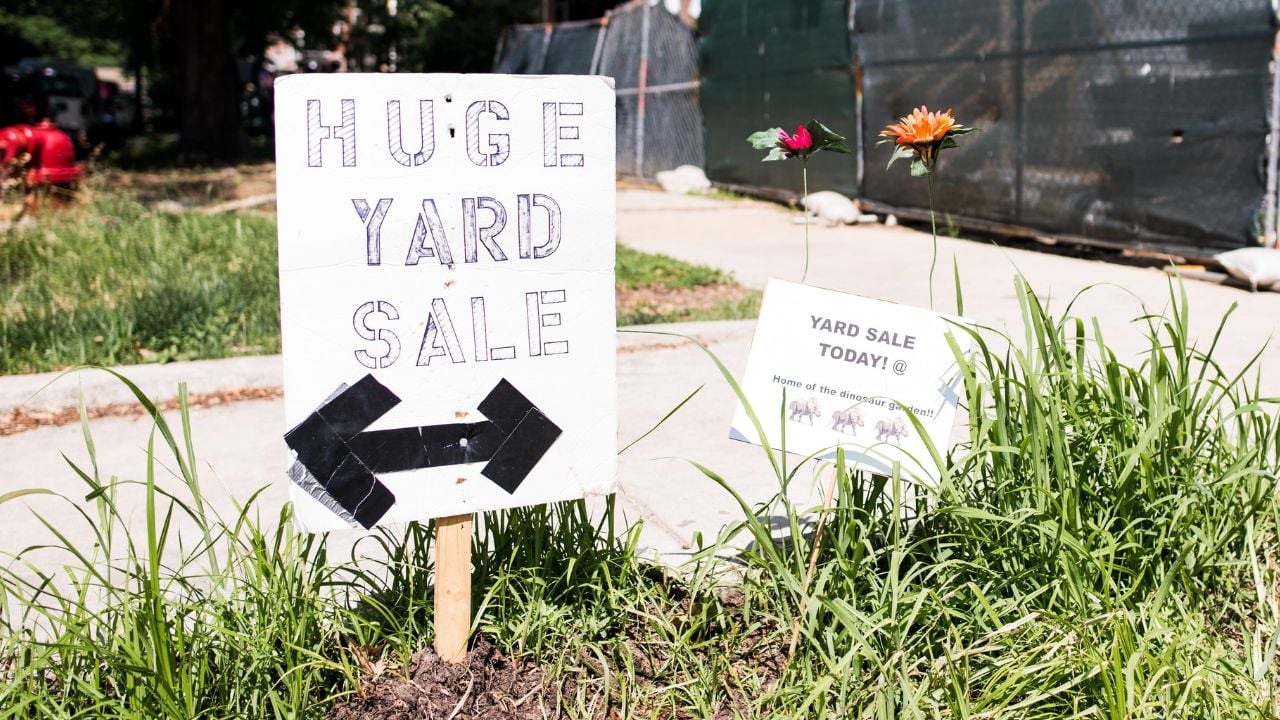
9 California Yard Sale Rules Sellers Break Without Knowing

Many California cities cap yard sales at two, sometimes three, a year.
Sell past that limit, and the state doesn’t just look away. It wants a seller’s permit and a cut of what sells after that.
These are the California yard sale rules that catch innocent homeowners off guard.
Note: This is general information, not legal advice. Permit rules, sale limits, and signage requirements vary by city and county, and are subject to change.
1. Permit Comes First
A California yard sale needs the city’s sign-off before the folding table goes up, not after.
Long Beach charges $17 for a garage sale permit and requires it posted where a code officer can see it.
San Gabriel’s version is free, but it still has to be requested in person, by mail, or by fax, and a mailed or faxed request has to arrive at least three days before the sale starts.
There’s no warning first.
Code enforcement can shut a sale down before lunch, permit or not, and nobody stops a folding table until a neighbor calls it in.
2. Sale Cap Sneaks Up
A second yard sale can feel like a rerun, not a rule change, until it isn’t.
Long Beach allows two permits a year for a single-family home, and Riverside County caps residents at three sales in any 12 consecutive months.
San Gabriel splits the difference at two sales a year, spaced six months apart, and Long Beach treats apartments differently too, allowing one permit per quarter instead of the two a year a house gets.
A homeowner who runs a spring cleanout and then a fall moving sale rarely stops to add them up, since neither one alone looks like more than a Saturday.
By the third sale, the city isn’t counting a yard sale anymore.
It’s counting an unlicensed business.
3. Day Four Breaks the Rule
A yard sale that’s moving slow on day three tempts almost anyone to leave the tables out one more morning.
Long Beach and Riverside County both cap a single permitted sale at three consecutive days.
That’s not a bonus round.
The permit that covered days one through three stops covering anything the moment day three ends, so a seller who leaves the tables out is running an unpermitted sale in the eyes of the same code officer who approved the first three days.
Long Beach will issue a replacement permit within a week if severe weather wipes out two of the three days, but that’s the only extension either city grants.
Signs come down when the sale does, not whenever it’s convenient.
4. Hours Have a Hard Stop
Riverside County bars yard sale activity before 8 a.m. or after 8 p.m.
Long Beach runs a tighter window, 8 a.m. to 3 p.m.
An early riser setting out boxes at dawn to beat the heat, or a straggler still ringing up sales after the posted end time, is outside the rule without meaning to be.
There’s no grace period.
Psst! How legal is your yard sale? Run through this checklist and see where you stand.
5. One Sign, One Spot
California’s sign rules for yard sales catch many sellers off guard.
Long Beach allows a single sign on the sale property, capped at four feet tall or six square feet, with no separate directional signs pointing the way.
Riverside County’s version caps that one sign at four square feet, bars it from going up more than five days before the sale, and requires it removed by the sale’s last day.
The rule allows exactly one.
A second sign at the corner, however well-meaning, breaks the rule the first one followed.
Riverside County’s Full Penalty Schedule
Riverside County’s garage sale ordinance ties every one of its rules to the same penalty schedule, not a sign-only fine.
A first violation is an infraction worth up to $250, whether it’s skipping the sale cap, running past three days, selling outside the permitted hours, or breaking the sign rule.
A willful repeat violation becomes a misdemeanor worth up to $1,000 and six months in jail.
That’s enough to erase a whole weekend of ten-dollar sales before the first customer even shows up.
6. No Signs on Poles
California doesn’t leave yard sale sign placement entirely up to individual cities.
State law, Penal Code 556, makes it a misdemeanor to post an advertising sign on public property without permission, and a utility pole or a street sign both count.
A stapled paper sign at the corner looks harmless.
Paper doesn’t make it legal.
Many sellers never hear about the law until a utility crew or code enforcement pulls their sign down.
7. Only Permitted Names Sell
Many California garage sale permits cover only the person named on them, not the whole block.
Long Beach’s ordinance limits a sale to personal property belonging to the individuals listed on that sale’s permit.
Invite a neighbor to unload their old bikes on the driveway, and technically, they need their own name on the paperwork too.
Friends helping friends clear out a garage happens all the time.
The paperwork doesn’t know that.
8. Third Sale Costs More
California’s tax agency watches yard sale frequency the same way cities do, just for a different reason.
The California Department of Tax and Fee Administration (CDTFA) lets a resident hold two garage sales in any 12-month period as an occasional seller, free of a permit.
That clock rolls day to day, not by the calendar year many city permits use, so a sale held last September and another held next August already use up both free passes without a single calendar year ever showing two sales in it.
Many sellers skip that math.
A third sale inside that rolling window crosses into business territory, and CDTFA then requires a seller’s permit plus ongoing sales tax collection, currently a 7.25% statewide base rate before any city or county add-on.
San Gabriel’s own permit already limits sales to used merchandise only, but CDTFA goes further: New or handcrafted items on the table trigger that same seller’s permit on sale number one, since the agency never counts those as personal used property in the first place.
9. HOA Has Final Say
A city permit doesn’t settle a yard sale question that an HOA gets to answer too.
A homeowners association (HOA) can write its own rule straight into its governing documents, restricting or banning yard sales entirely no matter what the city allows.
It has the final say.
Sellers who stop at the city’s yes are the first to hear from the HOA, usually after the tables are already up.
Some HOAs cap sales at once a year or funnel everyone into a single community-wide sale weekend instead.
A city permit in hand means nothing to an HOA board enforcing its own stricter rule.
Violating it brings HOA fines that stack separately from any city citation, and those fines can escalate the longer they sit unpaid.
10 California Beachcombing Rules That Can Cost Visitors a Fine

A California beach citation can start at $1,000, and penalties rise higher from there for repeat or more serious violations, depending on what a ranger catches someone doing.
These are the beachcombing rules that can turn a relaxed day at the coast into a costly one.
10 California Beachcombing Rules That Can Cost Visitors a Fine
9 Things Californians Do That Instantly Give Them Away in Another State

Regular gas in California runs about $1.60 more per gallon than the national average, the widest gap of any state in the country.
These are the habits that mark someone as a Californian the moment they cross state lines.
9 Things Californians Do That Instantly Give Them Away in Another State
