
9 Florida Boat Registration Rules That Catch New Owners Off Guard

More than a million boats are registered in Florida right now. That’s more than any other state in the country.
Every one of them passed through the same tangle of paperwork.
That tangle catches new owners off guard again and again, long before their boat ever backs down the ramp.
These are the Florida boat registration rules that catch new owners off guard.
Note: This is general information, not legal advice. Vessel titling and registration rules are subject to change, so confirm the current requirements with the Florida Department of Highway Safety and Motor Vehicles.
1. New Owners Who Also Just Moved Get 10 Days
A new owner who buys a boat and becomes a Florida resident around the same time doesn’t get the standard registration window everyone else counts on.
State law gives that owner just 10 days, not 30, to register the boat once they take a Florida job, enroll their kids in a Florida school, file for a homestead exemption, or register to vote.
Ten days, not thirty.
A buyer who purchases a boat out of state and tows it to Florida while starting a new job or enrolling kids in a Florida school can trigger residency before the paperwork ever reaches the tax collector’s counter.
Many new owners assume they have a full month, only to learn Florida already started counting from the day they became a resident, not the day they bought the boat.
2. 30-Day Titling Deadline
A new boat owner’s 30-day Florida titling deadline begins the moment money changes hands, not when the buyer files the paperwork.
Florida has more than a million boats registered, more than any other state, and every one of them cleared this same window first.
State law gives a new owner 30 days from the date of purchase to title and register the boat at a county tax collector’s office, whether the sale happens at a dealership in Duval County or in a stranger’s driveway in Sarasota.
Miss that window, and running the boat becomes a second-degree misdemeanor.
Not a warning.
A citation.
During those 30 days, Florida requires proof of the purchase date to stay on board the boat, so a bill of sale rides along until the title’s official.
3. Sales Tax Comes Due at the Counter
New owners often expect Florida’s 6% boat sales tax to show up as a separate bill, not a line item at the registration counter.
Recreational boating pumps $31.3 billion a year into Florida’s economy, and the county collects a share of it at this exact counter, one buyer at a time.
The county tax collector collects the tax at the same counter that handles the title and the registration, so proof of payment is what keeps a buyer from paying twice.
No receipt, no title.
That tax caps at $18,000 per boat regardless of price, a detail that surprises buyers closing on an expensive boat who brace for a bigger bill than the trade-in fishing boat ever carried.
A buyer who already paid the tax through a dealer still has to prove it at the counter, or the tax collector charges it again.
4. Your Boat Trailer Needs Its Own Tag
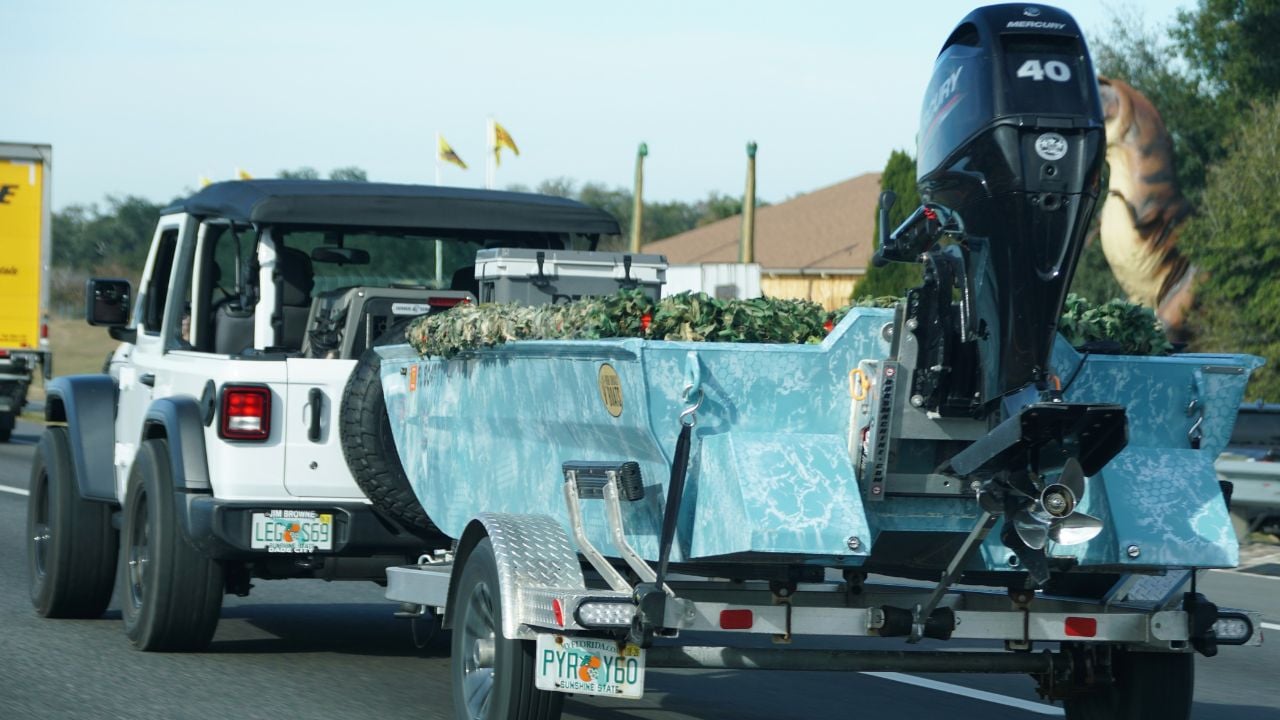
The trailer hauling a new boat isn’t covered by Florida’s boat registration at all.
A trailer used on public roads needs its own Florida registration and license plate, separate from the boat riding on top of it.
Trailers weighing 2,000 pounds or more also need a title, the same way a car does.
Many new owners tow a used boat home on a rig that’s never been registered in Florida and don’t find out until a deputy pulls them over on I-75.
That stop gets expensive fast.
5. Registration Expires on Your Birthday
A boat’s Florida registration expires on a date tied to its owner, not the calendar.
A privately owned vessel’s registration expires at midnight on the first registered owner’s birthday, whatever month that happens to fall in.
Buy a boat in October, and the registration might expire in March.
Same date, every year.
Many new owners circle the wrong date, or no date at all, and let it lapse without meaning to.
How Florida Times a Boat’s Renewal
Florida lets an owner renew a boat’s registration for one year or two, and that choice gets made at the counter, not set automatically.
When more than one name sits on the title, the birthday that counts is the first owner listed, not whoever pays the bill.
Tax collectors mail a courtesy renewal notice about three weeks before that birth month, but Florida law doesn’t require one, so a notice that never arrives doesn’t excuse a lapsed registration.
6. Bow Numbers Have Exact Specs
A new owner who thinks the paperwork ends at the tax collector’s counter still has Florida’s bow-number specs waiting on the water.
The Florida Department of Highway Safety and Motor Vehicles (FLHSMV) requires the number painted or permanently attached to both sides of the bow in block letters at least three inches tall, in a color that contrasts with the hull, reading left to right with a space or hyphen between the letters and the digits.
No creative fonts.
Freehand it in white on a white hull, and it fails inspection on the water.
The number is permanent, too, so it stays with the hull even after the boat changes hands again.
7. Your Decal Only Goes on One Side
Florida’s boat registration also comes with an annual validation decal, and a new owner who nailed the bow numbers can still fail an inspection over decal placement.
FLHSMV puts it on the port side only, within six inches of the registration number, never the starboard side to match.
One side, not two.
Any decal from an expired registration has to come off first, so a boat carrying two or three years of stickers is carrying at least one that’s a violation.
8. Documented Boat Still Owes Florida Tax
Florida’s boat registration rules make an exception for vessels documented with the U.S. Coast Guard, and new owners tend to read that exception too broadly.
A documented boat, generally five net tons or heavier, skips Florida’s registration numbers entirely and carries its federal documentation number instead.
That’s where the exception ends.
If the boat sits on Florida waters longer than 90 days, it still has to register with the state, and Coast Guard paperwork never substitutes for Florida sales tax.
Owners who assume documentation means no state involvement end up owing back tax, a decal, and a fine all at once.
9. Out-of-State Boat Earns a Tax Credit, Not a Free Pass
Florida’s boat registration process treats a boat bought in another state the same as one bought at home, tax included.
Bring a boat into Florida within six months of buying it elsewhere, and the county tax collector can still bill Florida’s use tax on it.
Paid tax to that other state already?
Florida credits it, as long as the owner hands over proof of what was paid at the same counter that titles the boat.
Proof matters.
Skip that step, and the county collects the full Florida rate on top of whatever already went out the door.
Psst! Curious whether your own paperwork would hold up? Run through this checklist and see where you stand.
That tax credit caps at whatever Florida’s own 6% tax would come to on the same purchase.
Pay a higher rate in another state, and Florida doesn’t refund the difference.
A bill of sale alone isn’t proof.
Florida wants a receipt, a registration or title certificate that lists the tax, or a state tax return.
Skip all three, and the tax collector charges it twice.
10 Florida Wildlife Rules People Break Just by “Being Friendly”
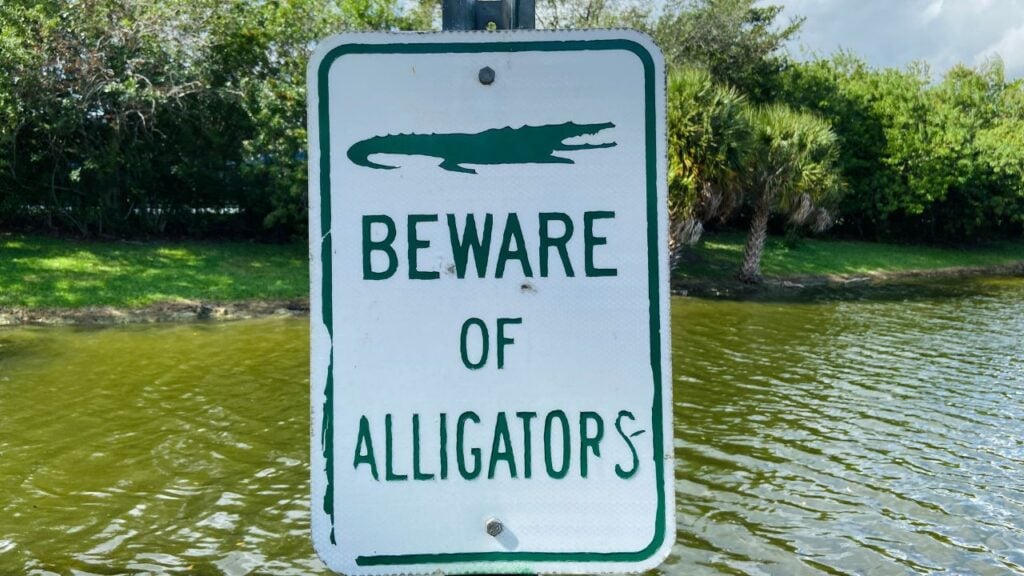
A tourist in Miami Beach once stomped a sea turtle nest and walked away with a felony charge and a $5,000 bond.
Many people who run afoul of Florida’s wildlife rules aren’t trying to hurt anything. They’re trying to pet it, feed it, or get the perfect photo.
10 Florida Wildlife Rules People Break Just by “Being Friendly”
9 Things Nobody Warns New Florida Residents About Hurricane Season

A hurricane doesn’t even have to make landfall to empty a Home Depot two counties away.
The moment a five-day cone brushes the map, plywood disappears off the shelves.
Generator installers stop taking new jobs, and new residents never see it coming.
9 Things Nobody Warns New Florida Residents About Hurricane Season
