

9 New York Tenant Rights Landlords Hope Renters Never Learn

A property manager in Rochester tapes a note to a tenant’s door: Rent jumps $200 next month, decide by Friday if you’re staying.
That notice breaks New York law before the ink even dries.
These are the New York tenant rights landlords hope renters never learn.
Note: This is general information, not legal advice. Tenant rights and New York law can change, so confirm the current specifics with an attorney.
1. Illegal Lockouts Are Banned
New York doesn’t let a landlord settle a dispute by swapping the locks.
A property owner who wants a tenant gone has exactly one legal route: Housing court.
No shortcuts.
Changing the locks, hauling out someone’s belongings, or shutting off the electricity without a judge’s order is what New York calls a self-help eviction, and it’s illegal everywhere in the state, not just in the five boroughs.
A tenant locked out that way can sue and collect treble damages, three times what the loss is worth.
The only lawful way out is a judge’s order and a sheriff or marshal at the door.
That’s the whole process, no matter how many months of rent a tenant owes.
A landlord who’s only a few days into a nonpayment dispute still has to file in housing court and wait for a judge, the same as anyone else.
2. Notice Before Your Rent Jumps
Renters across New York are entitled to a significant warning before a landlord raises rent.
Real Property Law 226-c requires 30, 60, or 90 days’ written notice before a rent increase of 5% or more, or before a landlord decides not to renew a lease at all.
The exact number depends on how long a tenant has lived there.
Under a year of living there gets 30 days.
Between one and two years bumps it to 60.
Past two years earns a full 90-day warning.
Skip the notice, and the old lease terms and old rent stay in place until the full notice period passes.
The lease doesn’t just end.
That protection covers market-rate apartments too, not just rent-regulated ones.
A tenant paying $2,000 a month who’s lived there three years has to get a full 90 days’ notice before facing a hike above $2,100.
3. Habitability Isn’t Optional
Every New York lease carries a promise a landlord can’t sign away.
Real Property Law 235-b, the warranty of habitability, guarantees every tenant in the state a home that’s fit to live in, whether the lease mentions it or not.
Broken heat, a leaking ceiling, no working smoke detector, or an infestation all count as violations a landlord has to fix.
A lease clause that tries to waive this right is void the moment it’s signed.
The landlord can’t opt out.
A tenant who documents the problem and still hears nothing back can take a landlord to housing court and ask a judge to order repairs or cut the rent until the landlord finishes the work.
Judges can also lower the rent a tenant owes for as long as the unsafe condition lasts, a fix known as an abatement.
4. Retaliation Doesn’t Fly
New Yorkers who report a code violation don’t have to worry about a landlord retaliating.
Real Property Law 223-b bans a landlord from serving an eviction notice, raising the rent, or refusing to renew a lease because a tenant complained about a violation or joined a tenants’ group.
File a complaint, and state law protects a tenant for a full year afterward.
Any eviction attempt within that year is presumed retaliatory, and the burden flips to the landlord to prove otherwise.
That’s a heavy lift.
Landlords who lose end up covering the tenant’s legal fees on top of everything else.
That one-year window resets with every new complaint, so a landlord can’t wait out a single protection period and then try again.
5. One Month’s Rent, Max
New York doesn’t let a landlord treat a security deposit like a savings account.
General Obligations Law 7-108 caps the deposit at one month’s rent, and landlords can’t tack on “last month’s rent” as a separate charge on top of it.
A deadline kicks in after move-out, too.
A landlord has 14 days to return the deposit or send an itemized list of every deduction.
Miss that window, and the landlord forfeits the right to keep any of it.
Not a penny.
Pocket more than the cap on purpose, and a court can order the landlord to pay back up to double the deposit.
Psst! How many New York renter rights do you already know? Run through this checklist and see where you stand.
6. New York City’s Heat Rules
New York City spells out exactly how warm an apartment has to stay, in writing, with a thermometer to prove it.
From October 1 through May 31, city rules require an indoor temperature of at least 68 degrees during the day when it’s below 55 outside, and at least 62 degrees overnight no matter the weather.
Hot water has to run at 120 degrees, every day of the year.
No exceptions.
Building owners who ignore a violation can face civil penalties between $250 and $1,000 a day depending on how many violations pile up, and the city’s Department of Housing Preservation and Development (HPD) can send a private contractor to fix the problem and bill the owner.
Upstate cities set their own separate heat rules, so the exact numbers change once a renter is outside the five boroughs.
7. Free Lawyer in Housing Court
New York City tenants facing eviction don’t have to sit across from a landlord’s attorney alone.
Local Law 136, the city’s Right to Counsel law, guarantees free legal representation to income-eligible tenants in housing court, and it’s been fully active in all five boroughs since 2022.
Call 311 and ask for it, and a nonprofit legal aid group takes the case.
No cost, no immigration check.
Tenants with a lawyer keep their homes far more often than tenants who show up alone.
Most represented tenants who go through the process end up staying in their apartment.
That protection stops at the city line.
Renters upstate or on Long Island facing the same housing court still have to find and pay for a lawyer themselves.
8. Rent Stabilization Caps Your Increase
New York City runs one of the country’s largest rent control systems, and it caps what a covered landlord can charge every single year.
The city’s Rent Guidelines Board sets the number, and for leases signed between October 2025 and September 2026, that’s 3% on a one-year renewal or 4.5% on a two-year renewal.
Nothing higher, period.
Rent-stabilized tenants also get the automatic right to renew their lease and, in many cases, can pass the apartment down to a family member who’s lived there with them.
Succession rules like that keep a household in place even after the tenant named on the original lease moves out or passes away.
This system covers a huge share of New York City’s rental housing.
It has almost no reach beyond it.
A handful of nearby suburbs opted into a similar program, but most of New York rents without any cap at all.
9. Good Cause Depends on Address
New York’s newest tenant protection doesn’t apply the same way everywhere.
The state’s Good Cause Eviction law, in effect since April 2024, blocks a landlord from ending a tenancy or pushing an unreasonable rent hike without a legally valid reason.
It covers most market-rate apartments automatically in New York City.
Everywhere else, a town, city, or village has to vote to opt in before the law applies there, and only a growing list of places, mostly upstate and in the Hudson Valley, have done it.
Landlords who own 10 units or fewer statewide are exempt.
Ten units is the cutoff.
Landlords still owe that same 30, 60, or 90-day notice before raising the rent past the standard, so a surprise letter breaks the rules under this law too.
A rent increase that stays under the local rent standard, inflation plus 5% and capped at 10% a year, doesn’t break any rule at all.
A renter in Buffalo or Syracuse has to check their own city hall to see if any of this applies at all.
8 Retirement Costs Pushing New Yorkers Out of the State in 2026

A single year in a New York nursing home can run past $186,000, one of the steepest price tags in the country.
That’s just one of the costs pushing longtime New Yorkers to retire somewhere else entirely.
8 Retirement Costs Pushing New Yorkers Out of the State in 2026
9 New York City Habits That Follow Transplants Wherever They Move
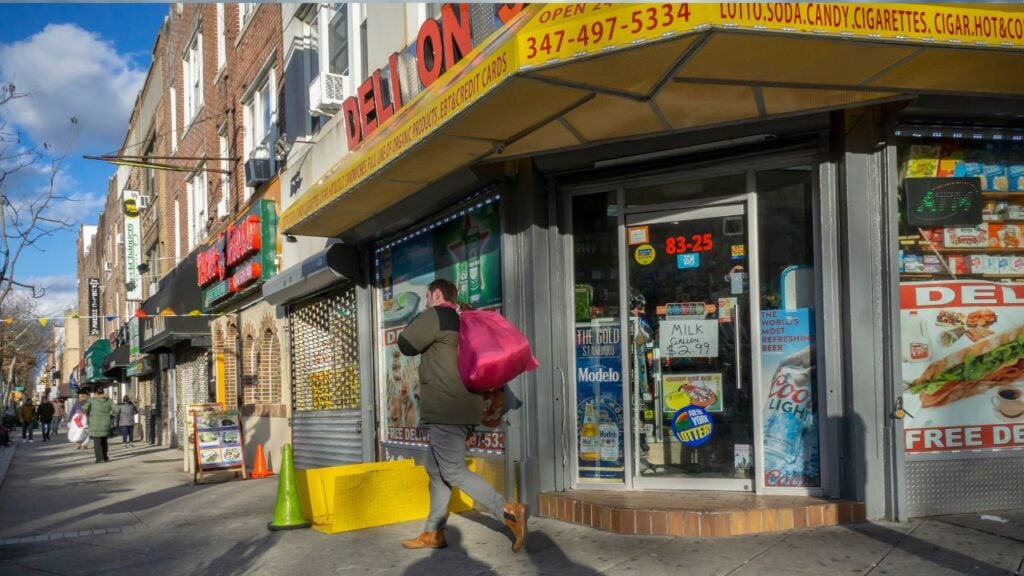
“Where do I get on line?” A cashier in Phoenix just blinks, and a transplant realizes the sentence never translates anywhere else.
New York City taught them to talk that way, and the habit never leaves.
9 New York City Habits That Follow Transplants Wherever They Move
