
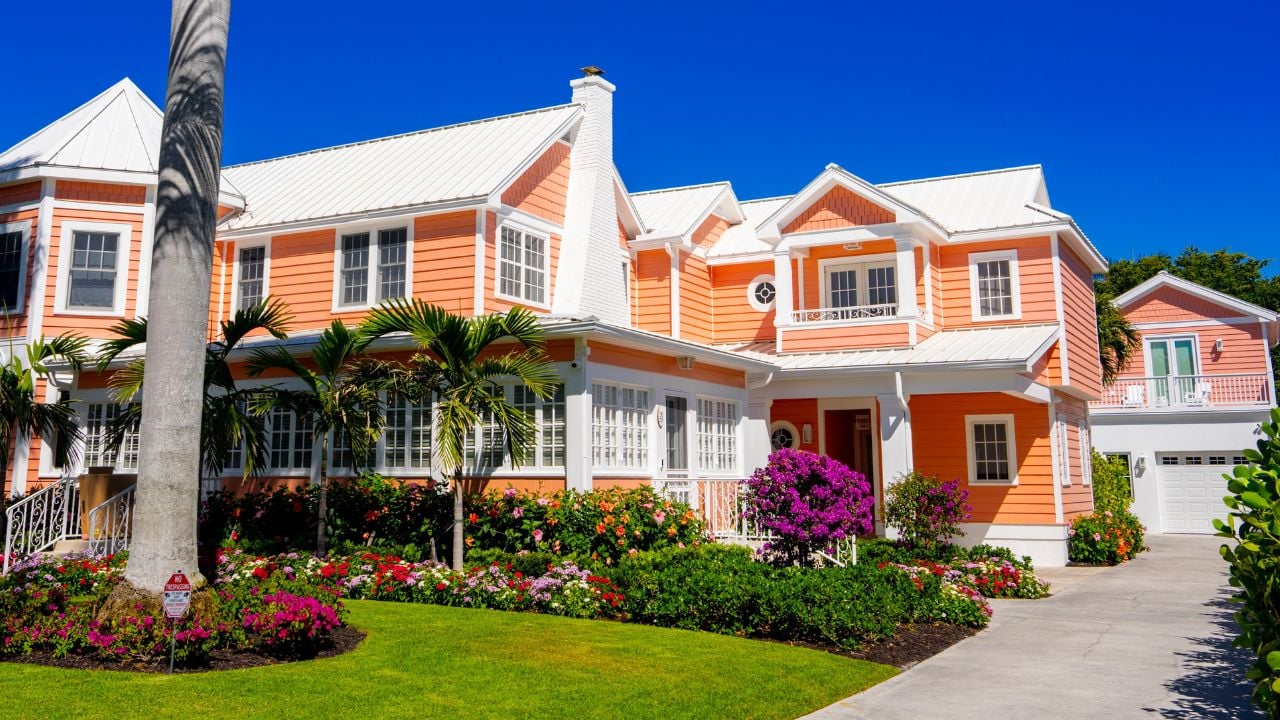
9 Paint Colors That Can Get Florida Homeowners an HOA Letter

The sprayer shuts off around noon on a Saturday, and your house finally looks like yours.
Your homeowners’ association disagrees.
The letter is dated Tuesday, and it cites a covenant you signed in 2004 and never opened again.
These are the paint colors that often get Florida homeowners written up.
Note: Homeowners’ association (HOA) covenants are subject to change and vary by community. When in doubt, confirm the current details with your HOA or consult with an attorney.
1. Flamingo Pink
Pink has worked on the Florida coast since 1928, when the Don CeSar opened on St. Pete Beach and started collecting the nickname “Pink Palace.”
That’s a hotel.
Your three-bedroom off a Sarasota cul-de-sac isn’t, and your HOA’s architectural committee will draw that line for you in writing.
Most approved Florida palettes carry a blush or a shell tone, and both of those read as nearly white on a wall in full sun.
Saturated flamingo pink is a different color entirely, and committees often deny it faster than almost anything else a homeowner brings them.
Not that pink.
2. Deep Purple
Purple is the color Florida homeowners most often assume they can slip past the committee.
They can’t.
An eggplant body color changes how a whole street looks from the corner, and that’s the exact thing many HOAs exist to protect.
Lavender shutters or a plum front door sometimes get the okay in, for example, a Delray Beach or Winter Park community because the color sits on a few square feet.
Your full house is a different conversation.
If you paint it first and ask later, an HOA letter arrives before your ladder is back in your garage.
3. Lime Green
Lime green does fine work on a Key Largo dive shop and none at all on a house in a Fort Myers community with a coastal palette.
Committees read it as commercial.
They’ll approve sage, seafoam, and pale olive without a second meeting, and every last shade of those is green.
The difference is saturation, not hue, and few covenants spell that out in a way a homeowner can measure with anything but a guess.
So the committee’s taste turns into the rule.
Bring the paint chip to the meeting before the sprayer comes out of the truck.
4. Fire-Engine Red
Red clears Florida architectural review as a front door far more often than it clears as a body color.
Scale is the whole argument.
A barrel-tile roof already carries a terracotta tone, so a fire-engine red wall underneath turns the front of the house into one loud block of color.
Too much.
That same red on a door, against warm-white stucco, passes in community after community across the state.
Spread it across 2,000 square feet of wall, and you get a hearing date instead.
5. Jet Black
Black houses look sharp on the design shows, and they fight the Florida sun every hour of the day.
The U.S. Department of Energy puts white roofing products at reflecting 60% to 90% of sunlight.
A black wall does the opposite of that.
Committees have their own reasons, and they’re about the street rather than your electric bill: One black house among 40 beige ones is visible from three blocks away.
Painters in Florida will also tell you dark colors show their fading sooner than pale colors do, so the black repaint drifts toward charcoal.
Then you’re painting your home again, with approval this time.
Psst! How much do you know about what your Florida HOA can and can’t do? Tap through these and see how many you can get right.
6. Turquoise
Turquoise is legal, celebrated, and completely ordinary in Florida, as long as you’re standing in the right zip code.
Miami Beach’s Art Deco district rocks it.
So does half of Key West.
A gated community off I-75 in Estero won’t.
Same state, different rulebook.
Master-planned Florida communities work from an approved palette, and turquoise almost never lands on it, no matter how many turquoise houses sit an hour down the road.
Teal shutters sometimes do, so ask for those and you’ll often walk out with a yes.
7. Sherbet Orange
Florida grows the orange, names a bowl game after it, and still won’t let you put that color on your siding.
Committees will take terracotta, clay, and a warm apricot, and every one of those sits in the orange family.
Sherbet doesn’t make the list.
The trouble is what the color does at 7 p.m., when low sun hits a west-facing wall and the whole house glows like a traffic cone.
A Cape Coral homeowner who wants that shade usually gets it, on the front door, on the shutters, or on a clay pot by the step.
Never the walls.
8. Neon Yellow
Yellow clears Florida review all the time, in the soft, buttery version that turns up on approved palettes from Tallahassee to Naples.
Neon is the problem.
A high-chroma lemon holds its brightness at dusk, throws color onto your neighbor’s white wall, and shows up in every listing photo on the street for the next decade.
Committees write “not harmonious with the community” in the denial, which is covenant language for no.
Pale yellow with white trim passes in nearly every Florida community running a coastal palette.
Ask for the pale version.
9. Bright White
Bright white gets Florida homeowners denied, and almost nobody sees that letter coming.
Many approved palettes call for a warm white or a cream, and they treat a pure, blue-white brightness as its own violation.
Too stark.
Trim rules do the same job in reverse. A community that wants cream trim won’t take the white you grabbed off the shelf at your Home Depot.
Here’s the part that catches people: Many Florida declarations require approval for any exterior repaint at all, including the exact shade already sitting on your wall.
Same color, new letter.
What a Letter Costs
An HOA letter in Florida turns into money on a schedule, and Chapter 720 sets the meter.
A Florida association can charge $100 per violation, unless your governing documents allow more.
The board can fine a continuing violation every single day, and the total stops at $1,000 unless those documents say otherwise.
That’s the ceiling.
A fine of less than $1,000 can’t become a lien on your house, which is the sentence most Floridians never make it far enough into the statute to read.
The board also owes you 14 days’ written notice of your right to a hearing before it fines you a dollar.
The Rule Committees Forget
Florida law hands homeowners one advantage in a paint fight, and no architectural committee is going to bring it up for you.
When the declaration or its published guidelines already list options, the association can’t restrict your right to choose among them.
Read that twice.
A community with an approved palette has already approved every color printed on it, and one board member’s taste doesn’t get to shrink the page.
So print the palette, carry it to the meeting, and put your finger on the swatch.
That page is the argument.
Psst! How well do you know Florida HOA law? Take our quiz and see if you can ace it.
Quiz
Florida HOA Pop Quiz
Answer these questions on what your homeowners’ association can and can’t do in Florida. We bet you can’t get them all right. Prove us wrong?
Florida law bars an HOA from fining you for leaving garbage cans at the curb within how many hours of collection time?
Cities With Their Own Palettes
Two Florida cities skipped the HOA middleman and wrote the color rules straight into the city code.
Coral Gables publishes pre-approved Benjamin Moore and Sherwin-Williams color lists for the Mediterranean look George Merrick built the place around in the 1920s.
Its Board of Architects, made up of at least seven local architects, meets every Thursday morning to rule on what gets built and painted.
Key West goes further.
Repainting a house in the historic district takes a Certificate of Appropriateness, and residential painting carries a $10 fee at the Building Department counter.
Key West's approved colors lean toward white, buff, pale gray, and muted pastels, the shades those wooden Conch houses wore long before the first T-shirt shop opened on Duval.
Paint one of those cottages flamingo pink without the certificate, and it's the city knocking on the door, not a committee.
9 Florida Homeowner Insurance Discounts You're Probably Not Getting
When did you last ask your agent what a wind mitigation inspection would knock off your premium?
If the answer is never, your renewal bill is showing it.
9 Florida Homeowner Insurance Discounts You're Probably Not Getting
9 Dangerous Plants Growing in Florida Yards Right Now
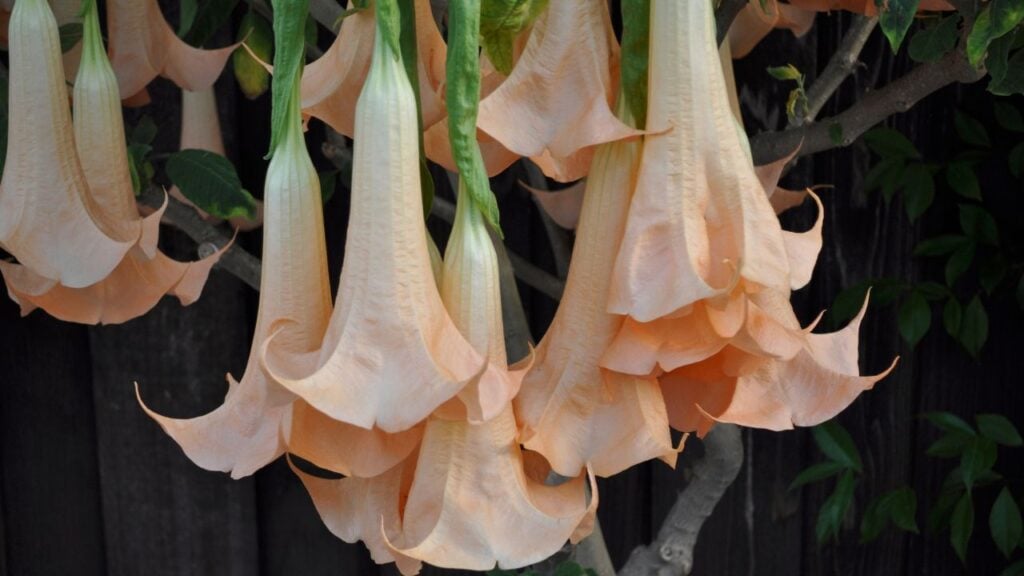
A puppy noses through the mulch and finds a cluster of bright orange seeds.
An hour later the vet is saying the words "liver failure," and the culprit is sitting in flower beds up and down the block.
