
9 Storm Repairs Texas Homeowners Assume Are Covered but Aren’t

Insurers can legally strip wind and hail coverage off a homeowners policy in 14 Texas coastal counties
Many people never realize this until a storm hits and their insurer denies their claim.
Other exclusions apply no matter which county a home sits in.
These are the storm repairs Texas homeowners assume their policy covers but often doesn’t.
Note: This is general information, not insurance advice. Coverage, exclusions, and endorsement costs vary by carrier and are subject to change, so check the specifics of your own policy with your insurer, agent, or the Texas Department of Insurance.
1. Flood Damage
Flood damage is the storm claim nearly every Texas homeowner assumes their policy handles.
It doesn’t.
A standard Texas homeowners policy excludes flood water altogether, the kind that rises from a swollen bayou, a stalled tropical system, or a storm drain that gives up.
Home insurance and flood insurance are two separate products in Texas, full stop.
Covering it takes a policy through the National Flood Insurance Program (NFIP) or a private flood insurer, and the standard NFIP policy caps building coverage at $250,000.
Contents get their own limit, up to $100,000.
2. Storm Surge
Storm surge sounds like wind damage to many Texas homeowners, and that assumption is the expensive part.
The Insurance Information Institute classifies surge as flooding, no different from a bayou spilling its banks.
A standard homeowners policy pays nothing toward surge damage.
The Texas Windstorm Insurance Association (TWIA) still pays zero, even on a full wind and hail policy.
A Galveston or Corpus Christi home needs the same NFIP or private flood policy that covers rain flooding to be protected against surge pushed in by a hurricane’s wind and pressure.
The Wait Before a Texas Flood Policy Works
Texas homeowners can’t buy flood coverage the week a storm is already spinning in the Gulf and expect it to help.
Many NFIP flood policies carry a 30-day waiting period before coverage starts.
Some private flood insurers cut that wait to 10 or 14 days instead.
Buying flood coverage in June, not August, is what gets a Texas homeowner protected before the season peaks.
3. Coastal Wind and Hail Damage
Insurers exclude wind and hail damage from the homeowners policy itself in a stretch of the Texas coast many inland residents never think about.
A home in that stretch often needs three separate policies just to cover one roof: Homeowners, TWIA, and flood.
Insurers can legally strip wind and hail out of a standard policy in the state’s 14 first-tier coastal counties, plus part of Harris County, and many do.
Galveston, Aransas, Nueces, and Cameron counties are on that list.
Homeowners there need a separate wind and hail policy through TWIA, the state’s insurer of last resort for coastal wind coverage.
TWIA covers wind and hail only, not flood or surge.
4. Foundation Damage From Shifting Soil
Foundation damage is the repair a Texas homeowners policy treats like a maintenance problem, not a storm claim.
Texas carries widespread reactive clay soil, the shrink-swell kind the U.S. Department of Agriculture’s soil surveys map across the Blackland Prairie and much of North and Central Texas, soil that swells when a storm dumps rain on it and shrinks again the moment a drought sets back in.
That cycle cracks slabs.
Standard policies exclude earth movement, and insurers count gradual soil expansion and contraction as exactly that, even when a storm’s rain triggered the crack.
A separate foundation endorsement can add up to $10,000 of coverage, often for $100 to $500 a year, and it usually carries its own deductible around $2,500.
Without it, a Texas homeowner pays for slab repair out of pocket, and that bill often runs into five figures.
5. Sewer and Drain Backup
Sewer backup is the storm damage that shows up in the bathroom, not the roof, and a Texas homeowners policy leaves it out by default.
When a storm overwhelms the municipal system and water backs up through a drain or toilet instead of down it, a standard policy pays nothing toward the cleanup.
It pays nothing.
Coverage exists as a water-backup endorsement, typically $30 to $70 a year for the first $5,000 of protection, with insurers commonly offering up to $25,000 in total coverage.
Homeowners in older Houston, Dallas, and San Antonio neighborhoods, where storm drains fill fast, tend to feel this gap first.
Nine storm repairs, nine different answers on who pays. The table below lines up what a standard Texas homeowners policy covers against what closes each gap, so a homeowner can check their own coverage against it in one pass.
6. Mold From Storm Water
Mold growth after a storm is where a Texas homeowners policy caps out fast, even when the water that caused it was a covered loss.
Texas requires insurers to offer a mold buy-up endorsement priced at 25%, 50%, or 100% of a home’s dwelling coverage limit, and many homeowners keep the lowest tier, or skip the endorsement altogether, until a claim proves it isn’t enough.
Remediation after a few days of standing water usually runs well past that lowest tier.
Homeowners can raise the endorsement to the 50% or 100% tier, but many never do until after the first moldy wall.
By then, it’s too late to change the limit on that claim.
7. Code-Upgrade Costs After a Storm
A standard Texas policy leaves code-upgrade costs for the homeowner to pay, a gap that shows up exactly when a storm forces a full rebuild, not before.
A standard policy is built to put a home back the way it stood the day before the storm, not to bring it up to the code the city enforces today.
It’s the same house, still under the old code.
Texas has no single statewide building code. Cities set their own, and many coastal and metro areas now require newer construction standards that an older roof or wall never had to meet.
Ordinance-or-law coverage is what pays the gap between rebuilding as-is and rebuilding to current code.
Some policies bake in a small amount automatically, often 10% to 25% of the dwelling limit.
That’s rarely enough to cover a major code jump after a serious storm.
8. Aging Roof’s Replacement Cost
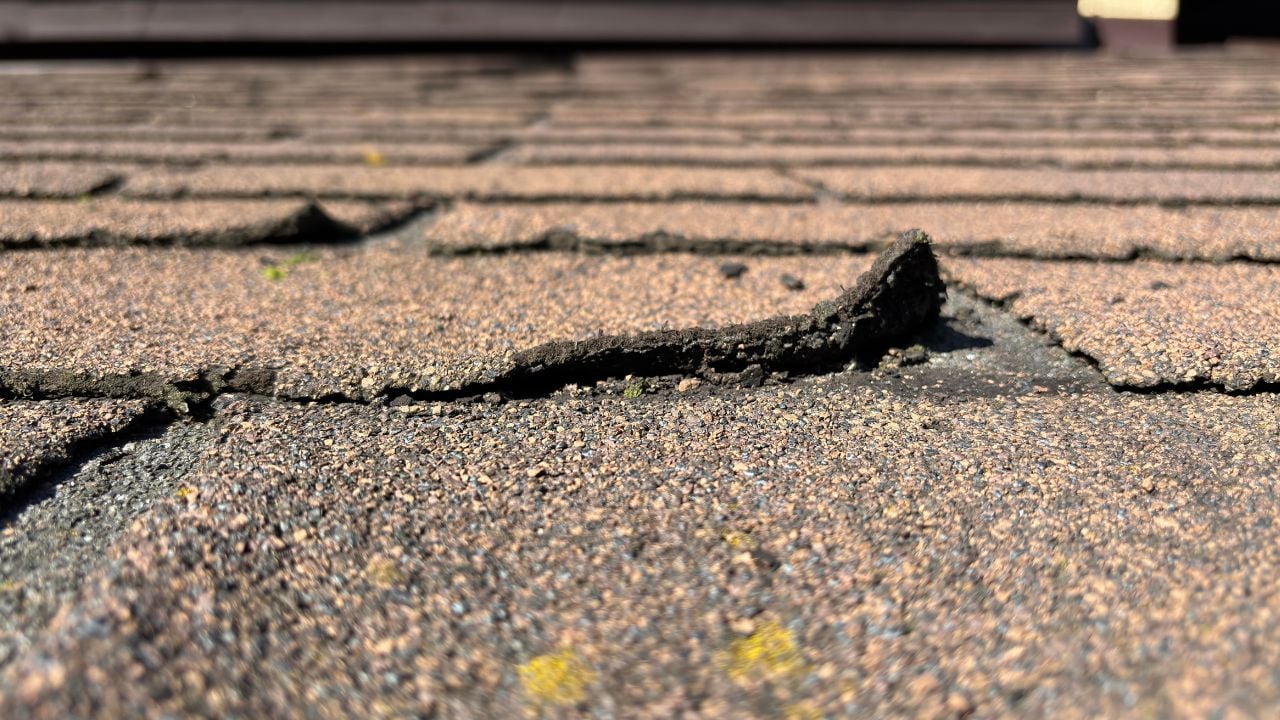
A hailstorm can strip a Texas roof bare, and the insurance check still comes up short if the roof had already passed a certain age.
Many Texas carriers move a roof past that age onto actual cash value or a payment schedule tied to its age, instead of full replacement cost.
That means depreciation.
An older roof settled this way gets paid out at a percentage of what a new one costs, and the homeowner covers the rest.
Each carrier sets its own depreciation schedule and its own age threshold, so two neighbors with identical roofs can see very different checks after the same storm.
Ask an agent whether a policy still carries full roof replacement cost before the next hailstorm, not after.
9. Tree Removal Without Home Damage
A Texas homeowners policy denies tree-removal costs when the tree missed the house entirely.
A storm that topples a healthy tree into the yard, without hitting a covered structure, isn’t a covered loss on its own.
The homeowner gets not a dime.
Policies do cover debris removal when a tree falls on the house, the garage, or a fence, but usually cap it around $500 to $1,000 per tree.
A downed tree blocking a driveway or wheelchair ramp is the one exception insurers usually still pay for, even with no structure damage.
Everywhere else in the yard, the chainsaw rental is on the homeowner.
Psst! How much do you know about Texas hurricane history and storm insurance? Take our quiz and see if you can ace it.
Quiz
Texas Storm History IQ
Answer these questions on Texas hurricanes, flood rules, and storm history. We bet you can’t get them all right. Prove us wrong?
Which storm remains the deadliest natural disaster in U.S. history, striking Galveston, Texas in 1900?
A signed, dated letter to a neighbor about a leaning or dead tree is the cheapest way to turn a maybe-covered dispute into a documented one.
Homeowners who skip that step often end up paying for someone else's tree twice, once for the removal and again if the neighbor's insurer comes looking to recover what it paid out.
8 Things Texans Refuse to Pay for That the Rest of America Accepts
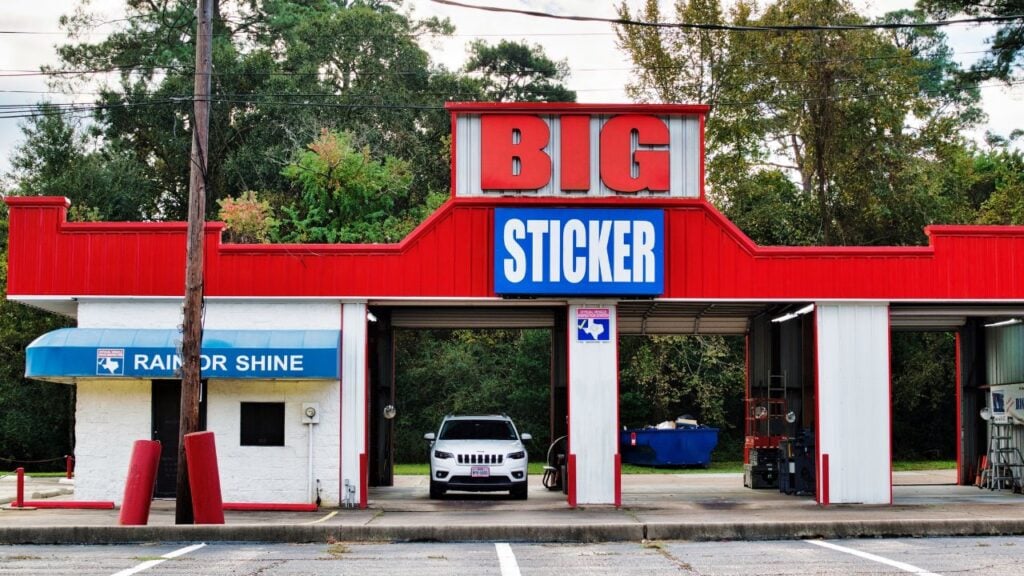
Texas dropped its yearly vehicle inspection sticker in 2025, and it's far from the only bill the state has stopped collecting.
Twenty-six other states charge an annual property tax on a car or truck, year after year, for as long as it stays registered.
8 Things Texans Refuse to Pay for That the Rest of America Accepts
The Cheapest Places to Retire in Texas in 2026

Texarkana runs about 16% cheaper than the national average, according to Bureau of Economic Analysis (BEA) data that prices the same basket of rent, groceries, and gas in every U.S. metro area.
Turning 65 in Texas also freezes the school tax bill for good, on top of a homestead exemption that shields $200,000 of a house's value from the school district entirely.
