
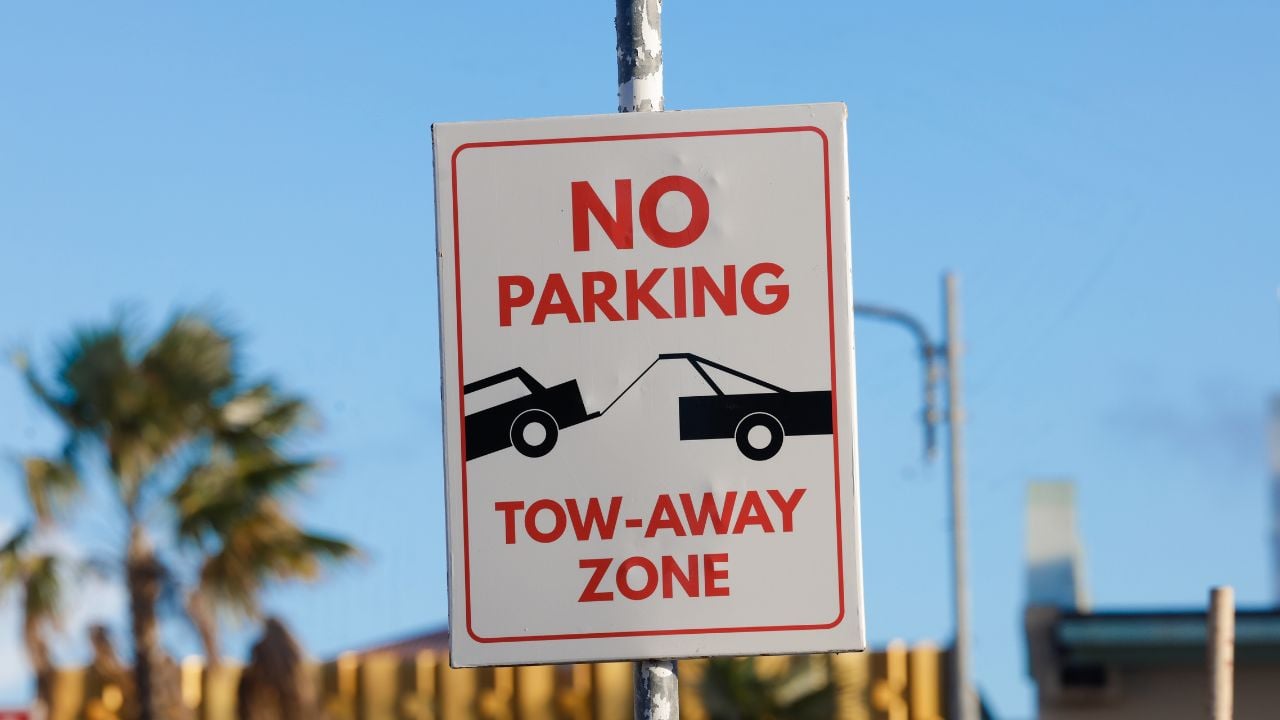
9 Things a California Tow Company Can Legally Do to a Parked Car

A parked car in California can end up sold at auction once its value drops to $4,000 or less and the storage fees go unpaid long enough.
Nobody has to steal it or crash it first.
It just has to sit still while the fees pile up on somebody else’s clock.
Here’s the full run of powers state law hands a California tow company over a car that never left the curb.
Note: This is general information, not legal advice. Towing rules can vary by city on top of state law, and are subject to change.
1. Towing After a 96-Hour Notice
A California tow company can haul away a parked car once a single sticker has sat on its windshield for 96 hours, at the property owner’s request.
Four days.
That’s the whole warning period the law requires before the tow company can come get it, and the clock starts the moment the notice goes on.
The catch protects the driver a little.
A code-compliant sign, at least 17 by 22 inches with letters an inch tall, has to be posted at every entrance first, listing the local police department’s phone number.
No sign, no valid 96-hour tow.
2. Towing Without Any Warning
A California tow company skips the four-day wait entirely for a car parked within 15 feet of a fire hydrant or sitting in a marked fire lane.
It can only do that once it already has a signed agreement with the property owner authorizing the call in advance.
No sign has to go up first.
No citation, either.
The distance itself is set by a separate part of the Vehicle Code, which bars parking that close to a hydrant in the first place.
Park there for five minutes to grab a coffee, and the truck can already be on its way.
That’s the trade-off for blocking equipment firefighters need in an emergency.
3. Towing a Car Blocking Another Parked Car
A California tow company can take away a car that’s illegally parked and trapping a second, legally parked car in place, once an officer authorizes it.
Picture a driveway with two spots.
A car parked crosswise there can pin in the car parked correctly behind it.
The rule hands that authority to a peace officer or a salaried parking-enforcement employee, not the tow company.
Once it’s authorized, the tow company just carries out the order, and the blocked car’s owner doesn’t have to do anything but report it.
Nobody has to be inconvenienced for hours first.
One trapped bumper is enough.
4. Impounding Over Paperwork Alone
A California tow company can impound a car over paperwork alone, not just where it’s parked, once a peace officer or a salaried parking-enforcement employee calls it in.
A vehicle with no license plates or registration displayed at all qualifies on the spot.
So does one whose registration expired more than six months ago, even if it’s tucked into a legal spot and bothering nobody.
The car doesn’t have to be blocking a thing.
An officer or employee makes that call, and the tow company’s job is hauling the car away once it does.
Stale tags are the violation.
Psst! How much do you know about tow trucks and vehicle history? Take our quiz and see how many you can get right.
Quiz
California Tow Law IQ
Answer these questions on tow trucks, DMV history, and the rules cities pile on top. We bet you can’t get them all right. Prove us wrong?
What did a Chattanooga, Tennessee mechanic invent in 1916 after he had to pull a car out of a creek?
5. Hauling It 10 Miles Without Notice
A California tow company doesn't owe a driver a heads-up about where the car is headed.
State law only sets an outer limit.
The storage yard has to sit within a 10-mile radius of wherever the car was parked, measured from that exact spot.
Go farther than that, and the tow company needed written sign-off from local law enforcement first.
Nobody has to ask first.
6. Hooking up and Still Charging You
California tow companies can hook a car up and still make its owner pay to walk away with it.
Run outside the second you see the truck, and the law only caps what happens next.
Get to the car after it's coupled to the truck but before it leaves the property.
The company can still charge up to half the regular towing fee to let it go.
Not free.
Just cheaper than the full trip.
What "Half Price" Covers
A California tow company only has to cut the base towing charge in half, not the whole bill.
Picture a $250 hook-up fee: The yard can't charge more than $125 once the owner shows up in time.
Storage charges, gate fees, and other add-ons the yard lists separately aren't part of that cap.
7. Keeping Your Car Until Paid
A California tow yard can keep a car locked up and refuse to let it leave until the driver pays the bill in full.
No partial payment gets it out early.
State law does draw one line around how that payment happens: Every yard has to accept a valid credit card, not just cash.
A driver who shows up at 11 p.m. with an empty wallet but a working card still walks out with the keys.
Overcharge on that bill, though, and California can make the yard pay the difference back four times over.
The bill doesn't vanish.
It just can't be padded.
8. A Lien Fee After Three Days
A California tow company has to give a towed car's owner a short grace period before it can tack on an extra charge.
Retrieve the car within the first 72 hours of storage, and the company can't add a lien fee on top of the regular towing and storage charges.
The grace period ends there.
Let those three days pass, and the lien fee becomes fair game.
Weekends don't pause it, either.
It just keeps running from the moment the yard logs the car in.
9. Auction for Unclaimed Cars
A California tow yard can eventually sell a car nobody claims and nobody pays for.
It's called a lien sale, and it's a legal process, not a threat a yard invents to scare people into paying.
For a car valued at $4,000 or less, the state's Department of Motor Vehicles (DMV) doesn't even have to approve it first.
The clock starts fast.
Paperwork can begin within 15 days of the unpaid charges turning into a lien.
After that, the car goes up for sale to the highest bidder.
San Francisco's Extra Rules
California cities can add their own rules on top of what the state already allows a tow company to do.
San Francisco requires every tow truck driver working within city limits to carry a separate police-issued permit.
The tow company itself needs a second permit just to operate inside the city at all, on top of anything the state requires.
Two permits, not one.
A tow-industry trade group pushed back on those local rules in federal court.
The fight went all the way to a federal appeals court, and San Francisco's permit system survived it.
Los Angeles piles its own posted-rate rule on top of that same state minimum: Every permitted tow operator has to post its rates and services in letters at least an inch tall.
Any rate hike needs ten days' written notice to the city's Board of Police Commissioners before it can even take effect.
7 California Traffic Laws Drivers From Other States Break on Day One
Montana has no statewide law against texting behind the wheel.
California does, and the state's rulebook goes much further than many new arrivals expect on their very first day behind the wheel.
7 California Traffic Laws Drivers From Other States Break on Day One
9 Things You Can't Legally Bring Into California From Another State

A family packs a moving van to head from Nevada to Sacramento with everything they own.
Not everything in that truck is guaranteed to survive California's agricultural border stations, which run on legal authority many drivers have never heard of.
9 Things You Can't Legally Bring Into California From Another State
