

9 Utah Myths Utahns Are Tired of Correcting

Utah’s “Mighty 5” campaign makes the state sound like America’s national-parks leader. But the National Park Service ranks it third nationally, behind California and Alaska.
Third is a strong showing.
Nevertheless, out-of-staters arrive with ideas about Utah that don’t hold up, and the parks ranking is just the first place reality catches up with them.
These are the Utah myths Utahns are tired of correcting.
Note: This is general information, not legal advice. Utah’s alcohol and family-law rules are subject to change.
1. Utah Is All One Religion?
Membership counts reported by the Cache Valley Daily put the Church of Jesus Christ of Latter-day Saints at close to 62% of Utah’s population.
That count was taken back when the state had about 3.1 million residents.
Utah has since grown past 3.5 million people, per the Census Bureau’s July 2025 estimate.
Salt Lake County, the state’s most populous, counted Latter-day Saints at just 49% in that same count, the lowest share the county had recorded since at least the 1930s.
Visitors who step off a plane at Salt Lake City International still assume the whole state prays exactly the same way.
It’s not universal.
Utah’s 29 counties don’t share one makeup, and many differ from each other by a wide margin.
2. Utah Still Practices Polygamy?
The state carries this myth longer than almost any other, mostly from old headlines and TV dramas that never got the memo.
The Church of Jesus Christ of Latter-day Saints ended and disavowed the practice of plural marriage with a formal declaration in 1890.
That document is now canonized in Church scripture as Official Declaration 1, per the Church’s history.
It hasn’t happened since.
Utah’s state constitution still bans polygamy outright.
A 2020 law reduced simple bigamy between consenting adults to an infraction, about the same as a traffic ticket.
Bigamy tied to fraud, abuse, or underage marriage still counts as a felony.
Modern plural-marriage practice in the state belongs to small, independent groups that broke away from the mainstream Church generations ago, not to Latter-day Saint congregations today.
3. Bars Still Hide the Bartender?
Utah restaurants have had a choice since a 2017 law took effect.
They can keep an opaque barrier between the drink station and the dining room, or move that station at least 10 feet from any table or waiting area.
Many still pick the barrier.
Utah bars made national headlines the year the law passed, when a wave of coverage announced the Zion Curtain was falling.
It never fully fell.
Utah’s Bar Barrier Rule, Explained
Utah lawmakers wrote this choice into House Bill 442 in 2017.
The choice applies to any restaurant serving mixed drinks.
The barrier option, still nicknamed the Zion Curtain, has to fully block a diner’s view of the spot where a bartender mixes drinks.
The 10-foot option only works if no table or waiting area sits inside that radius, so a cramped dining room usually keeps its curtain.
4. Still Stuck With 3.2 Beer?
Utah grocery and convenience stores get stuck with this myth more than almost any other product rule in the state.
That cap disappeared years ago.
Utah raised the limit in 2019, letting stores sell beer up to 5% alcohol by volume instead of the old 3.2%-by-weight cutoff.
Then-Governor Gary Herbert signed the change after 86 years under the lower cap.
Stronger wine, liquor, and heavy beer still sell only through the state’s Department of Alcoholic Beverage Services stores.
5. Salt Flats Never Change?
Utah’s Bonneville Salt Flats cover about 35 square miles today, and a drying West combined with human disruption keeps shrinking that crust year over year.
Researchers now warn the flats could disappear within a century if the decline continues.
The salt flats still look permanent in every road-trip photo, which is exactly why visitors assume the white crust never moves.
It never stops moving.
A federal restoration project has pumped leftover brine back onto the flats for years, an attempt to slow the disappearance before more of the crust is gone.
Psst! How much do you know about Utah? Flip these cards and see how many you get right.
6. Utah Has the Driest Snow on Earth?
Despite the myth, the state’s snow isn’t the driest on Earth.
University of Utah atmospheric scientist Jim Steenburgh has found that mountains in Montana, Idaho, and parts of western Colorado catch flakes holding even less moisture than Utah’s, per Deseret News.
Ski towns still lean hard on the phrase “Greatest Snow on Earth,” trademarked back in 1975 and stamped on license plates a decade later.
Marketing beats meteorology here.
What makes the snow feel so good under skis is timing and structure.
Frequent mid-size storms stack lighter snow over a firmer base, and that combination floats a ski better than drier snow that lets a skier sink.
7. Most National Parks?
Two states beat Utah outright on the National Park Service’s count.
California holds nine national parks, and Alaska holds eight, leaving Utah’s five parks in third place nationally.
Utah’s “Mighty 5” marketing convinces many visitors nothing else comes close.
Size isn’t Utah’s edge.
Zion, Bryce Canyon, Arches, Canyonlands, and Capitol Reef still make up a dense cluster a road-tripper can reach in a single week.
That density is the draw, not the total count.
8. Utah’s Drivers Are the Politest?
A 2025 LendingTree analysis ranked Utah third-worst in the nation for drivers, citing high rates of speeding tickets, accidents, and DUIs.
Speeding did the most damage to Utah’s ranking, with the nation’s second-highest rate of speeding-related incidents.
The state’s reputation for careful, family-first culture leads visitors to expect the same caution on the highway.
The numbers say otherwise.
Wide-open rural highways make that temptation easy to give in to.
9. Highest Birth Rate in America?
Utah’s fertility rate has slid to 10th place nationally as of the latest 2023 data, at 1.801 births per woman.
Utah held the nation’s top spot for so long that many people still assume it’s automatic.
Not anymore.
South Dakota, Nebraska, North Dakota, Alaska, and Louisiana are among the states currently ranking ahead of it.
The slide has been years in the making, not a one-year dip.
9 Utah Foods and Drinks That Confuse Out-of-Staters
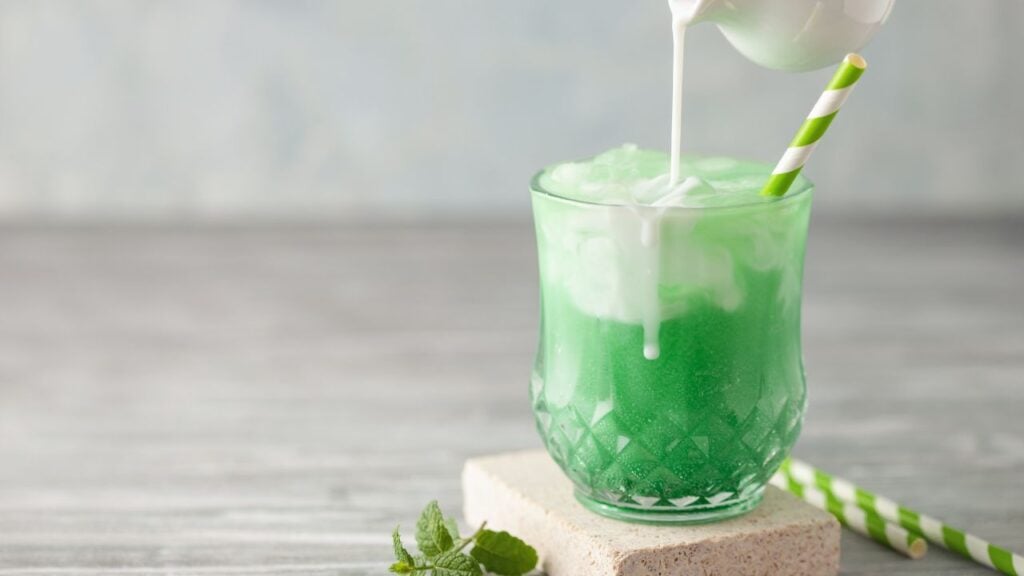
Utah’s plates carry as many surprises as its laws do, from a soda culture that built drive-through chains to a fry sauce debate that never settles.
Order the wrong thing at the wrong counter, and a Utahn will let you know exactly how you got it wrong.
9 Utah Foods and Drinks That Confuse Out-of-Staters
16 Things That Make Utahns Look Cheap Without Realizing It

Many everyday Utah habits look like plain frugality, but an out-of-state guest will point out how odd they seem.
A few of these habits have nothing to do with saving money at all, and Utahns rarely notice they’re doing them.
