
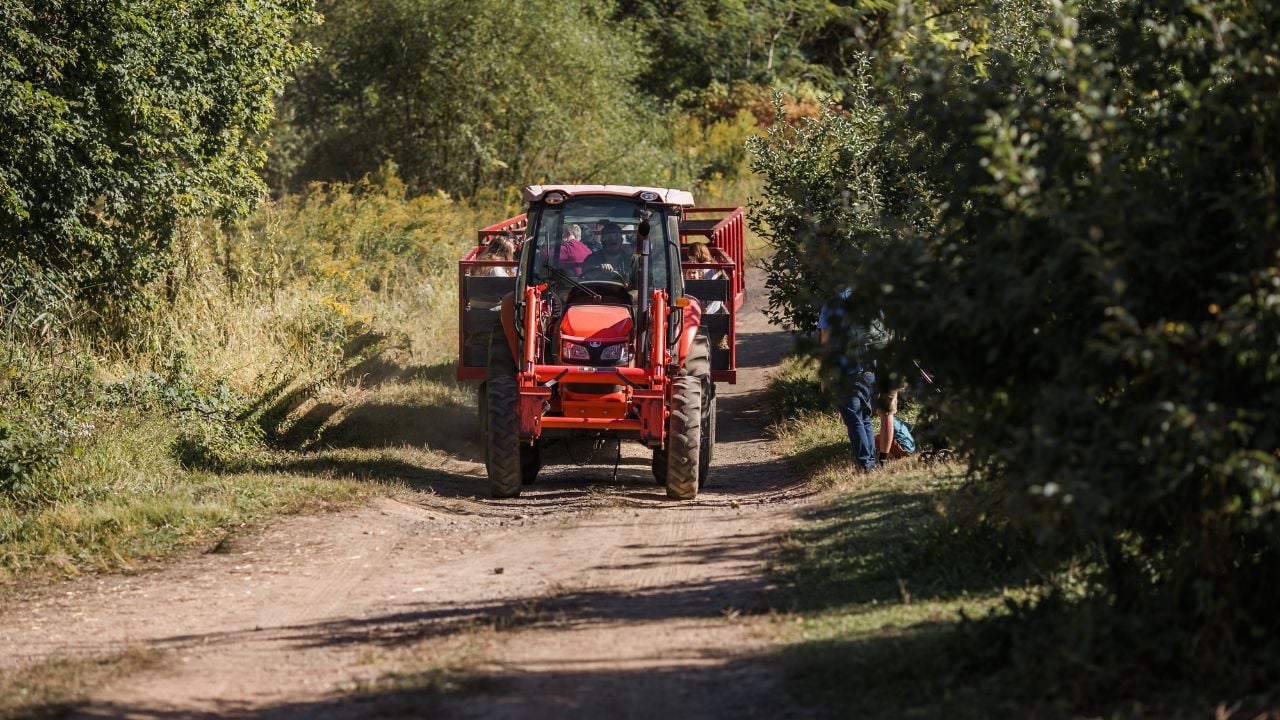
10 Things Upstate New Yorkers Do in September That the Rest of the State Finds Strange

New York opens archery season for deer in the Northern Zone on Sept. 27, and Upstate spends most of this month getting ready for it.
Downstate, nobody notices.
These are the things Upstate New Yorkers do in September that the rest of the state finds strange.
1. Racing the First Frost
Old bedsheets and tarps start coming out to the tomato patch by the second week of September, and they go back out every night the forecast dips.
The Adirondacks and the North Country average their first fall frost by mid-September, according to Cornell’s Northeast Regional Climate Center.
New York City typically doesn’t see one until November.
That’s two extra months of growing season the rest of the state gets to keep.
Tell a downstate coworker you covered the tomatoes last night and they’ll ask what for.
A killing frost landing weeks before Halloween candy hits the shelves doesn’t fit how they picture New York’s calendar.
One hard frost ends it.
So gardeners pick the last peppers green rather than risk losing the whole bed overnight.
Where “Upstate New York” Starts
Upstate New York has no official boundary, and the state’s tourism office never uses the word.
I LOVE NY, the state’s official tourism campaign, splits New York into 11 regions, from the Adirondacks and the North Country down to Long Island and New York City.
“Upstate” isn’t one of them.
Everyday definitions vary just as much.
Some people draw the line above Westchester, Putnam, Dutchess, Rockland, and Orange counties, while others put it wherever the daily commute into New York City stops making sense.
2. County Fair Season
New York’s county fair season runs almost entirely inside the first two weeks of September, a fixture Upstate builds late summer around rather than a last gasp of it.
The Schaghticoke Fair, running continuously since 1819, filled its midway and 4-H livestock barns Sept. 2-7 this year, one stop on a circuit of century-old fairgrounds that fills the Upstate calendar every late summer.
Ask a downstate friend what “the fair” means and they picture a street closed off for food trucks.
Ask an Upstate kid, and they mean the week they slept in the barn next to the steer they raised and showed the next morning.
It’s not the same fair.
New York City has street fairs too.
It has never had a fairground that’s run continuously for more than two centuries.
That’s a tradition worth the trip, fair after fair, every year the circuit comes back around.
3. Gearing up for Bow Season
Hunters spend September getting tree stands up, checking trail cameras, and re-sighting bows, weeks before a single arrow is legally loosed at a deer.
Archery opens in the Northern Zone on Sept. 27 and in the Southern Zone four days later, on Oct. 1, two separate countdowns Upstate hunters track depending which side of the zone line they hunt.
Mention to someone downstate that you’re already “sighting in” for a season that hasn’t opened yet and they’ll picture an indoor rifle range.
New York City allows no legal hunting season within the five boroughs, so there’s no deer season for the comparison to even land on.
There’s nothing to hunt there.
Upstate hunters spend the whole month making sure they’re ready before the clock starts.
4. Fire Company’s Chicken Barbecue
Fire companies, church halls, and Little League boards across Upstate New York all seem to know the same barbecue sauce recipe.
September fundraiser season means cooking it over charcoal for a crowd.
Food scientist Robert Baker developed what’s now called Cornell chicken at Cornell University, first serving it from Baker’s Chicken Coop at the 1949 State Fair.
It’s been the go-to at fundraiser barbecues across the region ever since.
New York has roughly 1,800 fire departments staffed almost entirely by volunteers, about 80,000 of them statewide.
A chicken barbecue is how a lot of those departments raise the money a tax levy doesn’t cover.
Tell someone who grew up with a truck from the taxpayer-salaried Fire Department of New York (FDNY) parked around the corner.
Here, the fire company is selling half-chickens in the parking lot to buy a new hose.
They’ll ask why the town doesn’t just pay for it.
In many Upstate towns, the volunteers are the town’s only fire department.
Nobody’s getting paid for this.
The chicken pays for the truck.
5. Closing up the Camp
An Upstate seasonal camp in the Adirondacks or the North Country isn’t built to survive a hard freeze.
Its pipes have to be drained by hand before the first one hits.
Owners shut off the water, open every faucet to clear the lines, and pull the boat out of the lake, usually over one long weekend in September.
Tell a downstate friend you spent Labor Day weekend draining your plumbing and they’ll assume something broke.
Nothing broke.
It’s just what happens every year before the camp gets left alone all winter.
No super handles that upstate.
New York City apartments don’t winterize.
A super takes care of it, no camp owner required.
Psst! How much do you know about Upstate New York’s history and geography? Take our quiz and see how many you can get right.
Quiz
Upstate New York IQ
Answer these questions on Upstate New York’s history and geography. We bet you can’t get them all right. Prove us wrong?
The Adirondack Park is bigger than which combination of famous national parks?
6. Putting up the Harvest
Mason jars cover every kitchen counter across Upstate by September, filled with the last of the garden, tomatoes, green beans, and corn, before frost ends the growing season for good.
Cornell Cooperative Extension offices across the state run canning classes every fall, teaching the water-bath and pressure-canning methods a pantry full of winter vegetables requires.
Describe a Saturday spent boiling jars of tomatoes to a downstate renter with no counter space and a produce aisle three blocks away.
They'll ask why anyone would do that on purpose when a can costs two dollars.
The freezer gets full too.
A full pantry shelf is the payoff for a summer's worth of garden work, and September is when that work finally counts.
7. Stacking a Winter's Wood Supply
In Upstate's St. Lawrence County, 17.5% of homes heat with wood, nearly nine times the national rate the Census Bureau reports, and September is when the whole county's woodpile takes shape.
A cord split in September has all fall to dry out before it has to carry a house through January.
Wait until October, and the wood's still too green to burn right when the cold arrives.
Tell a downstate coworker you spent Saturday splitting and stacking a cord of wood for winter and watch the confusion land.
Heat, to them, is a thermostat dial and a landlord's boiler schedule, not something they'd ever swing an ax over.
New York City runs on steam heat and a landlord's boiler schedule.
There's no cord to split.
8. Scheduling the Propane Fill-Up
Nobody's propane company comes unless somebody calls, so rural Upstate homeowners spend September scheduling a fall top-off for the buried tank before the furnace needs it.
Propane heats roughly 10% to 15% of homes in New York's lowest-density counties, the Empire Center for Public Policy reports.
Five of those counties, Schuyler, Hamilton, Orleans, Yates, and Oswego, top 20%.
No high-density county in the state clears 3%.
Ask a downstate resident when they last scheduled a fuel delivery for heat and they'll think you mean a space heater.
Their gas comes through a pipe under the street.
Nobody's driving a truck to their block to fill a tank in the yard.
Their gas just shows up.
Miss the fall delivery window Upstate, and there's no pipeline to fall back on until the truck comes back around.
9. Stuck Behind the Combine
Upstate New Yorkers plan their commute around a combine, not a subway delay.
Farmers bring tractors and choppers onto two-lane highways every September during corn and grain harvest.
Each one moves at 25 to 30 mph with a bright orange slow-moving vehicle emblem on the back.
Cornell Cooperative Extension in Jefferson County has pointed out that the emblem needs to be visible from about 500 feet.
A driver who sees a tractor slowing down should assume it's turning, not making room to pass.
Nobody who commutes by subway has ever had to ease off the gas behind a chopper on a two-lane road.
They've certainly never had to learn that a slowing tractor means it's turning, not waving you past.
Everyone just waits.
10. Riding a BOCES Bus to Another District
A rural Upstate teenager can spend a school day in September on a bus that crosses into an entirely different school district.
The ride is just to reach a welding class or a licensed-practical-nurse program their high school doesn't offer.
New York's 37 Boards of Cooperative Educational Services, BOCES for short, cover all but nine of the state's 697 school districts.
They pool career and technical classes, special education, and the busing that a single small district couldn't run on its own.
New York City, along with Buffalo, Rochester, Yonkers, and Syracuse, is barred by state law from joining a BOCES at all.
Try explaining to a downstate parent that their kid's classmate takes a separate bus, to a different building, in a different district, for half the school day.
They'll picture a magnet school program, not a wholly separate governmental system their child's district was never built to plug into.
The city has no BOCES.
Some of those BOCES routes run close to an hour one way, longer than many downstate kids' whole trip to school and back.
Nobody Upstate finds that unusual.
It's just what gets kids to the first bell every September.
9 New York State Fair Habits That Give Away a First-Timer
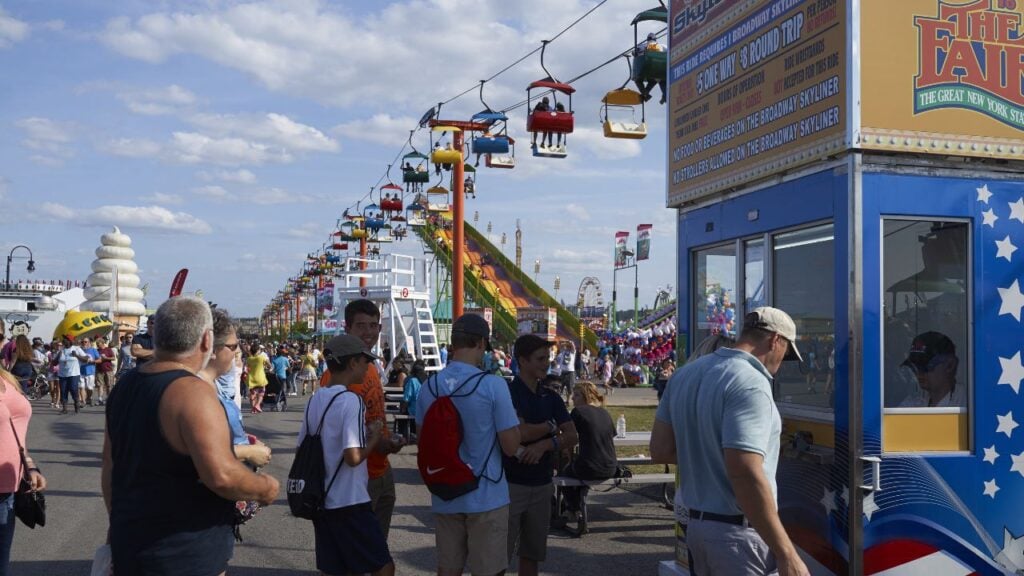
The Great New York State Fair draws crowds from every corner of the state every August, and a first-timer stands out before they reach the midway.
Veterans know exactly which building to skip and which line moves fastest for a sausage sandwich.
9 New York State Fair Habits That Give Away a First-Timer
6 Foods New Yorkers Grew Up With That Have All But Disappeared
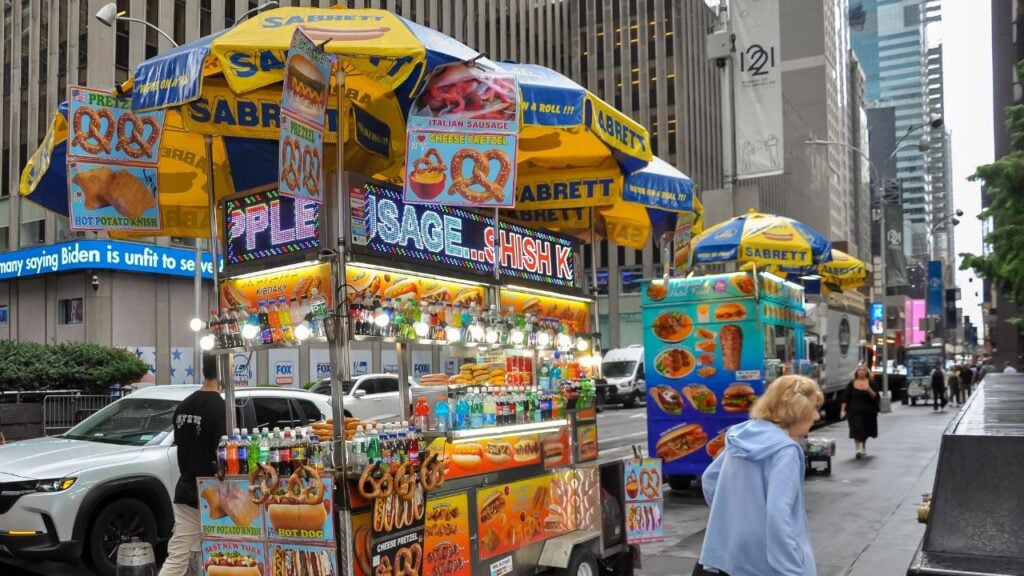
A generation of New Yorkers grew up on foods that vanished from grocery shelves without warning, and many people don't notice until they go looking for one.
A few of these still turn up in one stubborn corner of the state, if a shopper knows where to look.
6 Foods New Yorkers Grew Up With That Have All But Disappeared
