
5 Waffle House Counter Seating Habits Mississippi Regulars Know That Newcomers Don’t

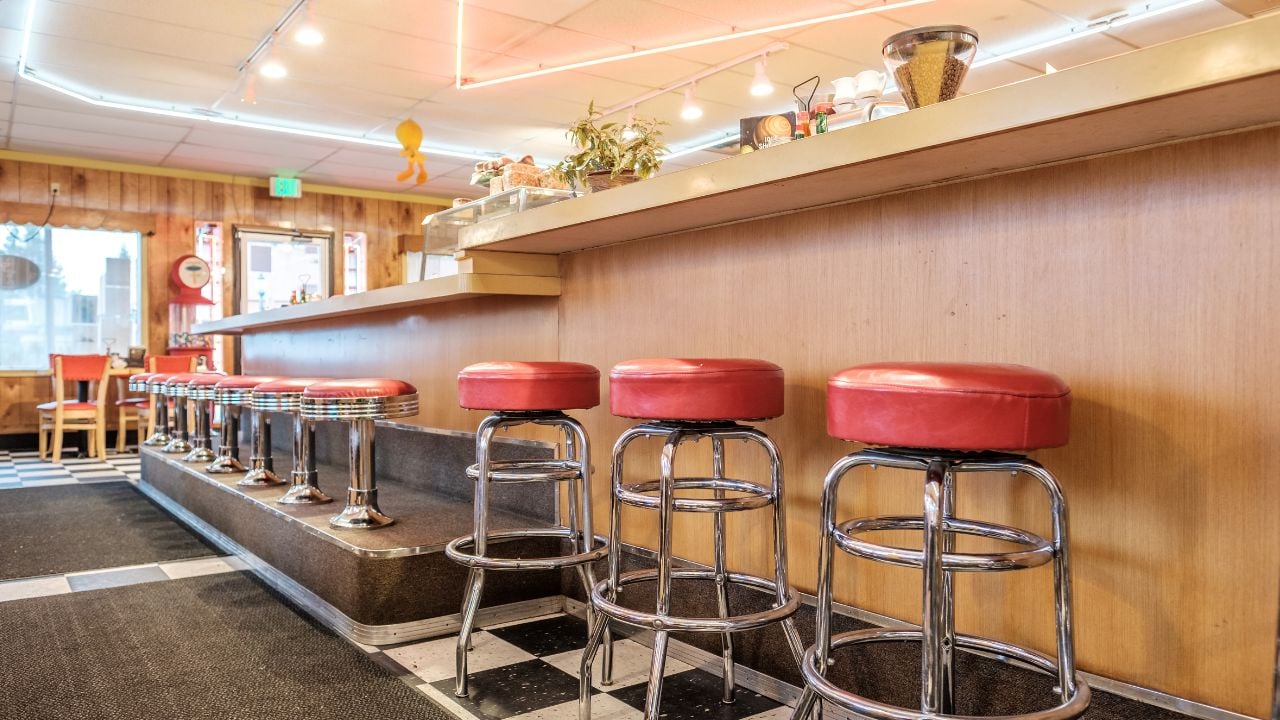
The first Waffle House opened on Labor Day 1955 with one long counter built for fourteen stools facing the grill.
At a Mississippi Waffle House, the counter and the booths might as well be two different restaurants, and the regulars can tell which one you belong at.
These are the Waffle House counter seating habits Mississippi regulars know that newcomers don’t.
1. Claiming a Stool When You’re Flying Solo
Waffle House expects a party of one to head for the counter, not a booth.
No posted Waffle House policy spells this out, but it’s one of the chain’s most consistently repeated unwritten rules.
Regulars pass it down long enough that it works like an official one.
Booths are for groups.
A single Mississippian sliding into a four-top during a Friday-night rush slows down the whole dining room, and regulars already know it.
Grab a stool instead.
There’s almost always a stool open, even when every booth in the place is full.
That’s the whole point of a counter built for people eating alone: It turns over fast.
Nobody has to wait on a table to clear before the next stool opens up.
2. The Hash Brown Code to the Cook
Waffle House servers call your hash brown order straight to the cook, not into a screen.
They stand on a marked spot on the floor a few feet from the grill and say it out loud.
Sit at the counter, and that call happens right next to you, cook and customer both hearing it at the same moment.
A booth works the opposite way.
The server carries your words back to that same spot alone.
If the cook mishears something, you find out only when the wrong plate arrives, not by watching the fix happen in real time.
A regular at the counter already has the code loaded before the server turns around.
Order hash browns “smothered”: Grilled onions land on the plate.
Order them “covered” instead, and a slice of melted American cheese shows up.
Fumble the code at the counter: The mix-up happens right in front of you, not back in the kitchen.
The Full Waffle House Hash Brown Code
Waffle House hash browns come with eight official modifiers, and a counter regular strings several together without blinking.
Smothered means grilled onions.
Covered means melted American cheese.
Chunked adds grilled ham.
Diced adds grilled tomatoes.
Peppered brings jalapeños.
Capped means grilled mushrooms.
Topped means a scoop of chili.
Country means sausage gravy poured on top.
Order them “all the way,” and a Mississippi cook piles on all eight without asking twice.
3. The Plate, Not the Ticket
Waffle House gives a counter regular a front-row seat to something a booth diner never sees: The cook reads the order straight off the plate.
No ticket, printed or handwritten, ever reaches the grill.
Waffle House runs what an academic study of the chain’s kitchens calls a plate-marking system instead.
Condiments and other small objects on the plate work as a coded stand-in for that ticket.
The system replaced years of cooks working from memory alone, back when only the sharpest ones could keep every order straight in their head.
A jelly packet’s position can mean scrambled eggs, and the number of packets set out tells the cook how many to make.
A butter packet tucked underneath a jelly packet can mean the toast comes dry.
A napkin folded a particular way can mean grits served in a bowl instead of on the plate.
A booth never sees it.
A Mississippi regular at the counter watches the cook read a folded napkin or a jelly packet like a note card.
That regular knows what’s coming before the plate ever slides over.
Psst! How much do you know about Waffle House beyond the menu? Take our quiz and see how many you can get right.
Quiz
Waffle House Trivia Test
Answer these questions on Waffle House history and how the chain runs behind the counter. We bet you can’t get them all right. Prove us wrong?
Which exact phrase for Waffle House hash browns is a registered trademark?
4. Timing an Order to the Grill
Waffle House regulars at the counter can see something a booth never shows: Exactly how many plates are stacked up in front of the cook.
That's more visibility into the kitchen than a booth diner gets, whatever a given regular does with it.
Timing still matters.
They save substitutions and custom orders for the chain's slow stretches, not a Saturday night rush or the after-church crowd on Sunday.
Late night and early weekday mornings are when servers say a special order has room to land.
A newcomer in a booth has no way to read any of that.
They ask for a substitution at the worst possible moment because nothing in front of them signals otherwise.
5. Tipping the Server, Not the Cook Beside You
Waffle House lets its servers keep every dollar of their tips, with nothing shared into a kitchen pool.
The company has confirmed it has no plans to change that arrangement, even as it raises servers' base pay.
That matters at the counter more than anywhere else in the building.
The cook is standing an arm's length away, clearly the one who made the food.
A first-timer sometimes reaches to slide a couple of dollars toward the grill on the way out.
Mississippi regulars don't.
The tip goes to whoever carried the ticket and refilled the coffee, not the person flipping hash browns a foot away.
That's simply how the paycheck works on that side of the counter.
Where the Counter Habit Started
Waffle House built its counter culture into the blueprint from day one.
Joe Rogers Sr. and Tom Forkner opened the first Waffle House on Labor Day 1955 in Avondale Estates, Georgia, with one long counter built for fourteen stools facing the grill.
That layout stuck.
The company's account of its founding describes a restaurant meant for people on both sides of the counter, not just for selling food.
That idea outlived both founders by decades.
Mississippi carries that layout into college towns like Oxford and Starkville, and down along the Gulf Coast.
The original Avondale Estates building is still standing, restored to its 1955 look and kept open today as the Waffle House Museum.
5 Mississippi Foods Out-of-Staters Refuse to Try That Locals Would Never Give Up
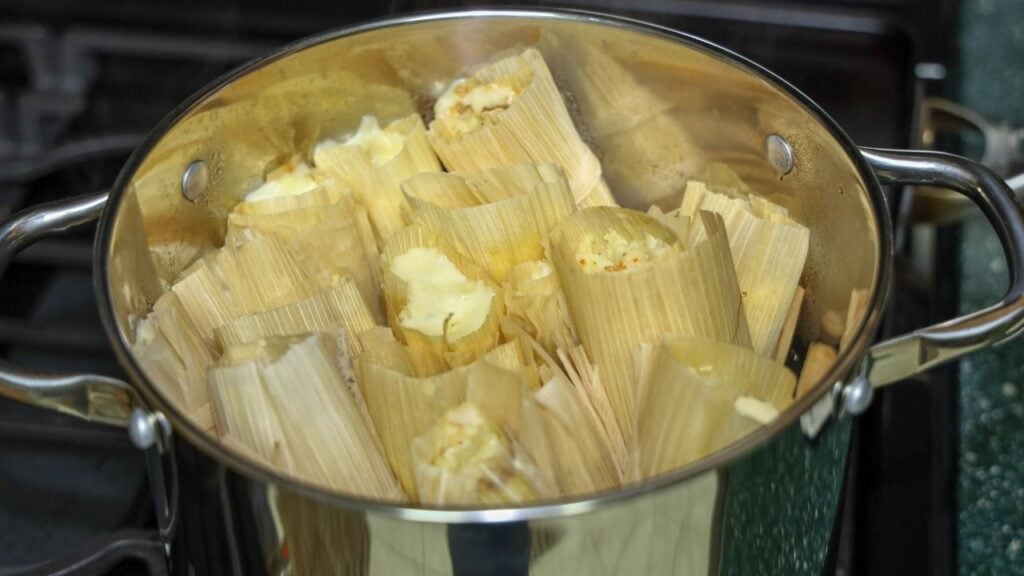
Some regional foods sound like a dare to anyone visiting Mississippi for the first time, but locals wouldn't trade a single one of them.
A handful of these dishes turn out-of-state stomachs, and Mississippians have heard every joke about them already.
5 Mississippi Foods Out-of-Staters Refuse to Try That Locals Would Never Give Up
9 Things Mississippians Miss Most After They Move Away
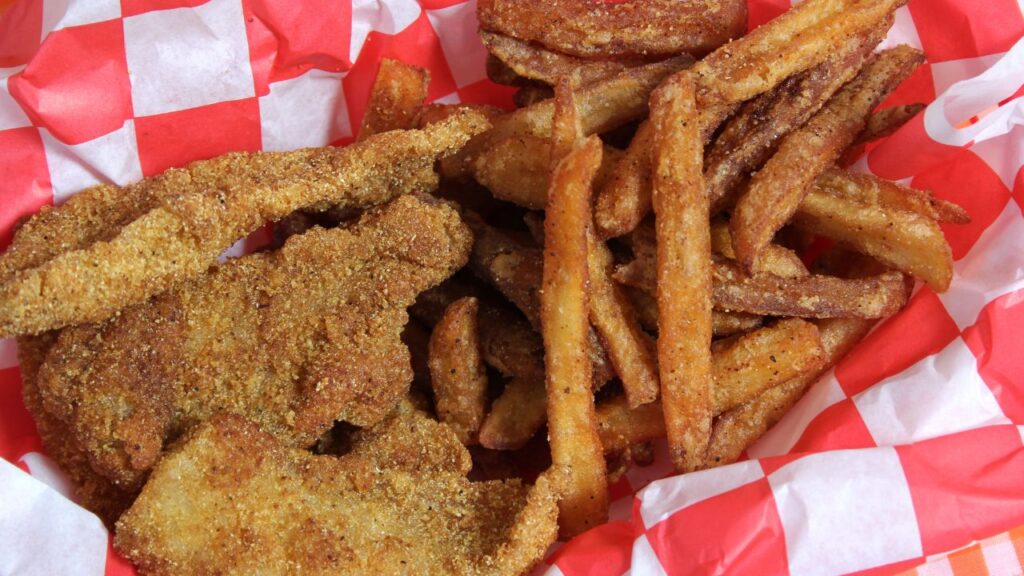
Leaving Mississippi teaches people what they miss most, and it's rarely the thing they expected before they packed the truck.
One transplant spent an entire trip down another state's grocery aisle looking for comeback sauce, and came up empty.
