
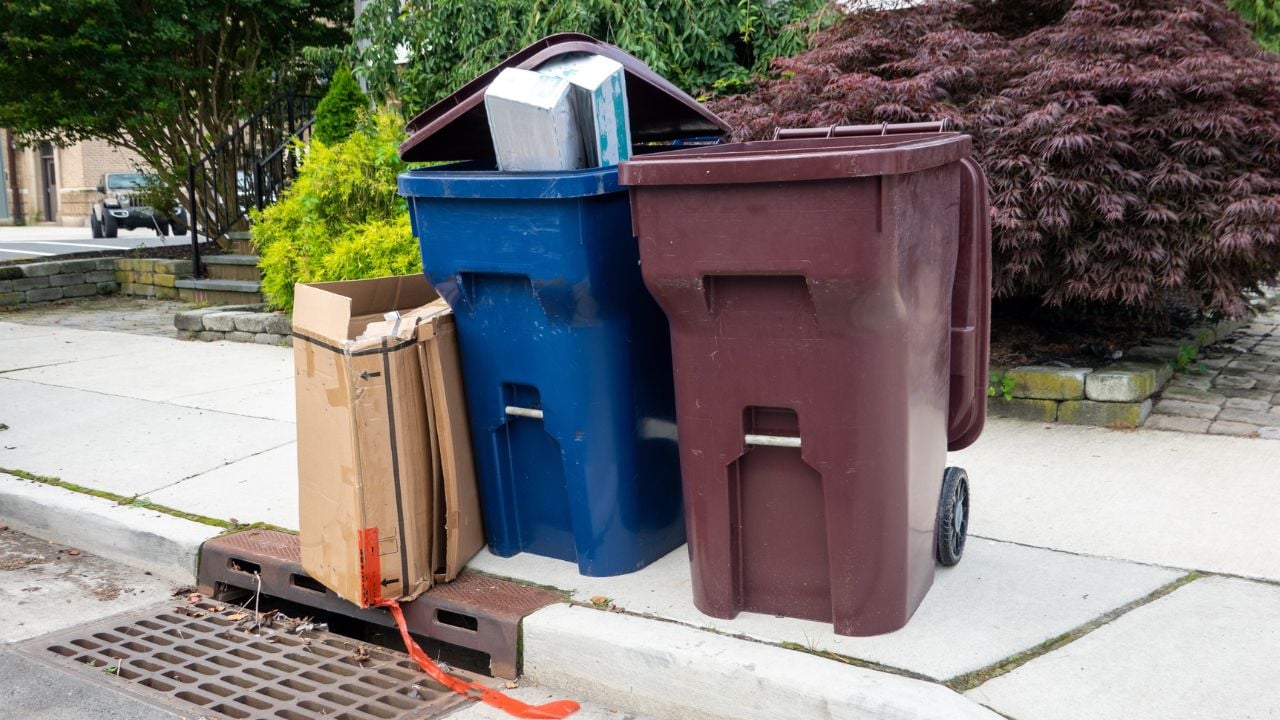
8 Things Pennsylvanians Can’t Legally Leave at the Curb

Setting the wrong item out on trash day can violate a Pennsylvania township’s waste code without you ever realizing it.
You could even have to pay fines up to $1,000.
These are the things Pennsylvanians can’t legally leave at the curb.
Note: This is general information, not legal advice. Disposal rules vary by municipality and are subject to change, so confirm current requirements with your municipality’s public works department or the Pennsylvania Department of Environmental Protection.
1. Whole Tires
Pennsylvania has banned whole tires from landfills since 1996, under the state’s Waste Tire Recycling Act.
That law binds haulers and landfill operators, not the resident setting one out.
Pine Township’s large-item tag rules close that gap for anyone in Allegheny County outside Pittsburgh.
The township sells three separate tags for anything too big for the regular cart: One for bulky furniture and large items, one for small items, one for a bagged cleanout.
All three exclude tires.
There’s no tag a resident can buy, and no lawful way to set one out with the regular hauler.
Philadelphia’s residential rules send a tire to a sanitation convenience center or the city’s annual Tire Round-Up Program instead of the regular truck.
The only legal curb pickup now runs through the city’s Bulk Collection program.
That takes an appointment scheduled ahead of time, not a tire set out on an ordinary trash day.
Stockpiled tires trap rainwater and breed mosquitoes, one of the reasons lawmakers targeted them in the first place.
2. Mixed-In Recyclables
Pennsylvania forces any municipality of 10,000 residents or more to run a mandatory curbside recycling program.
A smaller municipality, with between 5,000 and 10,000 residents, joins the mandate too once its population density passes 300 people per square mile.
The requirement comes from the state’s 1988 Municipal Waste Planning, Recycling and Waste Reduction Act.
That covers a lot of the state, not just the big cities.
Pine Township, in Allegheny County outside Pittsburgh, spells out exactly what that means at the curb.
Its solid waste ordinance reads: “It shall be unlawful to dispose of recyclable materials with solid waste.”
A glass jar or a plastic bottle tossed into the regular trash bag breaks that rule, whether anyone notices or not.
There’s no gray area.
That’s a violation on the books.
3. Bagged Leaves and Yard Waste
Pine Township’s ordinance won’t let a resident leave yard waste mixed with solid waste unless they compost it at home.
It also bars regular trash bags, plastic bags, and cardboard boxes from holding it.
A resident who rakes leaves into a kitchen garbage bag and leaves it at the curb breaks that rule, even if the hauler never mentions it.
Bundled branches follow their limits.
The limit is four feet long, two feet around, and forty pounds at most.
The township allows no exceptions.
4. Fireworks, Ammunition, and Oxygen Tanks
Pine Township’s solid waste ordinance says a resident can’t legally leave fireworks, ammunition, or an oxygen tank in the regular trash cart.
Flammable liquids and explosives make the same short list.
None of it gets a tag or a spot in the cart.
Philadelphia reaches the same place from a different direction.
The city’s hazardous waste events take paint, batteries, and dozens of other chemicals.
Those events turn ordnance and explosive materials away too.
Residents with old fireworks or ammunition have to call their local police district and arrange the pickup directly.
No trash day covers it.
5. Car Batteries
Pennsylvania’s landfill regulations bar facility operators from accepting lead-acid batteries for disposal.
A hauler who dumps a load with a car battery mixed in breaks that rule at the landfill gate.
Pine Township’s ordinance puts the responsibility on the resident earlier, naming lead-acid batteries directly among the items barred from a trash cart.
There’s no curb for it.
Many auto-parts stores and retailers that sell replacement batteries take the old battery back for free.
Skip that stop, and the battery has nowhere legal left to go but back inside the garage.
6. Paint, Pesticides, and Pool Chemicals
Pine Township’s solid waste ordinance names paint, pesticides, and pool chemicals among an entire shelf of products a resident can’t drop into the regular cart.
Solvents, weed killers, and propane tanks all made the list too.
Auto fluids and photography chemicals did too.
That’s the whole list.
Break that rule, and the township doesn’t start with a fine right away.
A first offense gets a certified letter and 30 days to fix it.
Ignore that, and a district magistrate can levy a fine of $100 to $1,000, with up to 30 days in jail possible on top of it.
Philadelphia handles the same category differently but lands on the same answer.
Household hazardous waste goes to a disposal site or a collection event, never the curb.
How Pine Township’s Curbside Fine Adds Up
Pine Township doesn’t run a separate fine for tires, batteries, fireworks, and household chemicals.
The same misdemeanor charge and $100-to-$1,000 fine in its solid waste ordinance covers every banned item on this list, not only the chemicals on a basement shelf.
It only kicks in after a 30-day written warning goes ignored.
7. Loose Needles and Broken Glass
Pine Township’s ordinance makes it unlawful to leave a loose syringe or a piece of broken glass at the curb unprotected.
Both have to be wrapped and sealed inside a hard, puncture-proof container first.
Philadelphia runs a nearly identical rule under its sanitation code, requiring needles and syringes to be sealed so they can’t puncture whatever holds them.
A hauler grabbing a bag by hand is the whole reason the rule exists.
That’s the risk.
Skip the container, and the resident, not the hauler, carries the legal exposure.
Psst! How much do you know about Pennsylvania’s quirky history? Take our quiz and see how many you can get right.
Quiz
Pennsylvania Trivia IQ
Answer these questions on Pennsylvania firsts and quirky history. We bet you can’t get them all right. Prove us wrong?
What shape are the streetlights that line Chocolate Avenue in Hershey, Pennsylvania?
8. Untagged Appliances
Pine Township requires a purchased appliance tag before a resident can leave a refrigerator, freezer, washer, dryer, air conditioner, stove, or water heater at the curb.
Skip the tag, and the item just sits at the curb with nobody legally allowed to haul it away.
Philadelphia takes a different route to the same wall.
Bulk appliances aren't accepted through ordinary curbside collection there at all.
There's no shortcut.
Residents need a private hauler, an appointment through the city's Bulk Collection program, or a trip to a convenience center with two or fewer items in tow.
Either way, an appliance sitting at the curb without the right paperwork just waits there.
The tag or the appointment is the step nobody gets to skip.
6 Pennsylvania Vehicle Inspection Failures Drivers Never See Coming
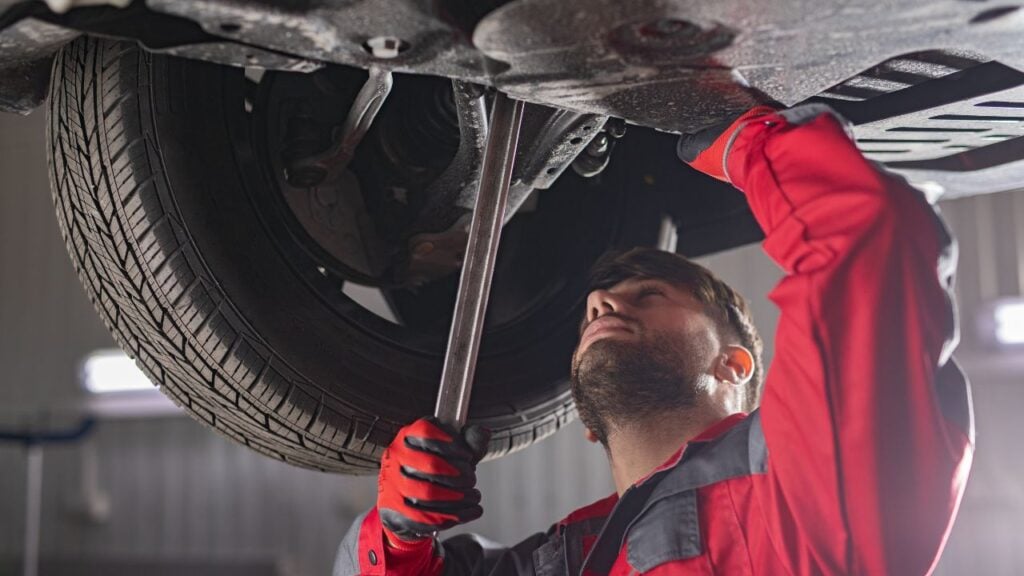
A small crack near the edge of a windshield can sail through a Pennsylvania inspection without a second look.
Move that same crack a few inches toward the steering wheel, and a PennDOT inspector sees a completely different problem.
6 Pennsylvania Vehicle Inspection Failures Drivers Never See Coming
9 Pennsylvania Festival Foods That Confuse Everyone Who Didn't Grow Up There
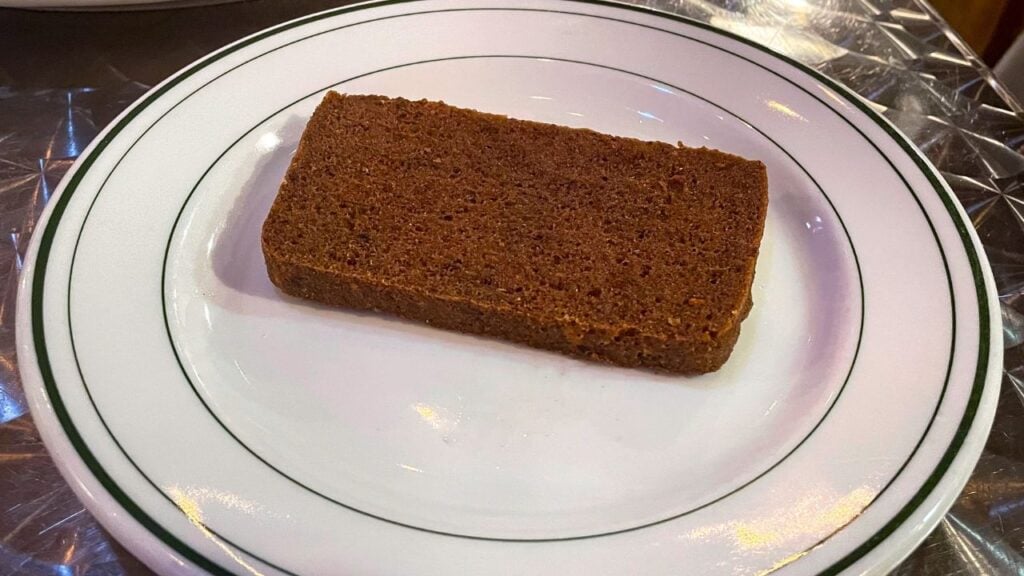
One Berks County fire company has sold the same square, hole-less doughnut every winter for 58 years running.
Fire companies, bakeries, and churches across Pennsylvania Dutch country fry the same treat to use up a year's worth of lard before Lent starts.
9 Pennsylvania Festival Foods That Confuse Everyone Who Didn't Grow Up There
