

6 Things That Change on a Georgia Property Tax Bill the Year a Homeowner Turns 62

Georgia’s age-62 property tax breaks go by how old you are on Jan. 1, not your birthday.
Turn 62 in February, and you could wait almost a year for the bill to change.
Here’s what changes on a Georgia property tax bill the year a homeowner turns 62.
Note: This is general information, not legal or tax advice. Assessment rules and exemption amounts are subject to change, so confirm the current details with your county tax commissioner or tax assessor.
1. School Tax Exemption
The school tax exemption takes up to $10,000 off your home’s assessed value once you turn 62.
Assessed value is the figure your county sets on your home for tax purposes.
On a home assessed at $150,000, your school tax bill is based on $140,000 instead.
That includes school bond taxes, the part of your bill that repays money the school district borrowed.
The exemption also caps your net income and your spouse’s together at $10,000 for the year before you file.
You prove your age and income with an affidavit, a sworn written statement.
O.C.G.A. 48-5-52 has you file it with your county tax office or, in a city school district, with the city.
Once the exemption is approved, you don’t have to apply again, but you must tell your tax office if you stop qualifying.
The Georgia Department of Revenue can compare your affidavit with its tax records and report any mismatch to your county or city.
How Georgia’s School Tax Exemption Counts Benefits
Georgia’s school tax exemption leaves retirement, survivor and disability benefits out of your income cap, up to a limit.
The limit is the most Social Security can pay you and your spouse together.
If that maximum were $90,000 and your benefits were $95,000, only the extra $5,000 would count toward the $10,000 cap.
2. Floating Homestead Exemption
The floating homestead exemption, a break on the home you live in, keeps a rise in your home’s assessed value from raising your county taxes.
Under O.C.G.A. 48-5-47.1, you qualify if you’re 62 on or before January 1 of the year you apply.
Your household income, counting your spouse and anyone else who lives with you, can’t top $30,000.
Your base is your home’s assessed value the year before the exemption starts, say $100,000.
The base stays put.
If the assessed value later rises to $112,000, the exemption covers the extra $12,000.
Your county taxes are then based on $100,000, before any other exemption you hold.
A higher county tax rate still raises your bill, though.
School taxes, city taxes and bond taxes are left out.
Income means your federal adjusted gross income (AGI), the line on your federal tax return that shows it.
A $28,000 total income with $2,000 in adjustments, such as individual retirement account contributions, gives an AGI of $26,000.
The exemption applies to your primary residence and up to five acres around it.
3. Deferral With a $15,000 Income Cap
A deferral lets you hold back all or part of your property tax bill once you’re 62 or older.
You qualify only if your household’s gross income last year, all income from everyone living in your home, was $15,000 or less.
The deferral covers only the taxes on the first $50,000 of your home’s assessed value, and taxes that repay bonds can’t be deferred.
The deferred part stays off what you owe now, but it becomes a lien, a legal claim against your home, under O.C.G.A. 48-5-74.
You still owe it.
Interest runs on the deferred tax from the date it was due, at three-fourths of the rate Georgia charges on past-due property taxes.
Your tax office must send you the total of your deferred taxes and interest each year when the bills go out.
If you sell the home or let its insurance lapse, O.C.G.A. 48-5-78 makes the full deferred total due that day.
You apply every year by April 1, and you must already qualify for a homestead exemption, a property tax break on the home you live in.
Georgia Legal Aid says the deferred taxes, interest and other liens on your home can’t add up to more than 85% of its fair market value.
4. Deferral Tied to 4% of Income
If your property tax bill is $3,000 and your household’s gross income last year was $60,000, you could defer $600.
That’s because 4% of $60,000 is $2,400, and everything above it can wait.
O.C.G.A. 48-5-72.1 offers this deferral to homeowners 62 and older as an alternative to the $15,000 deferral.
You pick one.
The 4% deferral has no income cap and no assessed-value limit.
Fulton, Gwinnett, DeKalb and Cobb counties each topped the law’s 550,000 mark in the 2020 census.
The same lien and interest apply to the deferred part.
5. Cobb County’s School Exemption
Cobb County’s school exemption starts at 62 and covers all taxes in the school general and school bond categories on your property tax bill.
School general taxes pay for the district’s regular operations, while school bond taxes repay money it borrowed.
The statewide school exemption stops at $10,000 of your home’s assessed value and $10,000 of income.
Cobb’s page lists neither limit for its exemption.
You apply with proof of your age.
Your deadline is the appeal date listed on your Notice of Assessment.
6. DeKalb County’s Two Exemptions
In DeKalb County, you may be eligible for either of two exemptions on your property tax bill at 62, according to the tax commissioner.
The first, coded H3, caps your household’s Georgia net income at $10,000.
H3 exempts you from all school taxes and keeps a $10,000 exemption on county taxes, except bond taxes.
The second, coded H7, raises the income limit to $40,000 of gross income.
Net income is a Georgia Department of Revenue formula, while gross income is the broader total.
H7 reduces your home’s taxable value by $22,500 for school taxes and by $10,000 for county taxes, except bond taxes.
On a home with a $100,000 taxable value, H3 exempts all your school taxes, while H7 taxes you on the remaining $77,500.
H3 pairs the lower income limit with the bigger school break, and H7 does the reverse.
DeKalb’s seniors page asks you to bring last year’s federal and state tax returns, any Social Security forms such as the annual 1099, and proof of your age.
No exemptions are retroactive.
Late applications can’t reach back.
January 1 Cutoff
The age-62 exemptions on your property tax bill go by how old you are on January 1, not on your birthday.
If you turn 62 on January 1, you can apply for that year’s bill.
If you turn 62 on January 2, you were still 61 on January 1, so your first application comes a year later.
A neighbor born one day earlier gets the exemption a full year before you do.
The deferral laws, O.C.G.A. 48-5-72 and 48-5-72.1, set no January 1 age test, only an age of 62 or older and an April 1 filing deadline, along with the income rules covered above.
Psst! How much do you know about your property tax bill? Take our quiz and see if you can ace it.
Quiz
Property Tax IQ
Answer these questions on assessments, mills and appeals. We bet you can’t get them all right. Prove us wrong?
By Georgia law, a home’s assessed value is set at what share of its fair market value?
Breaks That Start at 65
Several age-based property tax breaks start at 65, so your 62nd birthday doesn't open them.
The Georgia Department of Revenue lists a $4,000 exemption from all county property taxes at 65.
Your income and your spouse's can't top $10,000 for the prior year.
In the city of Atlanta, Fulton County's assessor lists a separate exemption at 65 or if you're disabled.
The exemption removes $25,000 of your home's value from Atlanta school and Atlanta school bond taxes if your Georgia taxable income is $25,000 or less.
7 Times a Georgia Store Doesn't Have to Honor the Price on the Shelf

A shelf tag feels like a promise.
So what happens when the register disagrees?
7 Times a Georgia Store Doesn't Have to Honor the Price on the Shelf
8 Bathroom Details Aging Georgians Regret Not Changing Sooner
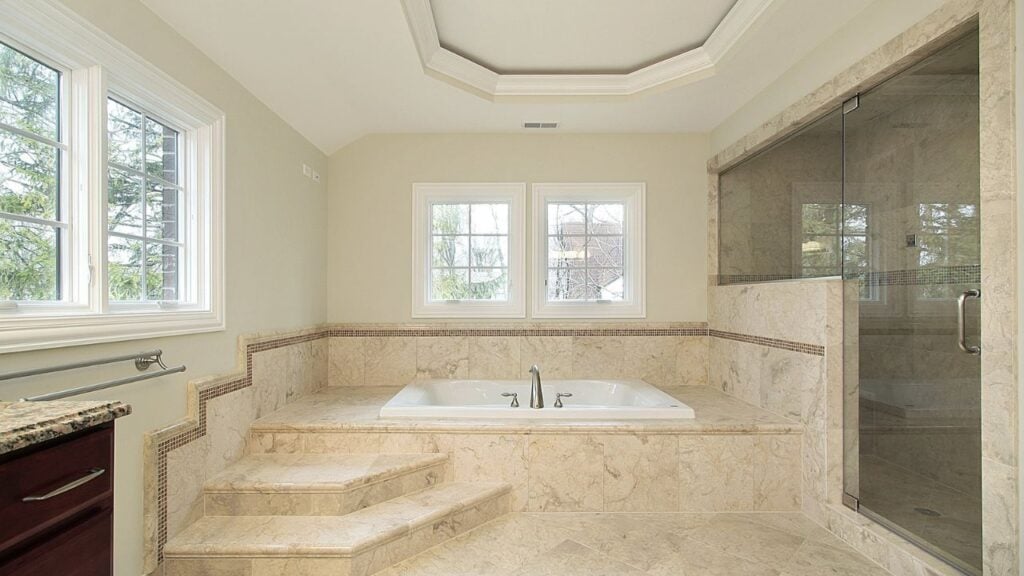
Many aging Georgians wish they had changed a few bathroom details sooner.
You may spot a few in your bathroom.
8 Bathroom Details Aging Georgians Regret Not Changing Sooner
