
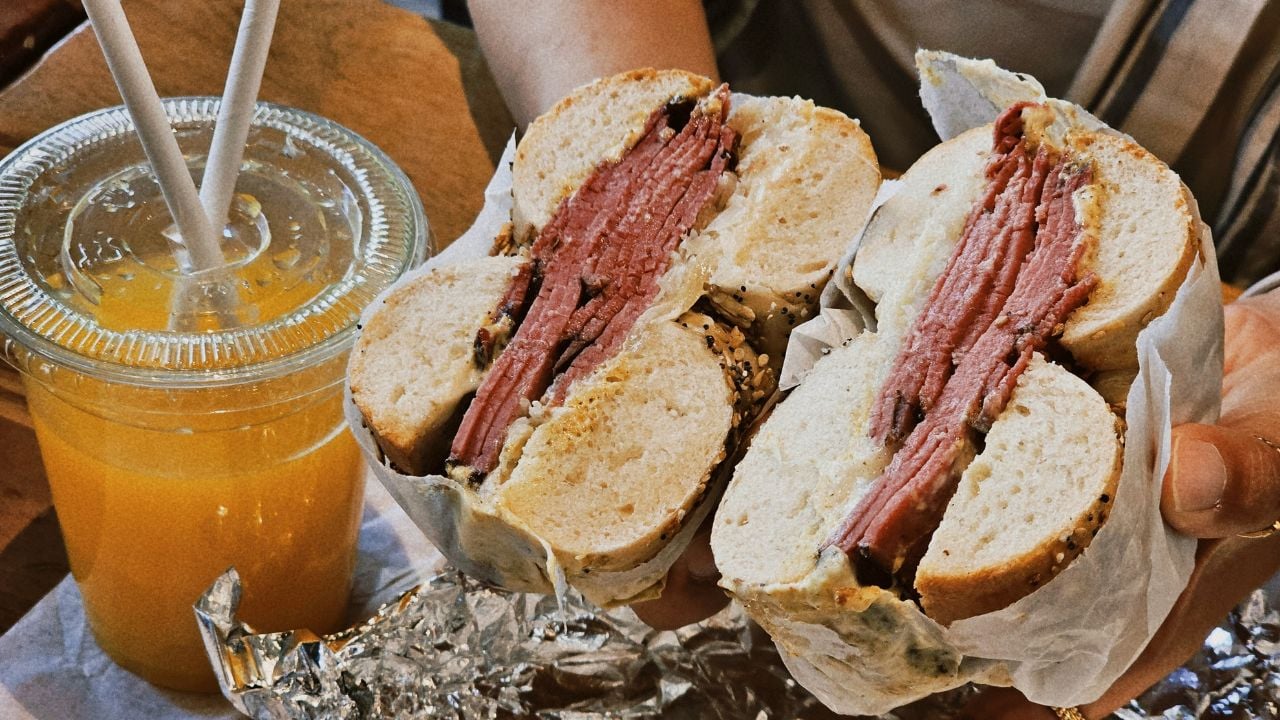
6 Reasons New York City Bagels Taste Different, and the One Everybody Gets Wrong

Almost everyone has a theory about why a New York bagel tastes the way it does.
But what you believe and what are facts don’t always align.
Here’s what goes into a New York City bagel, including the thing almost everyone gets wrong.
1. High-Gluten Flour
A New York-style bagel starts with high-gluten flour, which Britannica says gives the bagel its spongy, chewy texture.
King Arthur Baking says New York-style bagels are usually made with high-gluten flour at or above 14% protein.
Bread flour runs closer to 12% protein.
It bakes a more tender crumb.
Tender isn’t the goal.
That extra protein builds the chew you notice in a bagel.
Your first bite is where the flour shows up.
2. Barley Malt
Malt often shows up twice in a New York-style bagel, once in the dough and once in the boiling water.
Patch, relaying an Eater video, reports that Utopia Bagels in Queens mixes malt into its dough.
Traditional bagels boil in water with barley malt before they bake.
Malt also adds sheen to a bagel.
America’s Test Kitchen credits malt syrup with a complex, slightly malty flavor.
The note is slight.
If you’re eating a plain bagel, you may taste it.
3. Stiff Dough
New York-style bagel dough runs low on water.
The low water level matters, and America’s Test Kitchen’s recipe pairs high-protein flour with a minimum amount of water to get the right amount of chew.
King Arthur Baking says bagel dough is usually stiff and dry, with 55 to 65% hydration and a tight crumb.
If you tear a bagel open, you’ll see that tight crumb.
Less water means more chew.
4. Overnight Chill
Bagel dough gets a long chill at Utopia Bagels in Queens, where Patch says the shaped bagels rest in the fridge overnight.
Bakers call that chill retarding.
NPR says it slows the yeast and gives microbes time to build flavor compounds.
The flavor takes time.
If you’re baking at home, America’s Test Kitchen’s New York bagel recipe chills the shaped dough for 16 to 24 hours before baking.
You can ask a shop how long its dough rested.
5. Boiling Before Baking
A traditional bagel gets a short boil before it ever reaches the oven, Britannica says.
Utopia Bagels in Queens kettle-boils its bagels.
The boil changes the dough’s starch and locks water inside, which gives you a shiny, crispy crust.
Contemporary bakers often skip the boil and use steam-injected ovens instead, NPR reports.
Steam only gelatinizes the surface, so those bagels come out puffier.
That’s a different bagel.
If yours is puffy and soft, steam may be the reason.
6. Hand Rolling
A traditional bagel is shaped by hand into a ring, Britannica says.
Utopia Bagels in Queens hand-rolls its bagels.
The shop’s co-owner told Eater that hand rollers are a dying breed and no school teaches the skill.
The skill is rare.
America’s Test Kitchen says its recipe uses gluten-strengthening shaping techniques to increase the chew.
King Arthur Baking says a good amount of a bagel’s chew should come from the tension a baker builds while shaping.
You feel that tension in the chew when you tear into a bagel.
Water Myth
Many people will tell you the tap water explains the taste of New York City bagels.
Water isn’t the main reason.
NPR reports that the water’s effect on bagel texture is pretty minor, and PBS NewsHour says the same.
Harder water toughens gluten, while very soft water can leave it goopy.
If you’re curious about New York City’s water, the city’s Department of Environmental Protection (DEP) says water from the Catskill and Delaware systems is soft or slightly hard.
Smithsonian, reporting on an American Chemical Society video, says many New York City bagel shops boil and chill their dough while some other regions don’t.
So the tap gets credit that belongs to the boil, the chill and the flour.
What New York City’s Water Measures
New York City’s DEP measures water hardness, which means dissolved minerals like calcium and magnesium, in grains per gallon.
It puts the citywide average at about 1.8 grains per gallon.
If you’re curious how your tap compares, that 1.8 average is the number to measure it against.
Blended supply areas can reach 7 grains per gallon, which counts as moderately hard.
Water from the Croton system is moderately hard too.
Copying the Water
Some bagel companies now build the water story into their pitch, Fox News reported in January 2026.
Brooklyn Water Bagel filters its water in Florida and adds minerals to copy New York City’s.
H&H Bagels uses New York City water in its bagels.
The company says the process matters too.
If you’ve seen a bagel shop advertise New York City water, you’ve met this pitch.
Bagel Union
New York City bagels once followed a recipe written by a union.
The Jewish Telegraphic Agency (JTA) reports that 300 bagel craftsmen joined together to form Local 338.
The union’s rules required each bagel to weigh two to three ounces and to use high-gluten flour, malt syrup, salt, water, and yeast.
The recipe was strict.
If you picture a bagel from that era, it was about half the size of the bagel you’re used to today.
Local 338 closed its doors in the early 1970s.
Psst! How much do you know about bagels? Take our quiz and see if you can ace it.
Quiz
Bagel Trivia
Answer these questions on bagel history, baking, and Lower East Side lore. We bet you can’t get them all right. Prove us wrong?
Local 338, the bagel bakers’ union, required new members to roll how many bagels per hour?
Bagel Machine
New York City bagels changed in the 1960s, when the Thompson Bagel Machine arrived.
If you've pictured bagels rolled by hand, JTA reports the machine could make 300 dozen bagels in the time it took two men to make 125 dozen.
Hand rolling couldn't keep up.
Britannica says modern production uses machines and may substitute steaming for boiling.
So the bagel you buy may skip both hand rolling and the boil.
8 Things New Yorkers Refuse to Call by Their Official Names
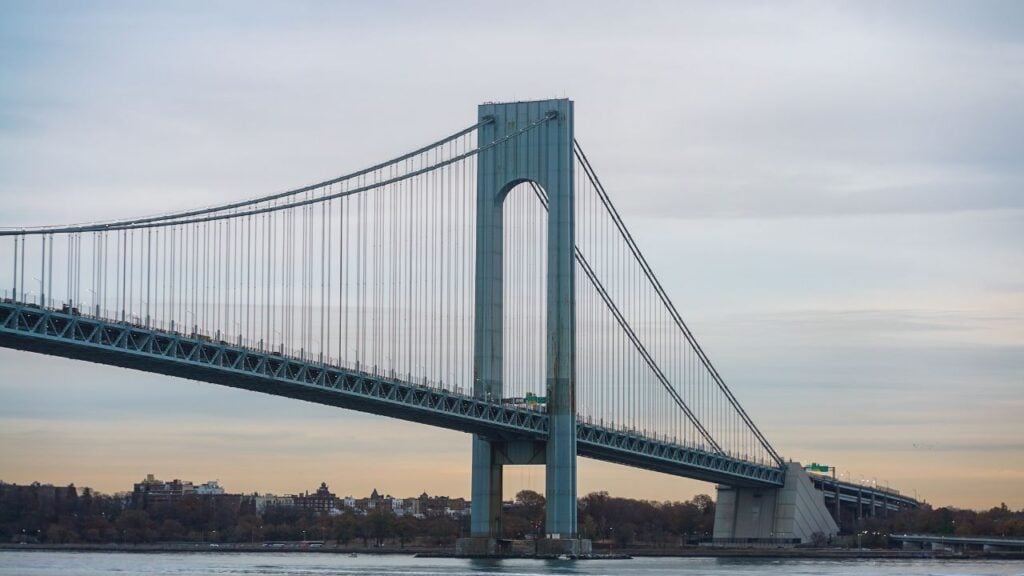
You probably know a New Yorker who still uses the old name for a corner.
The signs say one thing, and the neighbors say another.
8 Things New Yorkers Refuse to Call by Their Official Names
4 New York Apple Varieties You Won't Find at a Grocery Store Outside the State
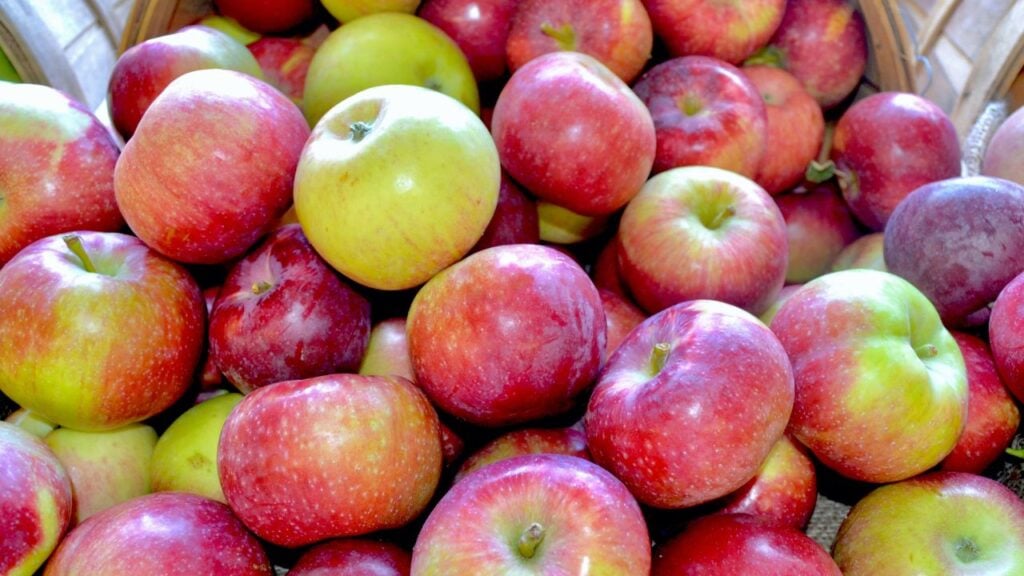
Try asking a supermarket produce manager in Ohio for a Jonamac.
You may get a blank stare.
4 New York Apple Varieties You Won't Find at a Grocery Store Outside the State
