
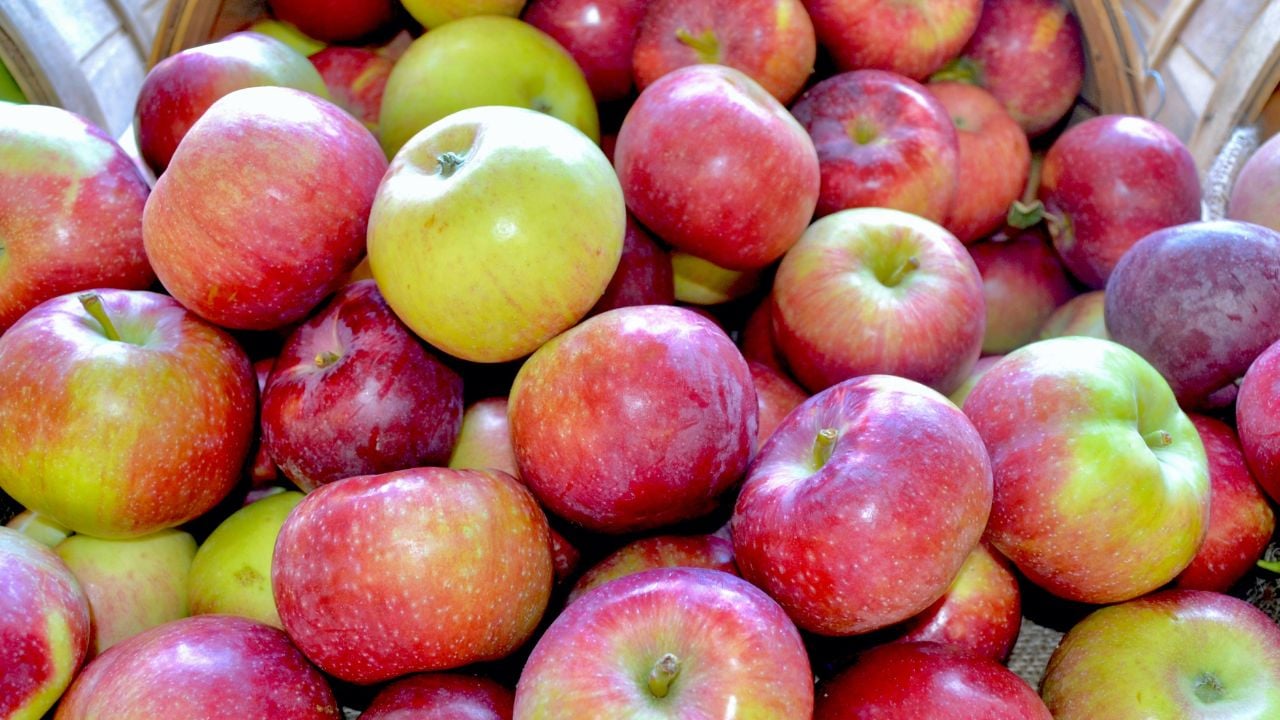
4 New York Apple Varieties You Won’t Find at a Grocery Store Outside the State

Try asking a supermarket produce manager in Ohio for a Jonamac.
Many won’t know what you’re talking about.
These are the apple varieties you won’t find at a grocery store outside of New York State.
1. 20 Ounce
The 20 Ounce apple has been growing in New York’s Hudson Valley since around 1844, first known there as Cayuga Red Streak.
New York’s own growers still list it today, mostly for one reason.
Pie bakers.
Its huge size and tart, pale-yellow flesh work better rolled into a crust than eaten out of hand, and the harvest window runs only from September through November.
A chain grocery buyer wants small, sweet apples that hold up in a bin for months.
A 20 Ounce apple checks none of those boxes.
Hudson Valley growers first planted the tree more than 180 years ago.
Small orchards and farm stands are still the only place to find one, never a grocery shelf outside New York.
2. Macoun
Macoun gives New York orchards a narrow window to sell it fresh, about six weeks from October into November.
In cold storage, it holds for only one more month before the flavor breaks down.
Then it’s gone for months.
Cornell’s Geneva experiment station bred Macoun in 1932, a cross involving McIntosh named for a Canadian fruit breeder.
That adds up to about ten weeks total, six on the tree and roughly a month after in storage, before a Macoun disappears from shelves entirely.
None of those ten weeks put it on a truck leaving New York.
Psst! How much do you know about America’s apple history? Take our quiz and see if you can ace it.
Quiz
American Apple IQ
Answer these questions on America’s apple history. We bet you can’t get them all right. Prove us wrong?
New York City’s “Big Apple” nickname didn’t start with fruit. Where did it come from?
3. Jonamac
Jonamac was bred at that same Geneva station in 1944, a cross between a Jonathan and a McIntosh, though Cornell didn't formally introduce it until 1972 after years of testing.
It ripens early, one of the first fresh options a New York orchard offers each September.
Cold storage buys it only about two months, nowhere near the half-year-plus some newer apples get.
No grower cooperative markets Jonamac under a trademarked name the way Crunch Time does for RubyFrost.
Nobody's pushing it onto a national shelf.
Nobody has to.
New York orchards mostly sell Jonamac locally, at their own farm stands and farmers markets, rather than trucking a short-lived apple to a distribution center three states away.
4. Pink Luster
Pink Luster is a New York apple that Cornell released in 2020, a cross of Honeycrisp and Gala that took the university's breeders 23 years to finish.
Cornell built Pink Luster for the orchard gate, not the grocery aisle.
Its bright pink-red skin and mid-September ripening were designed with farm stands and U-pick visits in mind, the kind of trip where the apple sells itself off the tree.
That's the whole plan.
New York orchards that grow Pink Luster mostly sell it directly to visitors instead of trucking it to a distribution warehouse, so it doesn't turn up on a grocery shelf outside New York.
New York's Apple Harvest by the Numbers
New York's apple industry brought in about 30.5 million bushels last season, enough to rank second only to Washington state.
New York apple country runs on more than 500 growers and 11 million-plus trees, enough fruit in a typical year to bake roughly 500 million pies.
New York's apple industry still ships a good share of that harvest through the country under familiar names too, apples like Empire, Gala, and Honeycrisp built for national grocery distribution from the start.
These four skipped it.
New York keeps them off that same distribution network, no matter how big the state's total harvest gets.
New York's Newest Apples, Built to Spread
New York's newest apples, Cordera and Firecracker, were never meant to stay exclusive to the state.
Cornell released both in September 2020, two of three new apples the university's breeding program introduced that year.
Cordera, named for pomologist Robert Lamb, carries built-in resistance to apple scab, a fungal disease that costs orchards money in spray treatments every season.
Firecracker handles fresh eating, baking, and hard cider all at once, its partial russet skin covering a mix of tart and sweet flavor that holds up well once it's baked.
It shows up on pour lists at the small cideries that build New York's own statewide Cider Week, held each spring.
Cornell released both apples open access, with no exclusive license, so any grower in the country can plant them.
A newly planted apple tree still needs several years before it produces a full commercial crop, so New York's own orchards, first in the ground, are the only ones with fruit to sell right now.
That head start won't last.
New York, Not the Only Locked-Up Apple State
New York isn't the only state guarding a homegrown apple with an exclusive license.
Washington and Minnesota Play the Same Game
Washington State University holds the exclusive North American license for the Cosmic Crisp apple through 2032, and no orchard outside Washington can legally plant it.
Minnesota's SweeTango runs a wider version of the same deal.
A single cooperative licenses it out to growers in Washington, Minnesota, Wisconsin, Michigan, New York, Quebec, and Nova Scotia.
Nowhere else.
SnapDragon's Slip Past New York's License
SnapDragon is a Honeycrisp-descended Cornell apple.
Cornell locked it to Crunch Time's New York growers under an exclusive license: No other state is legally allowed to plant the tree.
Growing stayed locked to New York.
Selling it didn't.
Crunch Time's own retailer list now runs to dozens of grocery chains stretching from the Northeast down to the Southeast and out to the West Coast.
A shopper in Texas or California can find SnapDragon on the shelf even though every apple in the bin grew on a New York tree.
An exclusive license only ever controlled who grows the tree.
It never controlled how far the truck could drive once the apples were picked.
New York made the connection official in 2022, naming SnapDragon the Buffalo Bills' team apple.
SnapDragon turns up on the concession menu at Bills home games, sold from the section fans call the Billevard.
Every apple in that cup still grew on a tree a grower outside New York isn't allowed to plant.
10 New York State Fair Foods and Drinks That People Can't Get Enough Of
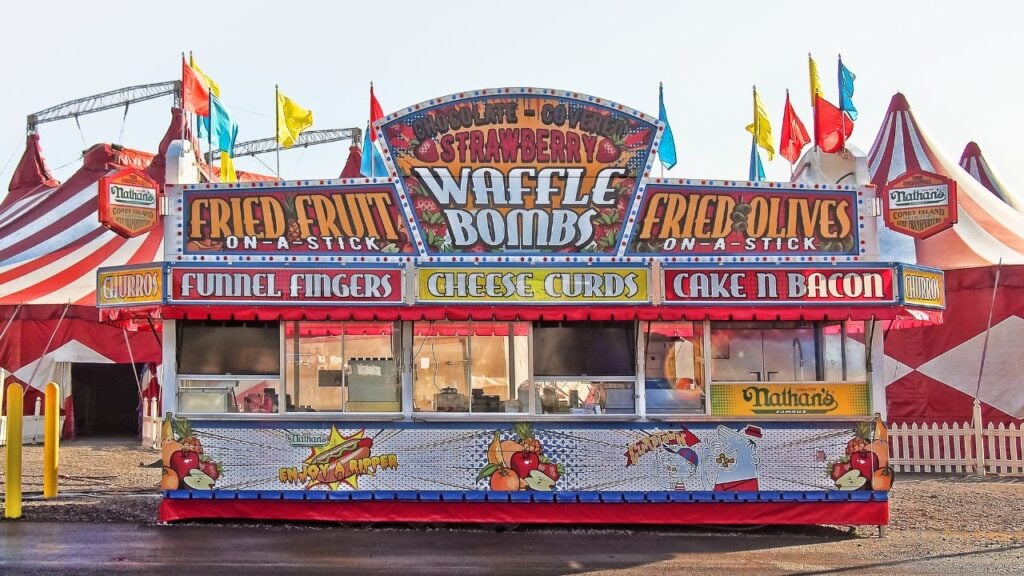
Yelp recently ranked the New York State Fair the fourth-best state fair for food in the entire country, and the lineup makes the case fast.
From a cream puff line that never seems to shrink to a fried favorite nobody skips, these are the New York State Fair foods and drinks people can't get enough of.
10 New York State Fair Foods and Drinks That People Can't Get Enough Of
8 New York Dumpster Diving Laws That Change Depending on What You Take
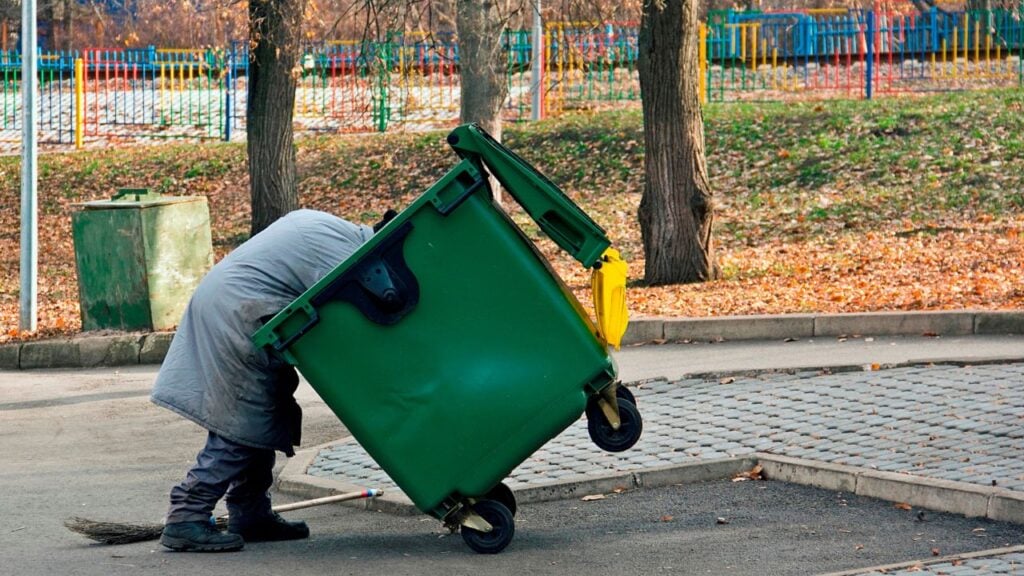
Think every item tossed in a New York dumpster answers to the same set of rules?
It doesn't, and a broken lamp, a stray envelope, and a half-full pill bottle can sit in the same pile while answering to three completely different laws.
8 New York Dumpster Diving Laws That Change Depending on What You Take
