
5 Iowa Winter Driving Rules That Can Get Iowans Ticketed

Snow caked over your license plate can get you a ticket in Iowa.
It’s one of the everyday winter habits Iowans don’t think twice about until they’re pulled over.
Here are the Iowa winter driving rules that can get Iowans ticketed.
Note: This is general information, not legal advice. Check the Iowa Department of Transportation and Iowa Code for current traffic rules, and know that fines and city ordinances are subject to change.
1. Studded Tire Dates
Studded tires are legal on Iowa roads from November 1 to April 1 of the following year.
Mount them in late October or leave them on past April 1, and you’re outside that window.
That earns a $30 fine on Iowa’s fine schedule.
Mark both dates.
The window works both ways, so you’ll want a calendar reminder for the spring swap as much as the fall one.
2. Move Over Law
Iowa’s move over law tells you to change lanes or slow down when you approach a stationary emergency vehicle with its flashing lights on.
Tow trucks with flashing lights get the same protection.
If you can’t move over safely, you slow down instead.
The scheduled fine is $135, plus any surcharge and court costs, according to the Iowa Department of Transportation (DOT).
What Iowa’s Move Over Law Adds After a Crash
Iowa’s move over law carries heavier penalties when a crash follows.
A crash that causes property damage brings a 90-day license suspension.
An injury crash adds a $500 fine and a 180-day suspension.
A fatal crash adds a $1,000 fine and takes your license for a year.
3. Headlights in Snow and Fog
Iowa’s headlight law starts at sunset, but it doesn’t end at sunrise.
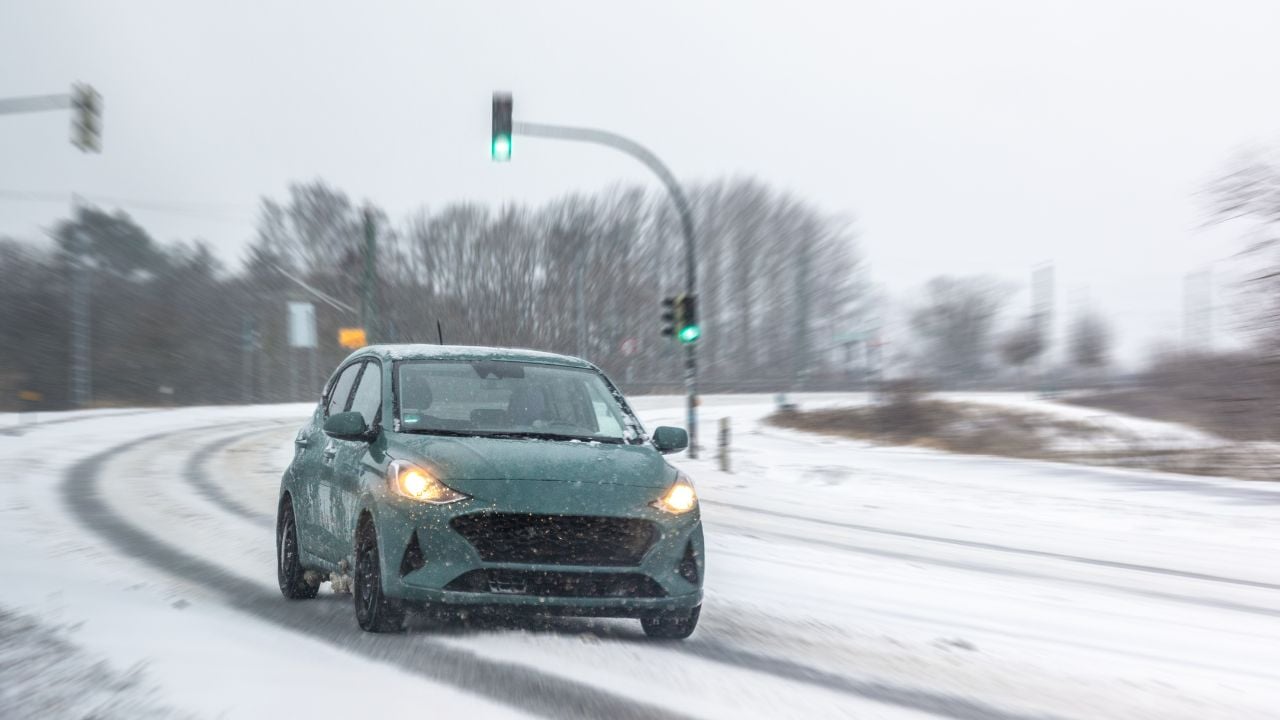
It also requires lit headlights whenever fog, snow, sleet or rain leave too little light on the highway.
That includes the middle of the afternoon.
Dusk isn’t the cutoff.
If you’re debating whether to flip them on, you probably should.
Skipping them can draw a $45 ticket.
4. Windshield Vision
Iowa’s windshield rule bans driving with a windshield, sidewings, or side or rear windows that don’t permit clear vision.
The wording is about clear vision, not about frost or snow in particular.
A windshield scraped only in a small patch, or a fogged side window, may not permit clear vision.
The Iowa State Patrol tells drivers to scrape snow and ice for full visibility.
The fine is $70.
Clear every window before you pull out.
Psst! How much do you know about winter on Iowa roads? Take our myth-or-fact challenge and see if you can get every card right.
5. Snow-Covered Plates
Snow or slush caked over your license plate can make it hard to read, and Iowa’s plate rule asks for a plate that is clearly legible.
Cars need a front plate and a rear plate, so check both ends of yours.
The rule says a plate must be kept free from foreign materials and in a condition to be clearly legible.
The fine on Iowa’s fine schedule is $30.
Brush off your plates when you brush off the hood.
Des Moines Snow Parking
Snow parking rules in Des Moines can get you ticketed even when you’re not behind the wheel.
The city bans parking on its Snow Route streets while snow is falling.
Starting three hours after the snow stops, the ban moves to residential streets.
Then come the odd and even days, when you park on the side of the street that matches the date’s number from 7 a.m. to 7 p.m. The city announces those days on Facebook.
Its snow removal page lists a $35 fine for a car left on a residential street, and the car may be towed.
You can appeal a ticket through the city’s parking ticket appeal process.
Normal parking returns 24 to 48 hours after the snow ends.
West Des Moines Snow Emergencies
West Des Moines bans parking on its public streets, alleys and city-owned lots once a snow emergency is proclaimed.
The mayor, the public works director or their designees can make that call under the city code.
The ban runs until 5 p.m. the following day unless the city extends it.
Police, code enforcement officials and public works employees can all write citations, and the city can impound your car.
If you leave your car on the street overnight after a proclamation, you could come back to a citation.
Move it early.
Plow Width
Iowa DOT snowplows clear a wide strip, and the width depends on which plows are attached.
A main plow clears roughly 11 feet of lane, and a wing plow adds an extra 8 to 9 feet.
A tow plow paired with a front plow clears 25 feet.
The Iowa DOT’s advice to drivers comes down to a slogan: “Don’t Crowd the Plow.”
That means keeping your distance.
Give them space.
Reading the 511 Map
The Iowa DOT’s 511 map starts reporting road conditions on October 15 and runs through April 15.
A purple road means Travel Not Advised.
A pink road means precipitation covers the entire road.
A red road means it’s impassable or closed, and Iowa law prohibits motorists from entering a closed roadway or moving traffic control devices.
You can check the map before you leave.
State Patrol Winter Tips
The Iowa State Patrol’s winter driving tips are recommendations, not a list of fines.
Before you leave, you can check road conditions and closures at 511ia.org.
Leave five to six seconds between you and the vehicle ahead, especially a snowplow.
Exits and overpasses get slick, so give yourself more braking time there.
Skip cruise control on snow or ice.
5 Reasons Fall Allergies Hit Iowans So Hard

Many Iowans feel fall allergies hit hard, and you don’t need a ranking to know it.
This breakdown explains why the sneezing starts before you’re back on the highway.
