
7 Bob-Lo Boat Memories Michiganders Still Talk About

Every Bob-Lo boat trip started with a blast of the big steam whistle.
If you grew up in Michigan, you might still hear it, along with other memories from the ride.
Here are the Bob-Lo boat memories Michiganders still talk about.
1. Boarding at the Foot of Woodward
The Bob-Lo boats set out from the foot of Woodward Avenue, where Hart Plaza is now, the Detroit Historical Society says.
If you rode from Detroit, you boarded the Columbia or the Ste. Claire there.
The Columbia dates to 1902, and the Ste. Claire followed in 1910.
A Metro Times column from 2003 says Detroiters anxiously awaited the Bob-Lo day trip every summer.
2. Whistle Salutes
If you boarded a Bob-Lo boat, your trip started with a blast of the big steam whistle, the Detroit Historical Society says.
Out on the river, the captains of the Columbia and the Ste. Claire exchanged whistle salutes when the two boats passed each other, the Metro Times column says.
The column calls the Ste. Claire the Columbia’s sister ship.
3. Engine Room View
After you came aboard a Bob-Lo boat, you could look down from the main deck into the engine room, the Detroit Historical Society says.
Below, powerful shafts and cams slowly warmed up.
A 1972 issue of The Detroit Marine Historian pointed to the gleaming brass and steel steam engines as a draw for passengers.
The National Park Service’s National Historic Landmark nominations for the two boats, prepared in 1991, describe a triple-expansion steam engine in each.
The boilers burned coal at first and oil later.
4. Dance Floor and Bandstand
If you danced aboard the Bob-Lo boat Ste. Claire, you found the dance floor aft of the main cabin and the bandstand forward, against the stack casing, the nomination says.
The Columbia’s ballroom, on the second deck aft, was a major departure in design.
The Ste. Claire got a hardwood floor for its dance floor and main cabin in 1925.
Drummer Joe Vitale and his orchestra entertained riders for many years, the Metro Times column says.
On evening moonlight cruises, riders heard dance music from Frank Gilbo and his group, Rhythm on the River.
5. Birth Aboard the Columbia
A 1923 Bob-Lo boat cruise included a birth aboard the Columbia, the Metro Times column says.
A volunteer for the Polish Women’s Alliance had spent the day at the dock selling tickets for the group’s annual cruise to Bob-Lo.
Despite being far along in her pregnancy, she took a trip to the island and back.
Labor began during the trip.
The Columbia’s first officer, Charles Anderson, assisted in the birth of her daughter.
Columbia became the baby’s middle name.
The girl went on to celebrate every birthday aboard the Columbia.
6. Beer Garden Deck
The Bob-Lo boat Ste. Claire had a beer garden on its third deck, above the dance floor.
To reach it, you’d have used doors on either side of the stack casing.
If you wanted food, you’d have headed to the counters aft on the main deck.
The column lists music, dancing, food, drink and souvenirs among the diversions along the way.
7. Best Ride of the Day
If you rode the Bob-Lo boat to the island, you took what many people called the best ride of the day, the Detroit Historical Society says.
A column in the Metro Times says the boat ride was as exciting as the roller coasters and the carousel for many riders.
If you sailed from Woodward, the column puts the 18 miles to the Bob-Lo dock at about 90 minutes.
The Detroit Historical Society puts the voyage at about 80 minutes.
Inside the Main Cabins
If you rode in the main cabin of either Bob-Lo boat, you sat in a mahogany room, the 1991 nominations say.
The Ste. Claire’s main cabin also had a cream-painted beamed ceiling, a large mirror on the stack casing and four curved-corner window bays.
Some original leaded glass survived there as well.
By 1991, the Columbia’s oak-paneled cabin on the third deck was gone.
Where the Boats Landed
If you rode a Bob-Lo boat, you landed on an island across from Amherstburg, Ontario, at the southern end of the Detroit River.
The Ste. Claire’s nomination calls it Bois Blanc Island and says it came to be known as Bob-Lo.
The Detroit, Belle Isle and Windsor Ferry Company established Bob-Lo as an entertainment destination in 1898.
A dance pavilion built there in 1913 was the largest in North America until 1925.
The park closed for the 1933 and 1934 seasons because of the Great Depression.
Trips Beyond the Island
If you wanted a longer day on the water, the Bob-Lo boat Columbia could take you beyond the island.
In the summer of 1939, the Columbia made an all-day sail to Port Huron’s Blue Water Bridge and back each Sunday, the Metro Times column says.
The April 1972 issue of The Detroit Marine Historian listed two special Columbia trips from Detroit to Port Huron that year.
The Sarah Ray Case
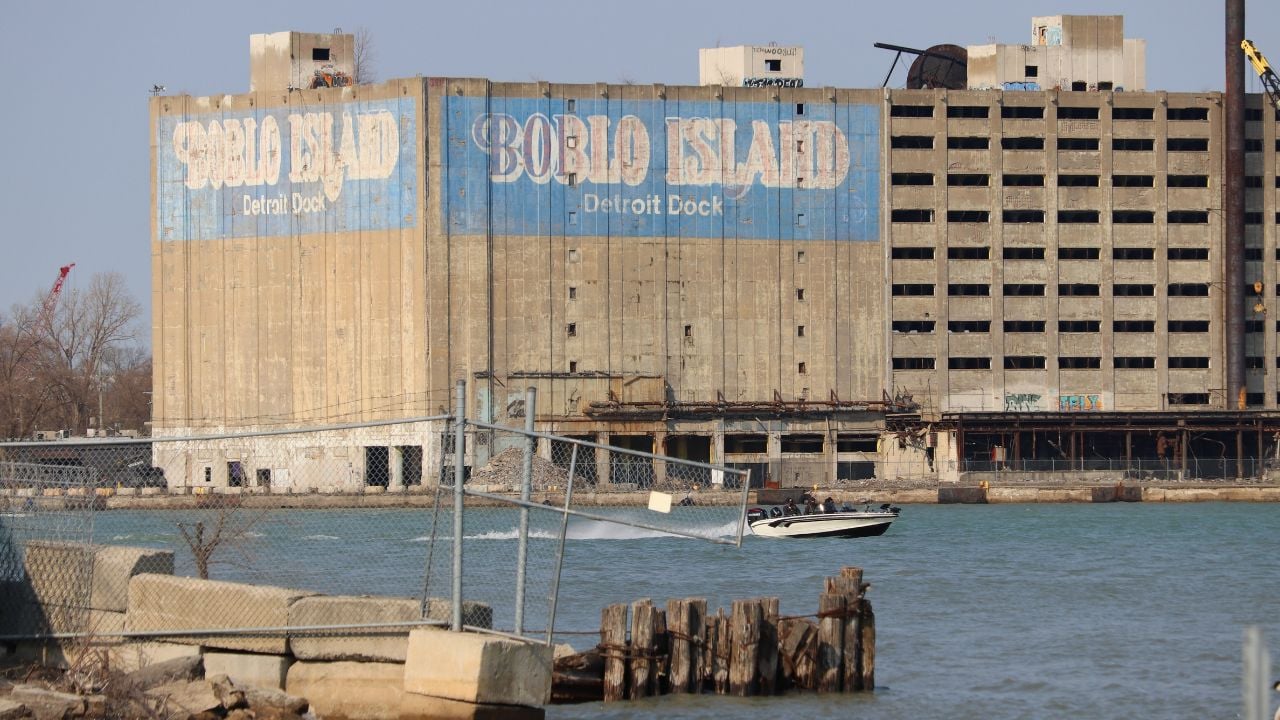
The Bob-Lo boat dock in Detroit was also where a civil rights case began.
In June 1945, Sarah Elizabeth Ray, a Black woman, arrived there with a group for an excursion to the island.
She paid her share of the round-trip fare, went through the gate and took a chair on the upper decks.
The company’s assistant general manager and a steward told her she couldn’t go because of her race.
They escorted her ashore, then offered a refund at the ticket office.
She refused the money.
Bob-Lo Excursion Co. v. Michigan
Detroit’s Recorder’s Court found the Bob-Lo boat company guilty under the Michigan civil rights act and fined it $25.
The U.S. Supreme Court affirmed the conviction on February 2, 1948.
The justices let Michigan apply its civil rights law to the company even though the island is in Ontario.
Psst! How much do you know about Detroit and Great Lakes history? Take our quiz and see if you can ace it.
Quiz
Great Lakes Pop Quiz
Answer nine questions on Detroit and Great Lakes history, from steamers to amusement parks. We bet you can’t get them all right. Prove us wrong?
In 2001, a stretch of the lower Detroit River became North America’s first what?
After the Last Run
If you were aboard the Bob-Lo boat Ste. Claire at 6 p.m. on Sept. 2, 1991, you were on its last departure from Detroit for the island.
The classic boats stopped running in 1991.
The park closed after the 1993 season.
In 2015, the Great Lakes Towing Company towed the Columbia from Toledo, Ohio, to Buffalo, New York, for a restoration planned by the S.S. Columbia Project, a nonprofit group.
Bad Roads Cost Detroit-Area Drivers Nearly $3,000 a Year, a Report Found

Ever hit a pothole on your way across town?
Detroit-area drivers may be surprised by what bad roads can add up to.
Bad Roads Cost Detroit-Area Drivers Nearly $3,000 a Year, a Report Found
7 Workplace Rights Michigan Employees Rarely Use

Think you know everything your job owes you?
Here's what's yours to claim, and how to put it to work.
