
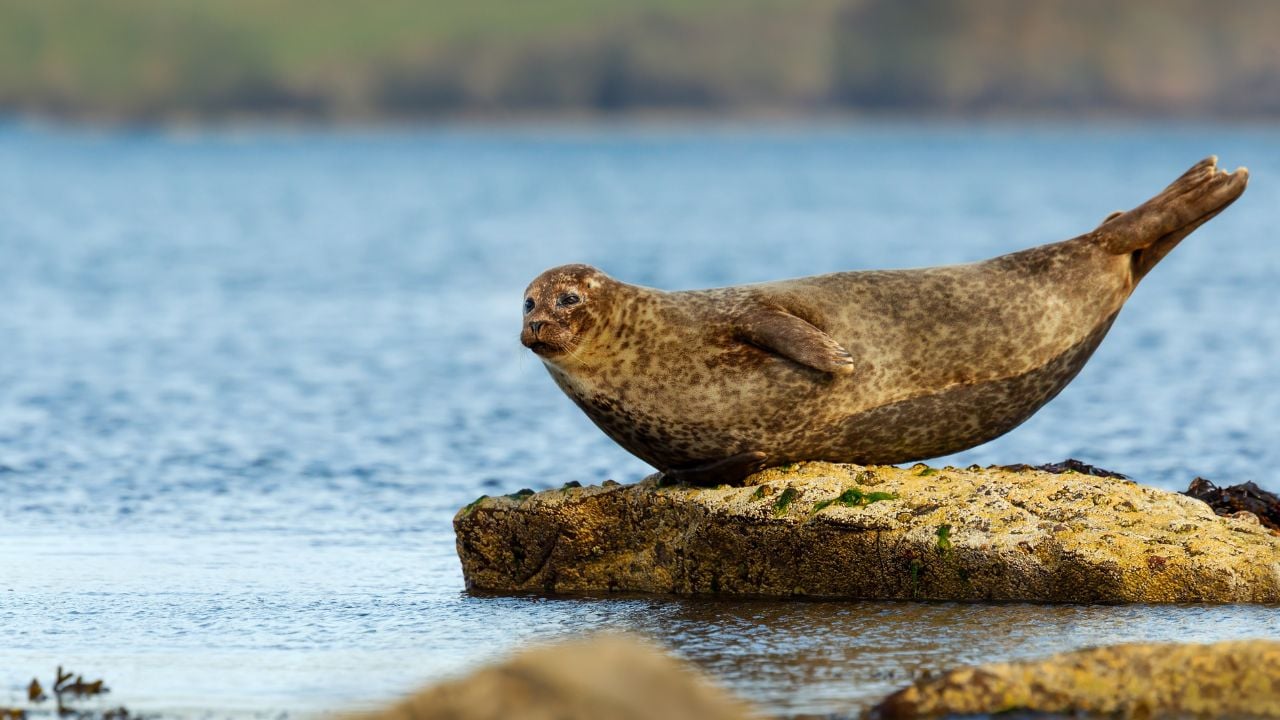
3 Rules New Jerseyans Break When They Try to Help a Seal on the Beach

If you’re an out-of-stater walking off Thanksgiving dinner on a New Jersey beach, a seal on the sand might be the last thing you expect to see.
Getting a closer look is tempting, especially if your dog spots it first.
Here are the rules New Jerseyans break trying to help the seals that haul out every winter.
Note: This is general information, not legal advice. Wildlife rules and hotline numbers are subject to change.
1. Pushing a Seal Back Into the Water
A seal lying on the sand looks stuck, so many people want to nudge it back toward the surf.
Leave it be.
Seals come ashore on purpose, and a seal that’s resting will head back to the water when it’s ready.
The Marine Mammal Stranding Center (MMSC) says it is illegal to approach or touch a seal.
A sick, tired, injured or young seal might drown if you push it into the water, as Shorebeat reported.
The federal Marine Mammal Protection Act bans harassing a seal in the wild.
The National Oceanic and Atmospheric Administration (NOAA) defines the worst kind as any act of pursuit, torment, or annoyance that has the potential to injure a marine mammal.
Shoving a seal toward the surf can fit that description.
That puts the rule in federal law, and your well-meant shove can break it.
2. Feeding a Seal
If you’re on a cold beach, feeding a seal can feel like the kind thing to do.
Don’t feed it.
It’s illegal to feed or attempt to feed any marine mammal in the wild, and seals are on that list.
Civil penalties can reach $36,498, and the agency lists up to a year in prison for criminal cases.
The ban covers an attempt to feed, so if you offer food a seal ignores, you can still break it.
Seals bite hard, and their mouths hold enough bacteria to cause a nasty infection.
3. Rescuing a Seal Yourself
A seal that looks sick makes you want to fix it right away.
Call instead.
You shouldn’t touch or try to assist a seal in any way because that’s illegal.
NOAA’s guidance is to call for help and never enter the water or attempt a rescue on your own.
The Marine Mammal Stranding Center (MMSC) in Brigantine runs a 24-hour hotline at 609-266-0538.
Call the hotline, and a trained person can check on the seal.
A sick seal may look thin or have trouble breathing, according to NOAA’s Maine seal FAQ.
Teary eyes and low energy are other signs.
A sick seal may bite you if you get too close, so you should wait at least 150 feet away.
How Far 150 Feet Is
Seals get 150 feet of room from beachgoers, and New Jersey Fish and Wildlife calls that a minimum.
The federal guidance gives the same distance as 50 yards, on land or on the water.
Use your phone’s zoom, and you can get the shot without stepping closer.
If a seal snorts or growls at you, you’re too close.
A seal may bite if it can’t get away fast enough.
If a seal moves off or changes how it’s acting, back away and never chase it.
What the Seal Distance Covers
For seals, 150 feet is viewing guidance, and NOAA Fisheries lists written legal distances only for a few whale species.
Disturbing a seal can be a problem even from farther away than the viewing distance, so watch how it reacts.
If you see someone crowding a seal, you can report it to the NOAA Fisheries Enforcement Hotline at 800-853-1964.
Dogs and Seals
The Marine Mammal Stranding Center warns people about letting their dogs interact with seals.
Its FAQ page says to keep all pets (dogs) away from the animals.
New Jersey Fish and Wildlife asks you to keep your dog far from seals to keep both safe.
NOAA’s Maine seal FAQ says pets shouldn’t be allowed to approach live or dead marine mammals, and it recommends contacting your veterinarian about the risk to your pet.
Both are agency guidelines, and keeping your dog close is the easy way to follow them.
Your dog follows its nose.
Psst! How much do you know about seals? Take our quiz and see if you can ace it.
Quiz
Seal IQ
Answer these questions on seals and the Jersey Shore. We bet you can’t get them all right. Prove us wrong?
The gray seal’s scientific name, Halichoerus grypus, translates to what?
Why Seals Come Ashore
Seals haul out onto beaches to rest, and New Jersey Fish and Wildlife calls it natural behavior.
Time ashore helps seals regulate body temperature, socialize, reproduce and molt.
Gray, harbor and harp seals are the three most commonly seen along the coast.
If you see a seal shivering, that's just part of its fur drying mechanism.
If you see a seal on its side rocking back and forth, it is getting comfortable.
A seal holding its flippers in the air may be stretching to warm up.
Not every seal needs rescuing.
Where Seals Gather
Seals crowd into Great Bay, in Ocean and Atlantic counties, which a 2023 report called the largest haul-out site for seals in New Jersey.
That report, on a state-funded tagging project, put the crowd at as many as 360 seals.
In 2023, about 100 seals lived at Gateway National Recreation Area at Sandy Hook, and you could see about 30 at Barnegat Light on Long Beach Island.
Harbor seals arrive in October and November, and you can usually find them through March or April.
The Conserve Wildlife Foundation of New Jersey says the number of seals appearing on the coast each winter has been increasing.
Gray seals sometimes follow the fish south, 300 miles or more, to reach the Jersey Shore.
6 Pinelands Rules That Make New Jersey Land Worth Less Than It Looks

The New Jersey Pinelands Commission controls what a landowner can build across a large share of the state.
A parcel can look like ordinary buildable land on a county map, until a buyer checks the zoning.
6 Pinelands Rules That Make New Jersey Land Worth Less Than It Looks
5 Beach Renourishment Fees New Jersey Shoreline Owners Don't See Coming
A federal contract to renourish two Cape May County beaches comes with a bill that reaches past the state.
Property owners along the shoreline can end up covering pieces of it too, sometimes years after the trucks leave.
5 Beach Renourishment Fees New Jersey Shoreline Owners Don't See Coming
