
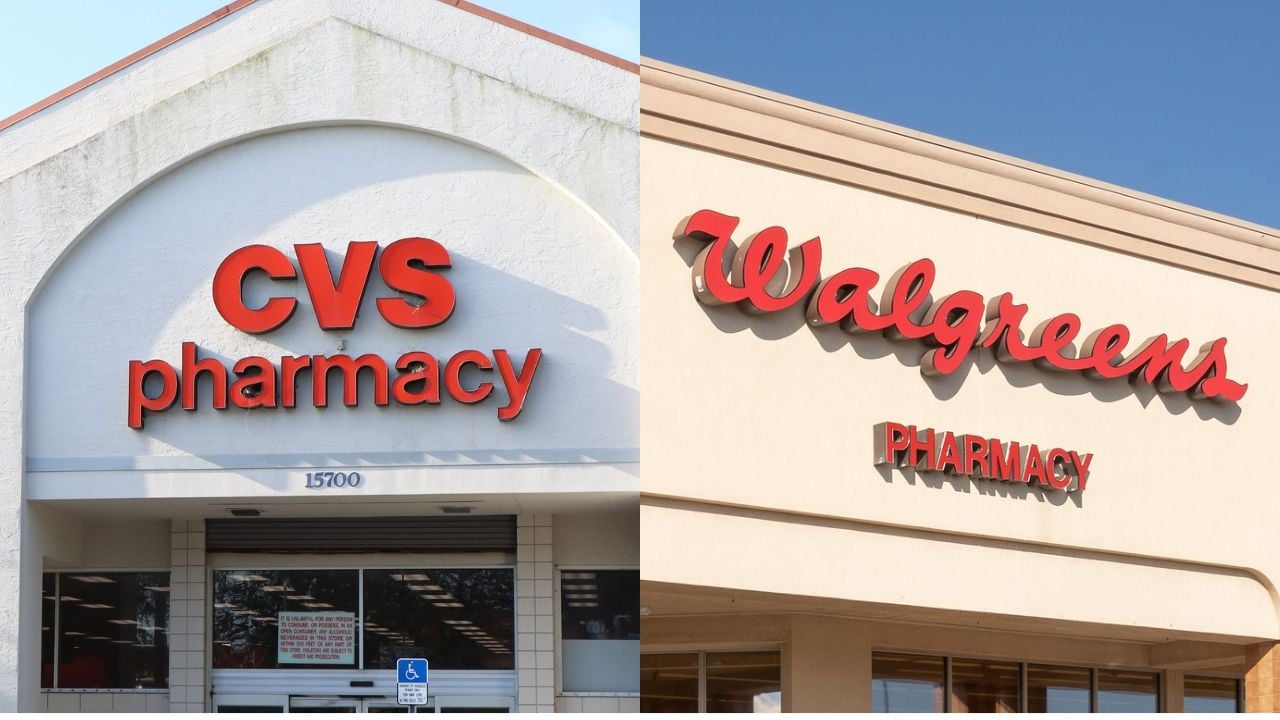
8 Big Differences Between CVS and Walgreens Every Illinoisan Should Know

Walgreens calls Illinois home, so for some shoppers, walking into a CVS is like cheering for the visiting team.
Hometown loyalty is a nice thing.
But it won’t tell you which drugstore is the better deal for you.
Here are some of the biggest differences between CVS and Walgreens that Illinoisans should know.
1. Return Windows
Walgreens gives you 30 days to return most items, and you need the original receipt or order number.
If you buy a gift on Black Friday, Nov. 27, that window closes around Dec. 27, two days after Christmas.
CVS gives you 60 days to return most new, unopened items for an exchange or a refund.
The same gift stays returnable at CVS until about Jan. 26, a full month longer.
2. Rewards Rates
CVS ExtraCare pays 2% back in ExtraBucks Rewards on qualifying purchases, double Walgreens’ base rate, and the card is free.
On a $40 purchase of qualifying items, that’s about $0.80 back at CVS and $0.40 at Walgreens.
Walgreens gives you 1% back in Walgreens Cash on eligible purchases, though Walgreens-brand products earn 5%.
If you fill that $40 cart with Walgreens-brand products, you’d earn $2 instead.
CVS’s 2% skips prescriptions, copays, alcohol, gift cards and CVS Photo purchases, among other things.
CVS sells a paid tier, ExtraCare Plus, for $5 a month or $48 a year, with 20% off non-sale CVS Health brand products.
To make that 20% cover the $48 fee, you’d need to spend about $240 a year on qualifying CVS Health brand products.
3. Pharmacy Payouts
Prescription fills earn rewards at both CVS and Walgreens, but CVS pays in credits and Walgreens pays a percentage.
At CVS, a 30-day fill earns 1 credit, a 90-day fill earns 3, and 4 credits turn into $2 in ExtraBucks.
You have to opt in before any of that counts, with rewards stopping at $50 a year for each person on a household membership.
Walgreens skips credits and pays 1% of what you spend out of pocket, so a $0 copay earns nothing.
If you pay a $20 copay every month, a year of fills earns $6 at CVS and $2.40 at Walgreens.
Walgreens won’t let you spend Walgreens Cash on prescriptions or other pharmacy items, so those rewards go toward the rest of your cart.
Both programs’ terms bar prescription rewards in Arkansas, New Jersey and New York.
Illinois isn’t on either list, though CVS says transferred prescriptions earn no credits in any state, Illinois included.
4. Retail Clinics
CVS has 805 MinuteClinic sites, while Walgreens has 100 clinic sites, according to an August 2026 industry roundup.
If you pick a drugstore partly for the clinic, CVS gives you far more sites to choose from nationwide.
CVS alone has 69% of the country’s 1,166 retail clinics, a total that stood at 1,750 in May 2023.
Those Walgreens sites are spread across 11 health-system partners.
If your Walgreens has a clinic, one of those health systems may be running it.
5. Same-Day Delivery
Walgreens charges a $5.99 fee for delivery, though orders of $35 or more qualify for free delivery.
CVS goes the membership route, giving ExtraCare Plus members free same-day delivery on qualifying orders with a $10 minimum after discounts.
That’s the same paid ExtraCare Plus tier, $5 a month or $48 a year, so the perk isn’t free.
If you aren’t a member, CVS shows your fee only after you add products to the shopping cart, with no flat amount listed up front.
If you order $20 of eligible items, you’d pay $5.99 at Walgreens, while an ExtraCare Plus member at CVS pays no delivery fee.
6. Expiration Rules
Rewards at CVS and Walgreens both expire, and the clocks don’t run the same way.
CVS says its 2% ExtraBucks “expire 90 days from the end of each calendar quarter following their date of issue.”
That ties your deadline to the calendar, not to the day you earn them.
Walgreens Cash expires 12 months after you earn it.
If six consecutive calendar months pass without you using Walgreens Cash in a transaction, Walgreens marks your membership inactive and you forfeit the balance.
That makes stashing Walgreens Cash for one big shopping trip a gamble.
7. Opened Beauty Products
If you open a lipstick and hate the shade, Walgreens’ return policy leaves cosmetics returns to the store manager’s discretion, usually as a Walgreens gift card.
Walgreens does guarantee satisfaction on Walgreens-brand products, though: If you’re not completely satisfied, you can return the unused portion for the full price.
CVS takes a beauty product back, opened or unopened, with your receipt or invoice.
CVS backs its beauty purchases with a 100% satisfaction guarantee.
Psst! How much do you know about the history of CVS and Walgreens? Take our quiz and see if you can ace it.
Quiz
Drugstore History IQ
Answer these questions on drugstore history and Illinois retail roots. We bet you can’t get them all right. Prove us wrong?
Walgreens says it invented which soda-fountain treat in 1922?
8. Public vs. Private Ownership
Walgreens stopped being a publicly traded company on Aug. 28, 2025, when Sycamore Partners, a private equity firm, finished buying the Deerfield, Illinois, drugstore chain.
CVS didn't follow.
CVS still has public shareholders, and it reported its third-quarter 2026 results on Nov. 4.
If you fill your prescriptions at Walgreens, your pharmacy now belongs to a private equity firm, not to public shareholders.
Before the sale closed, Walgreens had announced plans to close 1,200 of its roughly 8,500 U.S. stores.
The Sycamore deal for Walgreens was valued at around $10 billion.
7 Chicago Hot Dog Rules Illinoisans Enforce on Out-of-Staters
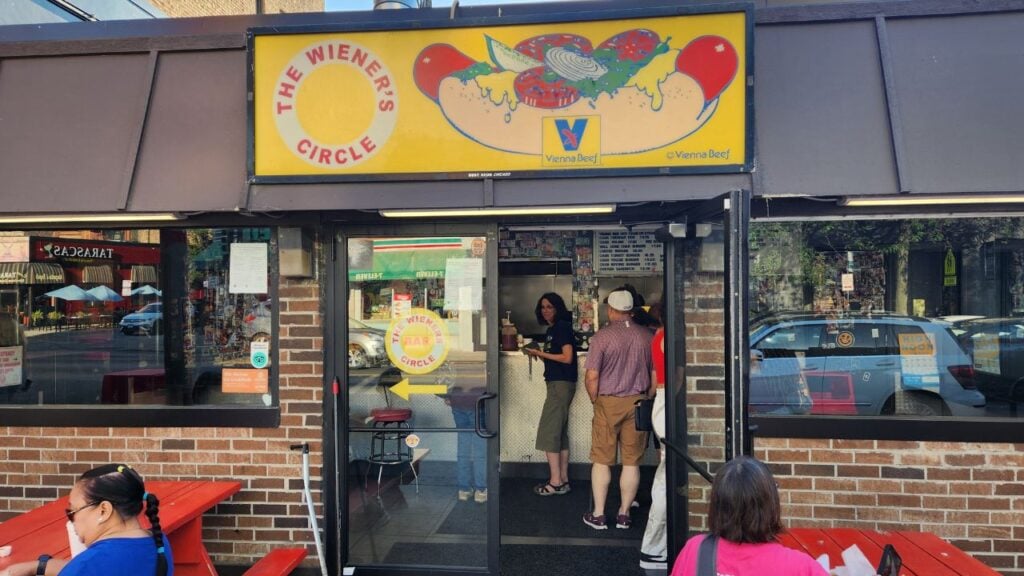
Order a hot dog wrong at a Chicago stand, and the whole line might have something to say about it.
Many Illinoisans are happy to enforce those rules on out-of-staters.
7 Chicago Hot Dog Rules Illinoisans Enforce on Out-of-Staters
7 Aldi Savings Illinois Shoppers Over 60 Give Up Without Realizing It

Aldi's low prices are only part of the savings story.
These are the savings that some Illinois shoppers pass up.
7 Aldi Savings Illinois Shoppers Over 60 Give Up Without Realizing It
