
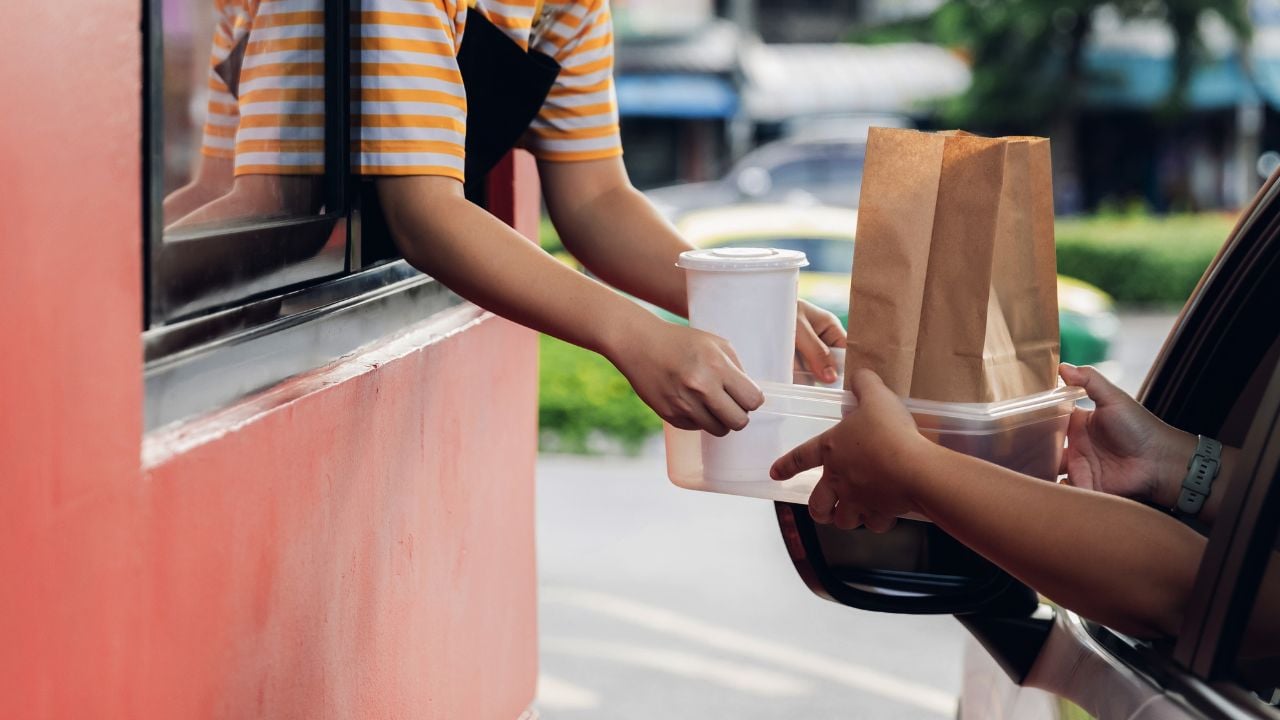
Berkeley Says California’s $20 Fast-Food Wage Added About 6 Cents to a $4 Burger

A fast-food run adds up quickly these days, so it’s fair to wonder where higher pay shows up on the menu.
Californians have heard a lot of guesses since the pay floor rose for workers at big chains.
Here’s what a university team found, and how a separate study compares.
Note: This is general information, not financial advice. Wage rules and study figures are subject to change.
What the Wage Law Changed
California’s fast-food wage law is Assembly Bill 1228.
It set a $20 hourly minimum for covered workers starting April 1, 2024.
Governor Newsom signed the bill on September 28, 2023.
CalMatters reported a last-minute deal in late 2023. The deal was between the Service Employees International Union and the industry.
Workers dropped a ballot fight.
In return, they got a $20 minimum wage and the creation of a council.
The law covers limited-service restaurants.
Each one must be in a chain of at least 60 establishments nationwide.
Not every restaurant counts.
Your corner diner likely isn’t one of them.
The law doesn’t depend on what a place sells.
So it can cover coffee, boba tea, pretzel, cookie and donut shops too.
Other workers in the state get the general minimum. It is $16.90 an hour as of January 1, 2026.
A higher local minimum applies in some places.
That puts the fast-food floor $3.10 an hour above it.
Say a worker puts in 40 hours a week. That is about $124 more a week.
How the Researchers Measured It
The Berkeley study comes from Michael Reich and Denis Sosinskiy.
They are at the University of California, Berkeley’s Center on Wage and Employment Dynamics.
The newest version came out in April 2026.
To track prices, the team copied menu listings from Uber Eats. They looked at burger-oriented restaurants, mostly fast-food chains.
They checked once in mid-March 2024, before the law, and twice afterward.
They looked at around 900 California restaurants.
They also looked at 1,100 in states that hadn’t raised their minimum wage since 2009.
They tracked cheeseburgers and hamburgers.
They also tracked specialty items, fries and combo meals.
Then the team compared California’s price change with the change in those other states.
Only listed prices were tracked.
Think of it as a before-and-after photo of the menu you’d scroll.
That’s the number on the menu, not the one on your receipt.
Pay came from Glassdoor job listings and official payroll records.
They estimate the law covers about 70% of the workers in the two industries they studied.
Those are fast-food restaurants and snack and nonalcoholic beverage bars.
Here’s what the menus showed.
Psst! How much do you know about California’s fast-food pay floor? Take our quiz and see if you can ace it.
Quiz
California Fast-Food Wage Quiz
Answer these questions on California’s fast-food pay rules and the numbers around them. We bet you can’t get them all right. Prove us wrong?
Can a covered employer count an employee’s tips toward the hourly minimum?
Menu Price Changes
Berkeley's April 2026 paper puts the price increase at about 1.5%. On a $4 hamburger, that is roughly 6 cents.
So a $4 burger would cost about $4.06.
The $4 hamburger is the researchers' illustration, not a price posted at any chain.
That's cents, not dollars.
The 1.5% is the average three quarters after the law. By then, prices had eased back relative to the comparison states.
Employers also passed about half, or 50%, of their higher wage costs on to customers, by that estimate.
The numbers changed between versions.
The September 2024 report found 3.7%, or 15 cents on a $4 hamburger.
A brief in February 2025 had already put it at about 1.5%, or 6 cents.
It used data through mid-December 2024.
The September 2025 version said 2.1%, or 8 cents on a $4 item.
The 2024 report called the increase one-time, not a yearly rate.
Worker Pay Changes
Worker pay rose about 11% in Berkeley's April 2026 paper. That is average weekly earnings of covered workers.
The paper compared the first and third quarters of 2024.
Say a covered worker earned $500 a week. An 11% rise is about $55 more.
That is a bigger jump than the menu price change.
The September 2024 report was built on Glassdoor job postings.
It said hourly pay rose 18%, from an average of $16.96 to about $20.
If you work at a covered chain, your raise may look different.
Your paycheck depends on hours as well as the hourly rate.
Hourly pay and weekly earnings are different measures. The reports also used different data and different months.
Berkeley's team also found no drop in fast-food employment.
KQED reported on Bureau of Labor Statistics data. It showed about 750,000 jobs in limited-service restaurants statewide.
That was true in both July 2023 and July 2024.
A Second Measure From NBER
A separate team measured restaurant prices a different way.
A team of four published a working paper in March 2026. It came through the National Bureau of Economic Research (NBER).
The authors are Jeffrey Clemens, Olivia Edwards, Jonathan Meer and Joshua Nguyen.
They used Consumer Price Index (CPI) data, not menu listings. The data is on food away from home.
Prices in four California metro areas rose 3.3 to 3.6% through December 2024.
That is relative to 17 control areas. On a $100 restaurant tab, that is about $3.30 to $3.60 more.
The four are Los Angeles, Riverside, San Diego and San Francisco.
The index covers full-service restaurants as well as limited-service ones. Together, they make up over 93% of it.
The authors also checked prices the law didn't touch, such as groceries. California prices did not rise more than elsewhere.
Part of the increase likely spilled over to full-service restaurants.
Those are different baskets.
That index is a bigger basket than your drive-thru order.
If you see both numbers quoted side by side, they're measuring different things.
So keep the 3.3 to 3.6% apart from Berkeley's 1.5%.
One tracks restaurant meals broadly.
The other tracks menus at burger-oriented restaurants.
Both measure how prices changed after the law, not today's inflation rate.
Where the Wage Stands Now
The Department of Industrial Relations' minimum-wage page lists $20 an hour for covered workers.
That is as of its December 2025 update.
The Fast Food Council can raise it each year. The raise is 3.5% or the change in the consumer price index.
It is whichever is smaller, according to the state's FAQ.
At the 3.5% cap, the next increase would take the rate to $20.70.
That is 70 cents more an hour.
If you're waiting on a raise, the council is where it would start.
The council has industry, franchisee, employee and advocate seats. It also has one unaffiliated member of the public.
CalMatters reported in May 2026 that the council hadn't met in over a year. It also had no chairperson.
Its latest meetings were two subcommittee sessions in 2025, the last in February.
8 Vons Deals Californians Only Get If They Do One Thing First
You key in your phone number at a Bakersfield Vons before the cashier even asks for it.
There's a reason for that.
8 Vons Deals Californians Only Get If They Do One Thing First
