

Eating Out Is Getting Pricier Faster Than Groceries, and Mississippians Are Feeling It

Your grocery bill and dinner out both cost more than they used to, just not by the same amount.
A national forecast suggests Mississippians who eat out may feel the bigger squeeze, even with prices at home rising too.
Here’s how the two compare, and what it could mean for your dinner table.
Note: This is general information, not financial or tax advice. Forecasts and tax rates are subject to change, so confirm the current rate with the Mississippi Department of Revenue.
The 2026 Outlook
The U.S. Department of Agriculture (USDA) has a team that tracks food prices.
It is called the Economic Research Service (ERS).
Groceries cost you 2.3% more in 2025. ERS expects another 2.4% rise in 2026.
On a $100 grocery run, that is about $2.40 more.
Eating out is forecast to rise 3.5% in 2026, after a 3.8% rise in 2025.
On a $100 restaurant check, 3.5% is about $3.50 more.
Neither is forecast to fall.
Put groceries and eating out together, and the forecast is a 2.9% rise in 2026.
That would match the rise in 2025.
So the bill keeps creeping up.
How 2026 Looks So Far
ERS’s September update includes price data from August. That shows how 2026 is going so far.
In August, groceries cost 2.2% more than a year earlier.
Eating out cost 3.4% more.
Prices for all items rose 3.4% over the same stretch. So your restaurant tab kept pace with everything else.
Groceries ran below it.
Wheat is one to watch.
On the farm, wheat prices were 35.1% higher in August than a year earlier.
Those are not shelf prices.
But wheat ends up in your bread, pasta and cereal.
Your cart doesn’t move as one, either.
From July to August, seven of the 15 tracked grocery categories fell in price, one stayed flat, and seven rose.
Aisles to Watch
USDA’s forecast also splits grocery prices by aisle. So your 2026 cart won’t feel the rise evenly.
Fresh vegetables are forecast to rise 5.7%. That is more than twice the 2.4% forecast for groceries overall.
So $100 of fresh vegetables would cost about $105.70.
Nonalcoholic drinks are forecast to rise 4.2%, and fresh fruits 2.5%.
So if your cart is full of vegetables and drinks, you may feel it more.
Meat looks calmer.
Pork is forecast to rise 1.2% and poultry 1.0%.
Their ranges dip as low as a 0.1% drop for pork and no change for poultry.
Dairy is forecast to rise only 0.1%.
Retail dairy prices were 0.3% lower in August than a year earlier, and USDA projects bigger milk production in 2026.
The 2027 Outlook
ERS expects grocery prices to rise 1.8% in 2027, down from 2.4% in 2026.
Slower is not cheaper.
Prices on your receipt still rise, just by less.
Eating out eases from 3.5% to 2.6%.
The Forecast Ranges
ERS builds each forecast from the latest price data and puts a range around it.
So the numbers above have room to move.
For 2026, the all-food range is fairly tight, from 2.5% to 3.2%.
2027 is much harder to call.
Grocery prices have the widest range, from a 5.0% drop to a 9.2% rise.
Eating out has the narrowest of the three, from 0.2% to 5.1%.
If you’re budgeting for 2027, think of the forecast as a best guess.
Psst! How much do you know about food prices and spending? Take our quiz and see if you can ace it.
Quiz
Food Price IQ
Answer these questions on food spending, price data and Mississippi sales tax. We bet you can’t get them all right. Prove us wrong?
In 2024, households in the lowest income fifth spent about what share of their before-tax income on food?
The Restaurant Gap
USDA says eating out is forecast to rise faster than groceries in both 2026 and 2027.
So the gap you saw in 2025 isn't forecast to close.
If restaurant meals take more of your budget than groceries do, the faster rise costs you more.
For 2026, the two ranges don't even touch. The top of the grocery range is 3.0%.
The bottom of the eating-out range is 3.3%.
The 2027 ranges overlap, so that year's gap is less certain.
What USDA's Gap Costs You
The 2025 price increases show how the gap adds up in a household budget.
Say you spend $500 a month on groceries and $500 a month eating out, or $6,000 a year on each.
Groceries rose 2.3% in 2025, so that spending would have cost you $138 more.
Eating out rose 3.8%, so the same spending would have cost you $228 more.
That's a $90 difference on the same budget.
The 2026 forecasts of 2.4% and 3.5% would put the gap at $66 on that budget.
Eating Out's Share of Income
Here is a twist.
ERS data show eating out taking 4.9% of Americans' disposable personal income in 2025.
That is the money left after taxes.
Groceries took 4.8%.
The two are nearly tied.
In 1997, eating out took only 4.3%, and groceries took more.
So if you spend like the average American, you now spend a bit more of your income at restaurants than at grocery stores.
Together, eating out and groceries make up the 9.7% of that income that Americans spent on food in 2025.
The Grocery Tax at Checkout
Prices are not the only number on your receipt.
Mississippi charges 5% sales tax on groceries instead of 7%, under House Bill 1.
The Mississippi Department of Revenue's rate schedule says groceries are food and drink for human consumption that Supplemental Nutrition Assistance Program (SNAP) benefits can buy.
Other retail sales generally carry a 7% rate.
The difference is two points.
Say you spend $600 a month on groceries. That is $7,200 a year. At 5%, you pay $360 a year in tax.
At the old 7% rate, you'd have paid $504. That is about $144 more.
6 Mississippi Myths Locals Are Tired of Correcting
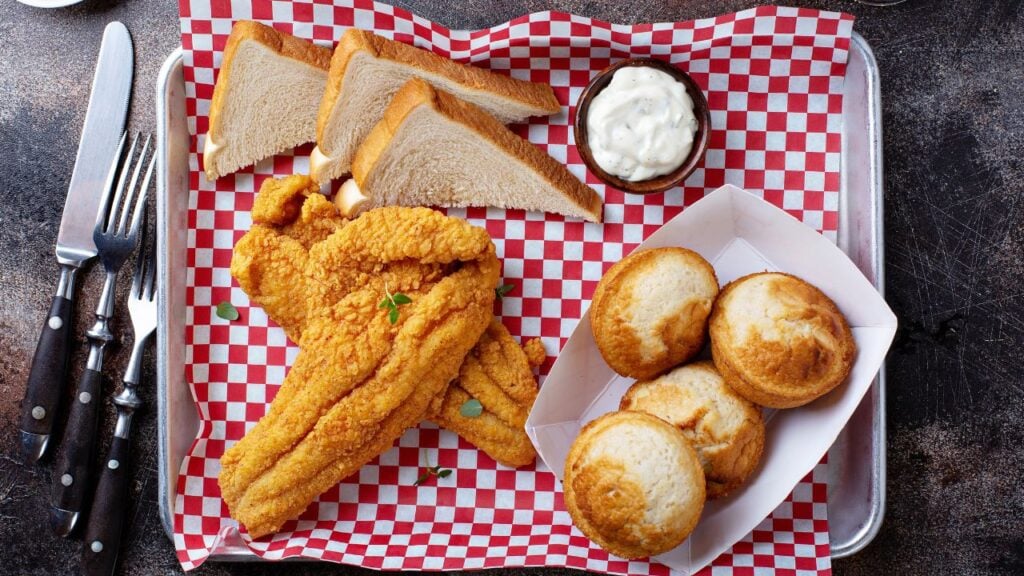
Out-of-staters bring a lot of assumptions about Mississippi.
This list takes on six of those assumptions, starting with the Delta.
6 Mississippi Myths Locals Are Tired of Correcting
5 Mississippi Tamale Rules Nobody Explains to Visitors
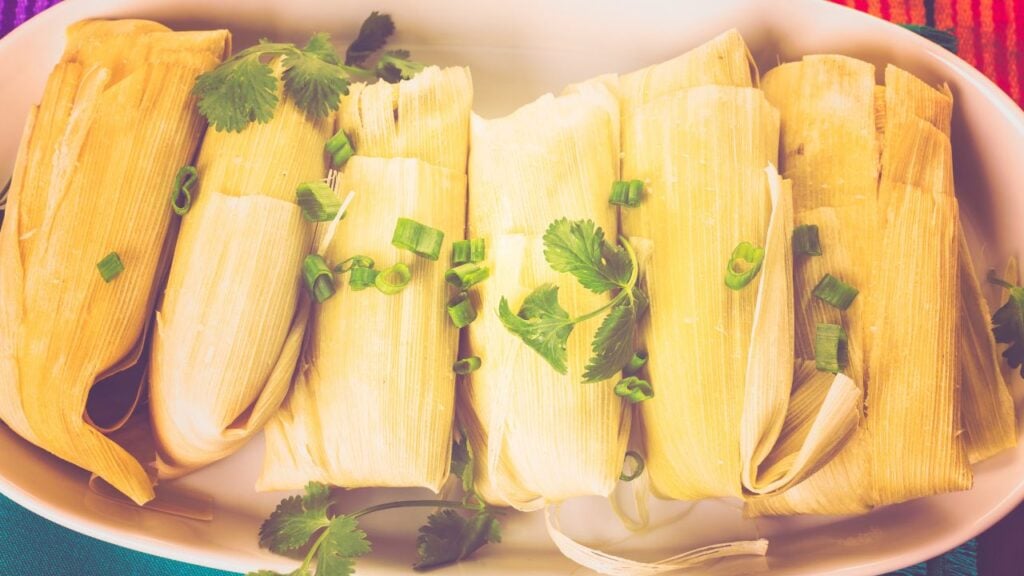
Hot tamales in Mississippi come with customs that nobody hands over on a menu.
This list covers five of those customs, starting with the spelling.
