
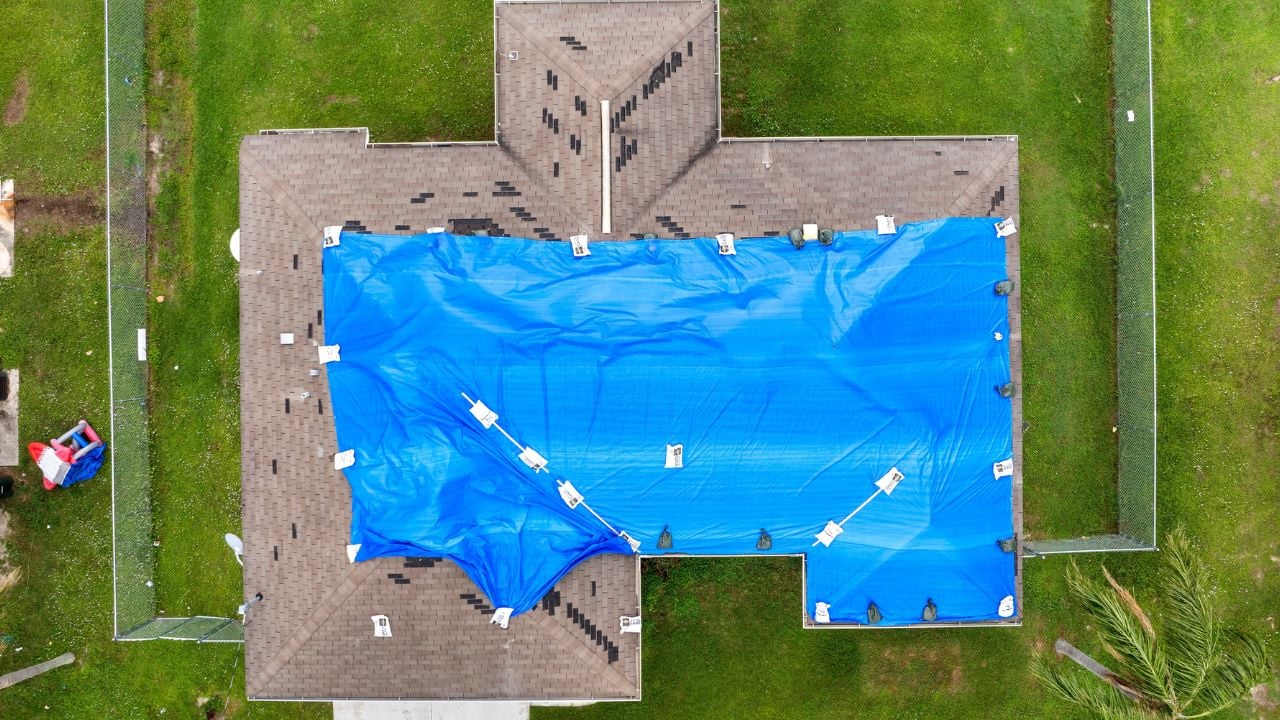
How Long Do You Have to File a Hurricane Damage Claim in Florida?

Citizens Property Insurance, Florida’s insurer of last resort, still had more than 266,000 policies in force as of late August 2026.
Every one of them runs on the same two-part clock: One year from the date of loss to file an initial hurricane damage claim, and 18 months for a supplemental claim on damage that turns up later.
Fla. Stat. § 627.70132 treats a late claim as barred, so an insurer can deny it on timing alone.
Note: This is general information, not legal or insurance advice. Filing deadlines and policy terms can change, so confirm your situation with your insurer or agent, or with the Florida Department of Financial Services.
One-Year Deadline for an Initial Hurricane Damage Claim
Florida spells out the filing clock for a hurricane damage claim in one law, and the first number to know is one year.
Fla. Stat. § 627.70132 bars an initial hurricane claim that hasn’t reached your insurer within one year after the date of loss.
That clock starts the day the storm caused the damage to your home, not the day you noticed a stain on the ceiling.
Every week you wait cuts into that one-year window.
A phone call to your insurer’s claims line usually counts as notice, but a follow-up in writing protects you if anyone disputes when you called.
That’s the whole window.
When Florida Starts Your Hurricane Clock
Florida measures that one-year window from the storm’s date of loss, the day the hurricane caused the damage to your home.
Say a hurricane crosses your county on September 26, 2026, and cracks a roof tile that lets water sneak in for months before you spot a stain.
Your deadline to report that initial claim still lands on September 26, 2027, whether you caught the leak in October or the following June.
Reopened Claims Keep the Same Clock
A reopened claim keeps running on Florida’s original clock instead of starting over.
Many reopened claims start the same way: An insurer pays and closes the file, then a contractor finds cracked trusses hiding behind the drywall months later.
Asking to reopen that file still has to happen within one year of the date of loss.
That’s the same deadline as your original notice, under state law.
You get no second chance.
18-Month Window for Supplemental Claims
Supplemental claims get six extra months under Florida law, compared to a first-time filing.
A supplemental claim covers new damage from the same hurricane that surfaces after your insurer already adjusted the original claim.
Picture a contractor finding rotted framing behind a wall only after tear-out starts, months after the adjuster’s first visit.
Notice of that supplemental claim has to reach your insurer within 18 months of the date of loss, six months past the deadline on an initial or reopened claim.
That’s six extra months many homeowners never realize they have.
Condo Owners Get One Extra Rule
Condo owners in Florida face one more twist in the filing clock, on top of the deadlines above.
When storm damage triggers a special assessment from the condo association, an owner can file that loss-assessment claim within one year of the date of loss.
A later assessment vote can stretch that window to 90 days after the vote instead, whichever date lands later.
Either way, Florida caps that window at three years after the date of loss, so a slow-moving association can’t stretch it forever.
That cap protects an owner from an association that drags its feet for years.
Psst! How much do you know about Florida’s hurricane history and insurance rules? Take our quiz and see how many you can get right.
Quiz
Florida Hurricane Insurance IQ
Answer these questions on Florida’s hurricane history and insurance rules. We bet you can’t get them all right. Prove us wrong?
Which storm holds the record as the costliest hurricane in Florida’s history?
What Happens When You File Late
Once the clock runs out, Florida doesn't leave any wiggle room.
Fla. Stat. § 627.70132 treats a late claim as barred, meaning your insurer can deny it outright on timing alone.
A missed deadline can sink an otherwise solid claim, no matter how much damage sits behind that missed date.
That's rarely negotiable.
Insurers rarely grant exceptions on their own, and Florida courts have upheld denials built on nothing more than a late notice.
Florida draws similarly firm lines elsewhere in its insurance and traffic law, including how soon you have to report a car accident.
Your Flood Policy Runs on a Different Clock
Those one-year and 18-month deadlines cover wind damage under a Florida homeowners or wind-only policy, not storm surge or flooding.
Flood damage from a hurricane usually runs through a separate flood insurance policy, either through the National Flood Insurance Program or a private flood insurer.
That federal flood policy runs on a much shorter clock.
The Federal Emergency Management Agency (FEMA) requires a signed, sworn Proof of Loss within 60 days of the flood, not the year or year-and-a-half Florida law allows for wind damage.
FEMA has stretched that 60-day window after some past disasters, but only when it announces an extension for that storm, so don't count on an extension showing up automatically.
Sixty days moves fast.
You Don't Need a Finished Repair Bid to Meet the Deadline
Meeting the one-year or 18-month deadline only takes notice of the claim under Florida law, not a completed repair estimate or signed contractor bid.
A homeowner can send that notice the same week the storm passes.
Photos, estimates, and invoices can follow later, as the repair work moves forward.
A roof that looks fine right after the storm can still hide mold or wood rot that shows up months later, once the humidity does its work.
That's exactly the gap the 18-month supplemental deadline exists to cover.
Paperwork can wait.
Florida holds homeowners to other deadlines just as tightly, including what happens when a homeowners association levies a missed assessment payment.
FAQ
Quick answers to what homeowners want to know after a storm.
How long do you have to file a hurricane damage claim in Florida?
You have one year from the date of loss for an initial or reopened claim, under Fla. Stat. § 627.70132.
A supplemental claim on damage tied to the same storm gets 18 months instead.
What counts as the date of loss for a hurricane claim?
It's the date the storm itself caused the damage, not the day you noticed it or the day you filed the paperwork.
Does the deadline change for flood damage from a hurricane?
Yes. A federal flood policy through the National Flood Insurance Program runs on a different deadline.
It gives you 60 days to file the Proof of Loss form, apart from the state deadlines above that cover wind damage.
What happens if you miss the filing deadline?
Florida law says a late claim is barred, meaning your insurer can deny it purely on timing, regardless of how much damage you have.
There's no exception.
How long does a Florida insurer have to pay or deny your claim?
Normally 60 days after your insurer receives your proof-of-loss paperwork, or up to 90 days when the state has declared an emergency tied to that storm.
Citizens Property Insurance, the state's insurer of last resort, still carried more than 266,000 Florida policies running on that same one-year-and-18-month clock as of August 28, 2026.
That's down from 782,424 policies on July 31, 2025, as Citizens' state-mandated depopulation program keeps moving policyholders onto private insurers.
7 Things a Florida HOA Can't Stop You From Doing in Your Own Yard
A board can dictate your paint color and your mailbox style, but its reach stops well short of everything happening in your yard.
Florida law draws a firm line around a handful of everyday choices no association can touch, no matter what the covenants say.
7 Things a Florida HOA Can't Stop You From Doing in Your Own Yard
9 Florida Flea Market Mistakes That Mark You as a First-Timer
One Florida flea market packs an entire week's worth of business into a single morning, and showing up on the wrong day gives it away instantly.
The regulars know a handful of unwritten rules that separate a good haul from a wasted trip.
9 Florida Flea Market Mistakes That Mark You as a First-Timer
