
Is Inflation Behind Publix’s Sales Growth? Here’s What Its Annual Report Means for Floridians

If your Publix total keeps creeping up, the company’s annual report has a word for part of it: inflation.
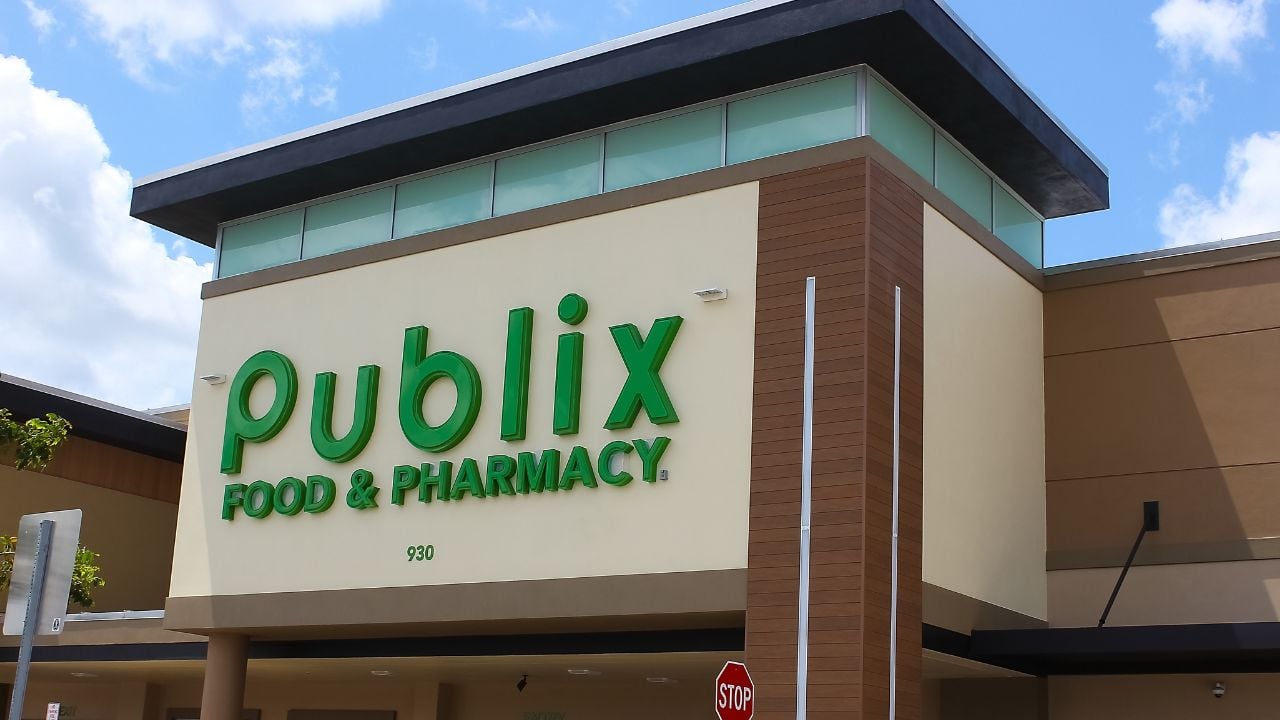
The Florida-born chain says rising product costs helped push up its comparable store sales in 2025.
Here’s what Publix’s 2025 annual report says about inflation and its sales growth, in plain terms.
Note: This is general information about a company’s annual report, not financial or investment advice. Financial figures are subject to change.
What the Annual Report Says
Publix opened its first store, a Publix Food Store, in Winter Haven, Florida, in 1930.
Today the company lists Lakeland, Florida, as its headquarters on the cover of its annual report for fiscal 2025.
That report covers the 52 weeks that ended Dec. 27, 2025.
In its sales discussion, Publix says comparable store sales for 2025 “increased primarily due to the impact of inflation on product costs.”
Those sales rose 3.5% that year.
You’ll notice the sentence names product costs.
Shelf prices don’t appear.
That’s about Publix’s sales, not the price of any single item in your cart.
What Publix’s Comparable Store Sales Count
Publix’s annual report counts supermarkets open for the same weeks in both periods as comparable store sales, replacement supermarkets included.
A supermarket replaced on site is treated differently.
Its sales are classified as new supermarket sales, since the replacement period is generally 12 to 15 months.
The measure tracks sales dollars, not the price of a single item.
Where the Sales Growth Came From
The company’s March 2, 2026 results release puts sales for fiscal 2025 at $62.7 billion, up from $59.7 billion in 2024.
The gain was $3.0 billion, or 5.0%.
Sales growth had two sources.
The increase came primarily from new supermarket sales and a 3.5% rise in comparable store sales.
The inflation sentence covers only comparable store sales.
Here’s what 3.5% looks like: If comparable stores rang up $100 in 2024, they rang up about $103.50 in 2025.
Those dollars are what you and other shoppers spend at those supermarkets.
That’s the figure for all of those stores combined, so your store could land above or below it.
New supermarkets were the other source.
Publix opened 52 supermarkets in 2025, including 13 replacements, and closed 10.
It had 1,432 supermarkets by the end of that year.
Florida had 889 of them.
At the end of 2025, the company operated 67.8 million square feet of supermarket space.
Where $100 of Sales Went
Publix’s gross profit, which is sales minus the cost of the merchandise it sold, was 25.4% of sales in fiscal 2025.
If you spend $100 at Publix, about $25.40 of it is gross profit on average.
In 2024, the share was 25.6%.
That’s a small dip.
Excluding the effect of its LIFO inventory accounting, a similar dip came primarily from faster growth in pharmacy sales, partly offset by cost improvements, including lower distribution costs as a share of sales.
Operating and administrative expenses came to 18.7% of sales, down from 18.9% in 2024.
On average, about $18.70 of your $100 goes to operating and administrative expenses.
The same release says net earnings were $4.7 billion, up 2.1% from $4.6 billion in 2024.
Earnings per share were $1.46, up from $1.41.
Psst! How much do you know about Publix and the grocery business? Take our quiz and see if you can ace it.
Quiz
Publix and Grocery IQ
Answer these questions on Publix and the grocery business. We bet you can’t get them all right. Prove us wrong?
What was the first purchase rung up on a supermarket barcode scanner in 1974?
The Year Before
Publix's annual report covers 2024 too.
Comparable store sales rose 2.9% that year.
The inflation wording repeats.
Total sales were $59.7 billion in 2024, up 4.6% from $57.1 billion in 2023.
That makes two years in a row that inflation on product costs gets the credit for the comparable-store increase.
For comparison, the U.S. Department of Agriculture's Economic Research Service (ERS) says grocery prices, which it calls food-at-home prices, rose 1.2% in 2024 and 2.3% in 2025.
Those are national grocery prices, so you shouldn't expect them to match Publix's sales one for one.
Your Publix cart can also hold pharmacy products, floral, deli and bakery items, and general merchandise.
Publix's sales figures cover all of it.
The 2026 Spending Plan
Publix's annual report says capital expenditures for 2025 totaled $2.3 billion, down from $2.6 billion in 2024.
Publix also remodeled 89 supermarkets in 2025.
For 2026, Publix expects to spend approximately $2.4 billion.
New supermarkets lead the list.
The list of uses starts with new supermarkets, remodeling existing supermarkets and construction or expansion of warehouses.
If you've watched a new Publix go up near you, that's the kind of project on that list.
Internally generated funds or liquid assets are expected to cover it.
The capital program is subject to continuing change and review.
How Comparable Sales Slowed
Publix's results release for the fourth quarter reported comparable store sales up 0.7% for the three months that ended Dec. 27, 2025.
The full-year figure was 3.5%.
A full-year figure blends four quarters, so a fourth quarter at 0.7% means the first three quarters averaged above 3.5%.
Growth had slowed.
If you read only the full-year number, you'd miss that.
That fourth quarter overlaps the November-to-April stretch when Publix's annual report says seasonal sales increases typically happen.
The causes are the historical influx of winter residents to Florida and increased purchases during the traditional Thanksgiving, Christmas and Easter holidays.
In the quarter that ended June 27, 2026, comparable store sales decreased 0.5%.
Publix names a Medicare drug-price change and economic conditions that affect consumer spending as the reasons.
Inflation isn't one of the reasons it names.
13 Things Floridians Never Have to Explain to Each Other

Ask a Floridian why they keep checking the sky every summer afternoon, and the answer is short.
Out-of-staters need the whole story, but Floridians don't have to tell it.
13 Things Floridians Never Have to Explain to Each Other
12 Words Floridians Used in the 1970s That Make No Sense Today

Long before texting shrank American slang into acronyms, Floridians talked with words nobody used to have to define.
Many of them didn't last, and some sound like a different language today.
12 Words Floridians Used in the 1970s That Make No Sense Today
