
New Jersey Drivers Can Be Fined for Snow on Their Roof. 4 Other Winter Car Rules New Jerseyans Miss

Warming up your car on a cold New Jersey morning?
You’ve got three minutes before you’re breaking the idling rule.
Shortcuts like that are tempting when you’re running late, but they can cost you.
Here’s why New Jersey drivers can be fined for snow on their roof, and the other winter car rules many New Jerseyans miss.
Note: This is general information, not legal advice. Driving rules, fines and emergency orders are subject to change, so confirm the current requirements with the New Jersey Motor Vehicle Commission.
Two Fine Tiers
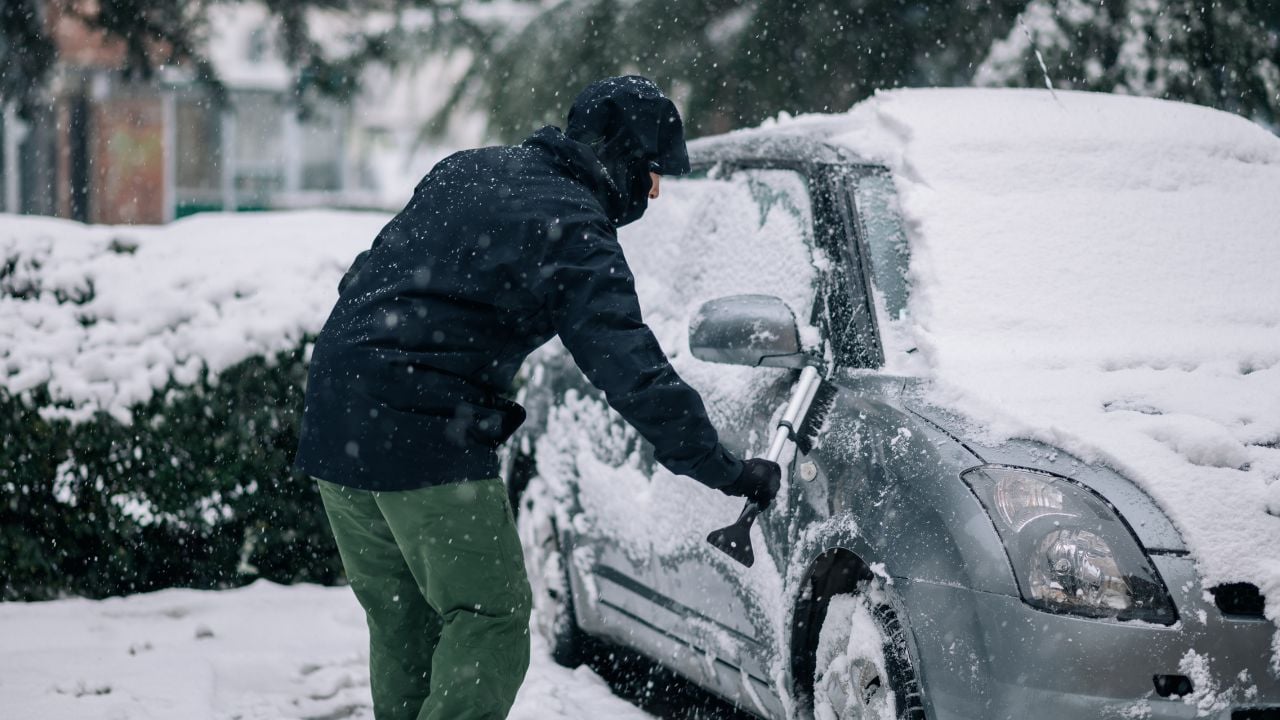
Snow on your roof can get you stopped before any of it comes loose.
The stop only takes an officer who believes the snow or ice could hurt someone or damage property.
The fine runs $25 to $75, and you owe it even if nothing comes off.
No motor vehicle points or automobile insurance eligibility points come with it.
If a slab of ice or snow flies off a moving car and causes damage or injury, the fine for a noncommercial driver is $200 to $1,000 for each offense.
Parked cars are exempt.
A snow or ice storm that began before you left and lasted the whole trip exempts you, too.
The rule isn’t new, since it took effect in October 2010.
Who Pays the Snow Fine
New Jersey’s snow-and-ice law puts the duty to clear a vehicle on the person in physical possession of it when the snow builds up.
A driver who didn’t have the vehicle at that point isn’t liable for the clearing violation.
For a commercial vehicle, the fine is $500 to $1,500 for each offense when dislodged snow or ice causes injury or damage.
A violation on each day counts separately, though no one pays more than one fine for not clearing a vehicle in 24 consecutive hours.
1. Headlights With Wipers
New Jersey’s headlight law ties your lights to your wipers.
Whenever rain, mist, snow or other precipitation calls for windshield wipers, your headlights have to be on.
Daytime counts.
The same law covers the stretch from a half-hour after sunset to a half-hour before sunrise.
It also applies whenever smoke, fog or other conditions leave too little light to clearly see people and vehicles 500 feet ahead.
The state’s winter driving advice adds that you should use low beams in snow.
2. Warm-Up Idling
New Jersey’s idling rule limits your gasoline-powered car to three consecutive minutes while it’s standing still.
Warming up the car counts too, since the exception for engine power used on other work doesn’t cover passenger compartment heating.
If you leave the engine running while you scrape the windshield, three minutes can pass before you’re done.
Idling in traffic is exempt, along with snow removal and other emergency vehicles on the job.
The Department of Environmental Protection (DEP) penalty starts at $250 for a first violation and rises for repeat violations.
The DEP or a local health department investigates idling complaints.
The agency can’t enforce the rule on public roadways or residential property.
Police handle the roads.
3. Storm Speed Limits
The state Department of Transportation (NJDOT) can lower the speed limit on New Jersey’s major highways with a single emergency order.
It did exactly that at 3 p.m. on Sunday, February 22, 2026, ahead of a forecast for heavy snow and blizzard conditions.
The order dropped every posted limit to 35 mph on Interstate, U.S. and state highways, including the Turnpike, the Parkway and the Atlantic City Expressway.
If your road was already posted at 35 mph or lower, nothing changed.
Under that order, 35 was your limit even on a stretch posted higher.
NJDOT lifted the order at 5 p.m. on Monday, February 23.
It ran about a day.
4. Trailer Restrictions
NJDOT’s storm travel restrictions can cover your car if it’s pulling a trailer.
The restriction that began at 12:01 a.m. on Sunday, January 25, 2026, listed tractor-trailers and passenger vehicles pulling trailers, among other vehicles.
It applied to I-76, I-78, I-80, I-195, I-280, I-287, I-295 and I-676, plus part of Route 440.
The New Jersey Turnpike, the Garden State Parkway and the Atlantic City Expressway were exempt.
The same list of restricted vehicles came back at 3 p.m. on Sunday, February 22.
NJDOT lifted that restriction at 5 p.m. on Monday, February 23, along with the speed limit order.
Many drivers towing a trailer don’t realize those restrictions include them.
If you tow a trailer behind your car, you’re on that list.
Passenger cars alone weren’t restricted.
NJDOT still asked all drivers to avoid unnecessary travel on Sunday and Monday.
Where the Fines Go
New Jersey’s snow-and-ice law sends your fine to the State Treasurer, who deposits the money each year in the Motor Vehicle Snow and Ice Removal Safety Fund.
The law tells the Division of Highway Traffic Safety to set up a public awareness campaign on why you should clear snow and ice.
It also has to maintain a data system that tracks how many accidents dislodged snow and ice cause and how serious those accidents get, and report on it every year.
The report goes to lawmakers.
Psst! How much do you know about New Jersey’s winter driving rules? Take our quiz and see if you can ace it.
Quiz
Jersey Winter Road IQ
Answer these questions on New Jersey winter driving rules. We bet you can’t get them all right. Prove us wrong?
If your car starts to skid on ice, state guidance says to lift off the gas and steer toward which direction?
Plow Formations
NJDOT's storm advice tells you to stay clear of plowing and spreading trucks.
A plow behind you?
Let it pass.
Don't pass between trucks that are running in a plow formation.
Before you head out, check 511nj.org for live travel information.
9 New Jersey Sayings That Sound Rude to Out-of-Staters but Aren't

To a first-timer, “youse” can land like a challenge instead of a greeting.
In New Jersey, it's just how people talk.
9 New Jersey Sayings That Sound Rude to Out-of-Staters but Aren't
7 Reasons Your New Jersey E-ZPass Bill Runs Higher Than the Toll Signs
The toll sign at the plaza shows one number.
Your monthly statement rarely matches it.
7 Reasons Your New Jersey E-ZPass Bill Runs Higher Than the Toll Signs
