
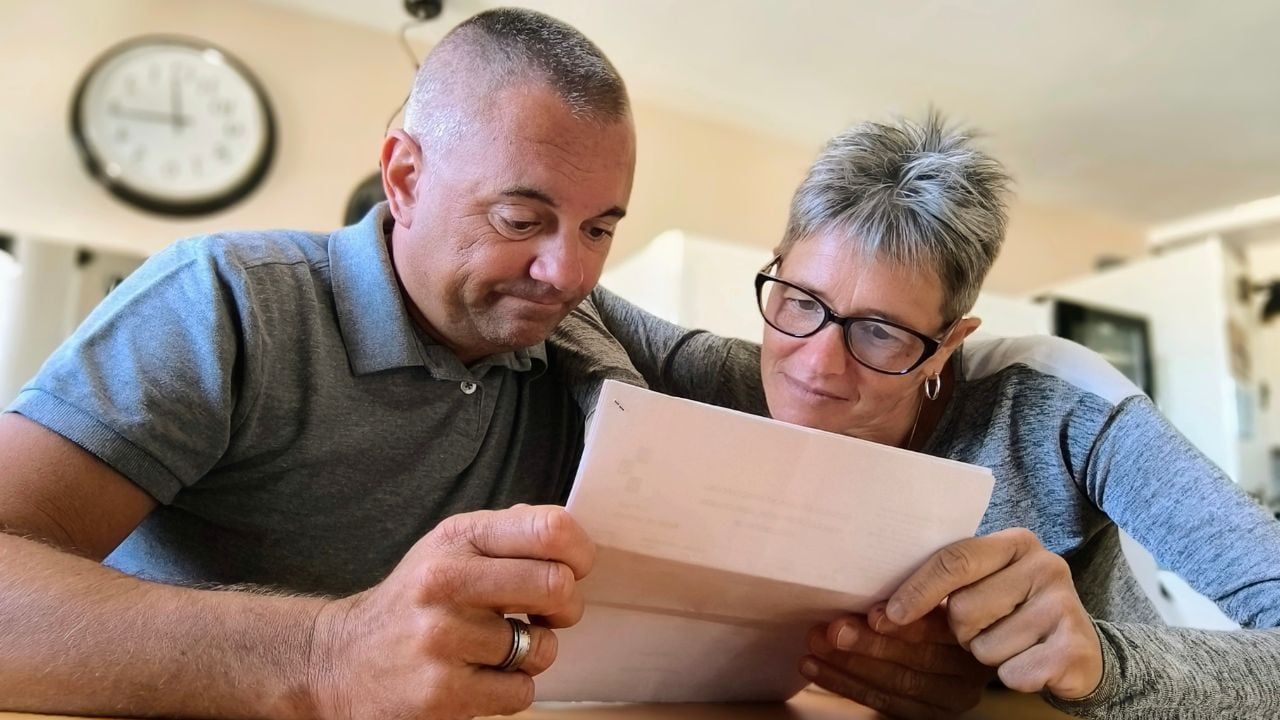
What Documents Do You Need to Apply for New York’s Enhanced STAR Exemption in 2026?

Most New York homeowners no longer have to send in any documents for the Enhanced STAR exemption.
The state now automatically upgrades most homeowners already on STAR, New York’s School Tax Relief program, once they turn 65 and their income clears the limit, which the state Tax Department sets at $110,750 for the 2026-2027 school year.
A smaller group still has to apply.
Homeowners in that group need four things: Proof of age, proof of income, proof they own and live in the home, and a signed income-verification form.
Here’s all you need to know about it.
Note: This is general information, not legal or tax advice. Assessment rules and exemption amounts are subject to change, so confirm the current details with your local assessor.
Do You Even Need to Apply?
New York changed how it hands out the Enhanced STAR exemption starting with 2026.
Homeowners who already receive the STAR exemption no longer need to apply with their local assessor when they turn 65, according to the state Tax Department.
The state matches its records and applies the upgrade automatically.
Homeowners who get the STAR credit instead of the exemption, meaning a check or direct deposit rather than a line item on the tax bill, get the same treatment.
Those homeowners don’t have to take any action either.
That leaves the documents question for a narrower group: New arrivals to Basic STAR, homeowners whose ownership just changed, and anyone the state’s records can’t match automatically.
How Is Enhanced STAR Different From Basic STAR?
Basic STAR asks almost nothing of a homeowner beyond owning and living in the home.
Enhanced STAR asks for two more things: Age and income.
At least one owner, or an owner’s spouse who lives at the property, has to be 65 or older by December 31 of the exemption year.
The household’s combined income can’t top that $110,750 line.
Clear both bars, and Enhanced STAR knocks a bigger chunk off the school-tax bill than Basic STAR does.
That gap is exactly why Enhanced STAR needs documents Basic STAR never asks for.
Nobody has to prove their age or income for Basic STAR.
Enhanced STAR does because the bigger benefit depends on both.
Who Still Has to File RP-425-E?
Form RP-425-E is New York’s Enhanced STAR application.
Homeowners already on Basic STAR usually hear about it first through a letter assessors send, Form RP-425-MBE, the mandatory-benefit notice, to those who appear to qualify for the upgrade.
That letter is the cue to submit RP-425-E along with its required income-verification companion, Form RP-425-IVP.
A homeowner whose ownership just changed also has to refile, even with an exemption already in place.
Marriage, divorce, a death that moves the deed to a survivor, a trust, a life estate, or a simple name change.
All of it counts.
Buy a first home and want STAR at all?
The state closed the exemption itself to brand-new applicants.
A first-time homeowner registers for the STAR credit through the state directly instead of filing with the assessor.
That homeowner moves up to Enhanced STAR automatically once age and income line up.
Psst! How much do you know about New York’s STAR program and its history? Take our quiz and see how many you can get right.
Quiz
NY Property Tax IQ
Answer these questions on New York’s STAR program and its history. We bet you can’t get them all right. Prove us wrong?
Roughly how many New York homeowners shared in STAR tax relief in 2025, according to Governor Hochul’s office?
What Documents Prove Your Age and Ownership?
New York's Form RP-425-E asks for proof of age before anything else.
A driver's license, a birth certificate, or a passport all work, and a voter's registration record or a military record covers a homeowner without any of those.
Ownership and residency come next, and this part leans on photo identification tied to the property's address.
A New York driver's license listing the home's address does the heavy lifting here.
Assessors can ask for more if a file looks thin, so a utility bill or a voter registration card in the same name is worth having on hand.
A home held in a trust needs the trust document itself, since the assessor has to confirm a qualifying owner holds the interest that STAR requires.
What Documents Prove Your Income?
Many homeowners misjudge what counts as income on their Enhanced STAR application.
A homeowner who files taxes attaches the first pages of a 2024 federal Form 1040 or New York's resident income tax return, Form IT-201.
That's the return covering the income year Enhanced STAR checks for 2026 benefits.
A homeowner sends copies only, not the original documents.
A homeowner who wasn't required to file a return that year fills out Form RP-425-Wkst instead.
The worksheet adds up income from a 1099, a pension statement, or a Social Security benefit letter without a tax return behind it.
Every resident owner's and resident spouse's income counts toward that shared limit, but a co-owner living elsewhere isn't included.
Skip an owner's documentation, and the whole application can stall.
What "Income" Means for Enhanced STAR
Enhanced STAR doesn't count every dollar a homeowner brings in.
The state defines income as federal adjusted gross income minus the taxable portion of any Individual Retirement Account (IRA) distributions.
That's a narrower number than what shows up on a full tax return.
There's a timing catch, too.
The $110,750 limit for 2026 benefits runs off 2024 income, not the current year's.
A homeowner whose income has already dropped since that return still has to clear the older number this time around.
When Is the Enhanced STAR Deadline?
Every Enhanced STAR document has to land with the assessor by the same cutoff: The taxable status date.
That date is generally March 1 in most New York towns and some cities.
It isn't universal.
Nassau County and New York City both run on their own calendars.
Many Westchester towns push the date into spring, so a homeowner in one of those places files by a different day.
If a homeowner misses the date, the application waits until next year.
There's no partial credit for filing late, so a homeowner gathering these documents should call the local assessor's office and confirm the exact date before mailing anything.
What Is Form RP-425-IVP?
Form RP-425-IVP rides along with every Enhanced STAR application, and it isn't optional.
Every owner, plus any spouse who lives at the property, has to list a Social Security number, a date of birth, and a signature on this supplemental form.
That signature authorizes one thing.
It lets the state Tax Department check a homeowner's income against tax records every year afterward, through what New York calls its Income Verification Program.
The payoff shows up the following year.
A homeowner who signs RP-425-IVP once doesn't mail a tax return to the assessor again.
The state's database does that checking from then on, and the assessor never even sees the actual income figure, only whether it clears the limit.
FAQ
Quick answers to what homeowners ask most about applying for Enhanced STAR.
Do I need to apply for Enhanced STAR every year?
No.
Once Form RP-425-IVP is on file, the state checks income automatically each year, so most homeowners never reapply or resend tax paperwork unless the ownership on the home changes.
What is the income limit for Enhanced STAR in New York?
The limit is $110,750 for 2026-2027 benefits, based on 2024 income. It's already set to rise to $113,550 for the 2027-2028 school year.
What forms do you need to apply for Enhanced STAR?
Form RP-425-E and its required companion, Form RP-425-IVP, filed together with your local assessor along with proof of age and income.
When is the deadline to apply for Enhanced STAR?
Generally March 1, the taxable status date in most New York towns.
Nassau County, New York City, and some Westchester towns run on different calendars, so confirm the exact date locally.
Is Enhanced STAR the same as the STAR credit?
No. The STAR exemption reduces a tax bill directly and is now closed to brand-new applicants.
Everyone else gets the STAR credit, a check or direct deposit, which upgrades to Enhanced automatically too.
Staying enrolled in New York's Income Verification Program comes with one more condition beyond the paperwork.
A homeowner who moves, sells the home, or stops living there full time has to tell the assessor, since the automatic income check only covers a primary residence.
6 Subscription Tricks That Make It Maddeningly Hard for New York Customers to Cancel

Canceling a New York subscription can turn into a maze of screens, holds, and "are you sure?" pop-ups.
A federal case names one company that buried the cancel button under screen after screen, even in a state that's required an easy cancel option since 2021.
6 Subscription Tricks That Make It Maddeningly Hard for New York Customers to Cancel
7 Purchases That Make New Yorkers Look Wealthier Than They're Worth

Some New Yorkers spend money just to look like they have more of it.
One line item on a Manhattan rent bill has nothing to do with square footage, and many tenants pay it without asking why.
7 Purchases That Make New Yorkers Look Wealthier Than They're Worth
