
The West Faces the Biggest Jump in Electric Heating Costs This Winter, and Washingtonians Are in It

More than half of Washington homes heat with electricity.
This winter, the West is expected to see the biggest jump in electric heating costs, mostly because of colder weather.
Here’s what the forecast means for Washingtonians who heat with electricity, and why the West stands out.
Note: This is general information, not financial advice. Energy forecasts and utility bills are subject to change.
EIA’s October Forecast
Electric heating in the West is forecast to cost an average of $1,151 this winter, up 9% from last winter.
That comes from EIA’s Winter Fuels Outlook, published October 6, 2026.
The winter totals add up November through March.
No other region has a larger forecast increase in electricity spending.
Spread over those five months, $1,151 works out to about $230 a month.
Homes are sorted by primary heating fuel, so the figure describes homes like yours if electricity is your main source of heat.
It’s an average.
Washington’s Place in the West
Electric heating is the main heat source in 55% of Washington homes, about 1.63 million of 2.94 million, based on EIA’s 2020 Residential Energy Consumption Survey.
That’s well above the 34% national figure from the same survey.
Natural gas comes second in Washington at 37%.
If you heat with electricity, you’re in the majority.
EIA’s outlook uses U.S. Census Bureau regions.
Its glossary lists Washington among the 13 states of the West region, a group that also includes California, Colorado and Hawaii.
Within the West, Washington sits in the Pacific division, alongside California and Oregon.
So the 9% is an average across all 13 states, not a forecast for your utility’s customers.
Your bill will differ.
Psst! How much do you know about Northwest power and home heating? Take our quiz and see if you can ace it.
Quiz
Northwest Power IQ
Answer these questions on Northwest power, hydro dams, and home heating. We bet you can’t get them all right. Prove us wrong?
Washington produced about what share of the nation’s conventional hydroelectric power in 2025, according to the U.S. Energy Information Administration’s preliminary figures?
The Cold-Weather Factor
Cold weather, not higher rates, drives the West's electric heating jump.
EIA expects a much colder winter in the West, with heating degree days up 25% from last winter.
Heating degree days add up how far each day's average temperature falls below a baseline, so a higher count means more heating.
National winter temperatures are expected to be about the same as last winter and the previous 10-winter average.
That makes the West the outlier.
The average West home is also expected to use 9% more electricity, while the price rises just 1%.
Wholesale electricity prices at the Northwest's Mid-Columbia hub are forecast to fall 23% in 2026 compared with 2025.
That's a wholesale price for the whole year, not what you pay on your bill this winter.
Weather is the swing factor.
If you live in the West, the extra heating may lift your bill far more than the rate does.
The Math Behind EIA's 9%
The West's electric heating figure comes from multiplying electricity use by its price: 5,624 kilowatt-hours at 20.47 cents each.
Working backward from 9%, last winter's average comes to about $1,056.
That's roughly $95 more across the winter, or about $19 a month.
EIA's dollars cover only households that heat mainly with electricity, and EIA calls its figures a broad guide for comparing one winter with another.
The West Versus Other Regions
If you compare regions, electric heating costs more in the Northeast than in the West, even after the West's jump.
Northeast homes that heat with electricity are forecast to spend $1,637, down 3%.
The Midwest, at $1,380, and the South, at $1,079, are each up 3%.
The West isn't the priciest.
The West's $1,151 sits $45 below the national average of $1,196.
West homes use about 14% less electricity than the national average, 5,624 kilowatt-hours against 6,562, but they pay more for each one, 20.47 cents against 18.23.
That number covers the whole region, so what your utility charges may differ a lot.
The Midwest and Northeast also have far more heating degree days, with 4,802 and 4,331 against 2,781 in the West.
EIA forecasts a warmer Northeast this winter, with heating degree days down 12%.
Heating oil households face a bigger percentage jump than the West, 21% in spending, though the fuel is used mostly in the Northeast.
Electric Versus Gas Heating
Electric heating in the West costs nearly twice as much as natural gas heating, $1,151 against $590.
EIA expects natural gas heating in the West to rise 7%, while the national average falls 9% to $640.
The colder winter offsets lower gas prices there.
In dollars, that's about $39 more for a gas-heated home in the West, against about $95 for an electric one.
Both go up.
If you heat with natural gas, you're in the smaller group statewide, and the forecast still points up for you.
What Could Change the Numbers
Electric heating forecasts for the West rest on a 30-year weather trend.
The outlook also included side cases with every region 10% colder or 10% warmer than its base forecast.
A colder stretch can push your bill past the average, and a milder one can pull it under.
Forecasts can miss.
You may see a different winter than the one modeled.
EIA notes that a strong El Niño pattern this winter could lead to large temperature variations from its forecast.
These figures come from the October outlook, and a new Short-Term Energy Outlook comes out on November 10.
The agency says it will update these forecasts throughout the winter.
14 Everyday Habits That Only Make Sense to Washingtonians
Some Washington habits follow you wherever you move.
What feels natural back home can earn you a curious look elsewhere in the U.S.
14 Everyday Habits That Only Make Sense to Washingtonians
8 Moisture Problems Washington Homeowners Discover Too Late
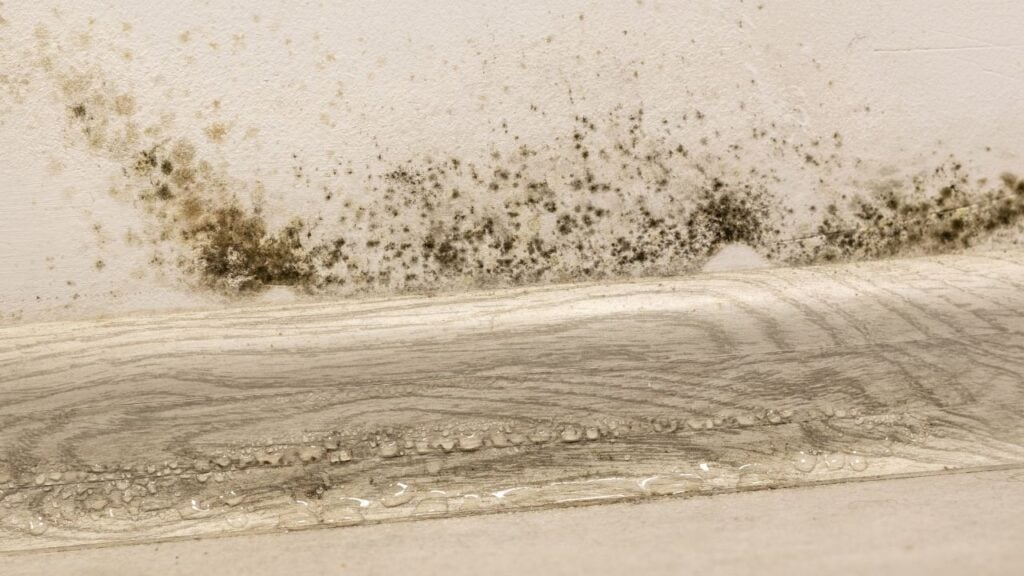
Rain falls across Western Washington for months at a stretch, and a lot of what it does to a house happens where nobody's looking.
These are the moisture problems Washington homeowners often discover too late.
