
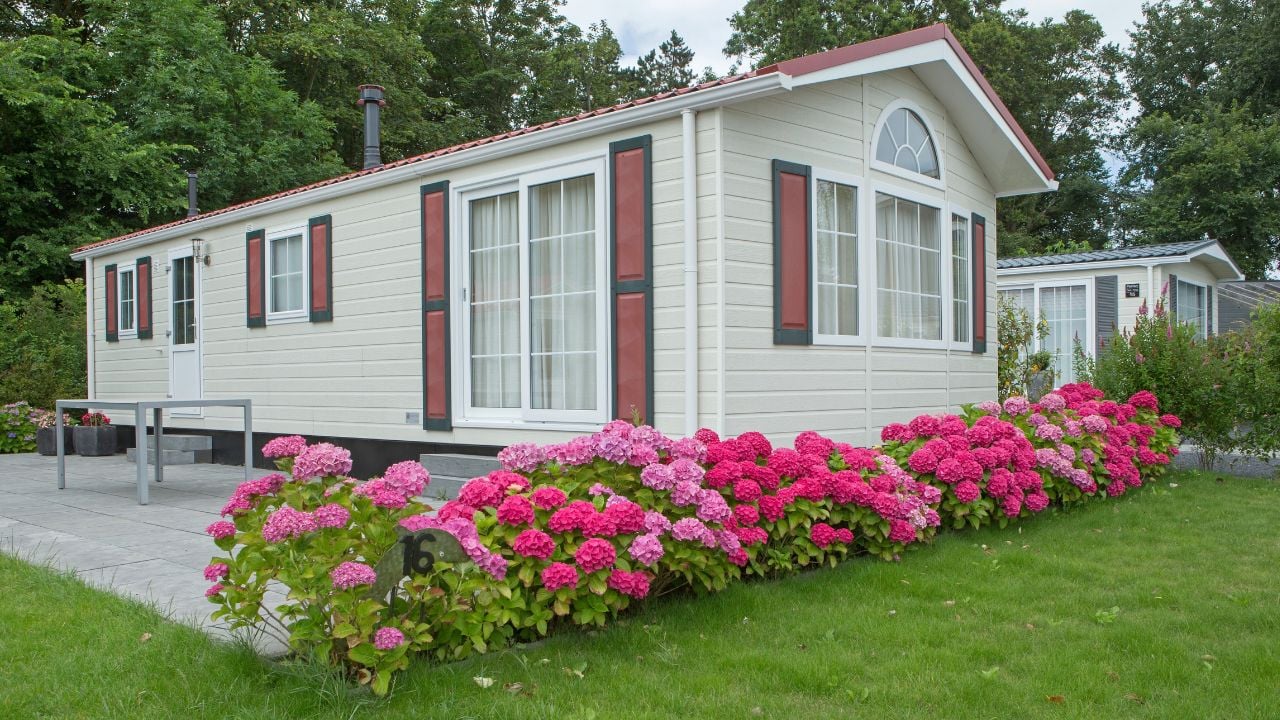
2 Documents North Carolinians Need to Transfer a Mobile Home Title

A mobile home sale is a big day, and the paperwork shouldn’t be what spoils it.
Here are the papers you’ll want in hand before you transfer a mobile home title in North Carolina.
Note: This is general information, not legal advice. Titling rules, forms and county requirements are subject to change, so confirm the current requirements with the North Carolina Division of Motor Vehicles.
Mobile Home Title Documents in North Carolina
State law and NCDMV’s cancellation form say manufactured home, while NCDMV’s website says mobile home.
Many of NCDMV’s title pages cover vehicles in general rather than mobile homes, so you’ll see the page behind each requirement named below.
Nationally, mobile homes make up 5.7 percent of housing units, and Commerce’s analysis of Census Bureau data puts North Carolina at about twice that share.
The two numbered items are the documents NCDMV’s mobile home list marks for a transfer.
A lien, a second owner or a move to real estate adds more, and the sections after item 2 cover each one.
What State Law Calls a Manufactured Home
A manufactured home, under the North Carolina General Statutes (G.S. 143-143.9), is a structure built on a permanent chassis.
It measures eight feet or more wide or 40 feet or more long while traveling, or 320 or more square feet when erected on site.
A structure that falls short of those measurements doesn’t meet that statute’s definition of a manufactured home.
1. Your Notarized Title
Your mobile home title comes first on the mobile home list, where NCDMV marks it as requiring notarization.
Both the seller and the buyer fill in the back of the original title, according to NCDMV’s title transfer page.
The seller adds a signature and a hand-printed name, while the buyer adds a name, an address and the date of sale or delivery.
You also need a notary for a North Carolina title, and a title from another state follows that state’s requirements.
2. MVR-1 Title Application
You declare every lien, meaning each lender’s claim on your mobile home, on the MVR-1 title application, and NCDMV’s mobile home list marks the form as requiring notarization.
On the MVR-1 form, you enter an ID number for each owner and a tax county.
You also need ID: NCDMV’s vehicle titles page says the person titling a vehicle must have a valid North Carolina driver license or ID.
A new North Carolina resident can use a valid out-of-state driver license plus a North Carolina Temporary Driving Certificate.
If Your Title Shows a Lien
If your mobile home title shows a lien, you apply to remove it on NCDMV’s MVR-8 form and attach evidence that the lender released it.
You sign the MVR-8 in front of a notary and send the original title with it, unless the lender still holds the title.
NCDMV’s duplicate title page says you complete a lien release when any lien shows on a title you’re replacing.
The mobile home list asks only that you declare all liens on the MVR-1, and it names no lien release.
Psst! How much do you know about mobile homes? Take our quiz and see if you can ace it.
Quiz
Mobile Home Pop Quiz
Answer these questions on North Carolina’s mobile homes and the board that oversees manufactured housing. We bet you can’t get them all right. Prove us wrong?
Which county has the highest share of mobile homes among its housing units, according to the state Department of Commerce?
Two Owners on One Title
With two owners on your mobile home title, NCDMV's vehicle titles page says every signature on the required documents needs a notary.
You also attach a black-and-white copy of the other owner's license or ID.
The mobile home list doesn't repeat either requirement.
Mobile Homes Converted to Real Estate
If your mobile home sits on land you own or lease long-term, NCDMV can cancel its title, so you may never transfer the title at all.
Under G.S. 20-109.2, you surrender the title and file an affidavit, which is a sworn written statement that the home meets the law's definition.
NCDMV then cancels the title and returns the affidavit with a notation.
You record the affidavit with the county register of deeds.
That office also records deeds, and our guide explains what can go wrong if you don't record a deed.
Once you record the affidavit, G.S. 47-20.6 says the mobile home becomes an improvement to real estate, which means it counts as part of the land.
Any lien on the home then follows the rules for a lien on real estate.
The MVR-46G and Tax Record
The MVR-46G, NCDMV's Cancellation of Mobile Home Titles form, is the paperwork you need when you record the home as real estate, according to NCDMV's forms page.
On the MVR-46G, you swear that the moving hitch, wheels and axles are gone and that the home sits on a permanent foundation of land you own or lease.
G.S. 20-109.2 limits this to the record owner of the land or a lessee whose lease has a primary term of at least 20 years.
On the MVR-46G, a notary takes your acknowledgment, and any lender with a lien on the home adds an acknowledgment and a lien release.
You attach a county tax record to the MVR-46G showing the home listed as real estate for property taxes.
If NCDMV issued a title that you can't find, the statute lets the land's record owner file the affidavit with a tax record instead.
The tax record must list the home in the name of the land's record owner.
Forms NCDMV's List Skips
NCDMV's mobile home list doesn't name the odometer disclosure statement (MVR-180), the damage disclosure statement (MVR-181) or a bill of sale.
Those forms sit on the general vehicle forms page, which lists a bill of sale for a vehicle bought from a dealer.
The list's intro does mention a manufacturer's certificate of origin, which the vehicle titles page calls the official transfer document for new vehicles.
If you're unsure whether your sale needs any of these, you can call (919) 715-7000 with questions.
Missing Mobile Home Titles
If your mobile home title is lost, you request a duplicate on the MVR-4, NCDMV's Application for Duplicate Title.
You have the MVR-4 notarized and complete it exactly as the original, according to NCDMV's duplicate title page.
NCDMV holds each duplicate title request for 15 days before processing it.
If the title belonged to a parent who has died, our guide to a car title after a parent dies covers the vehicle version of that process.
If you can't prove you own the home, NCDMV's bonded vehicle rules let you title a vehicle with a cash bond.
An indemnity bond, a security bond written by an insurance company, works too.
You then file a notarized MVR-1 with all liens declared, an indemnity bond (MVR-92D), an affidavit of facts (MVR-92H) and a vehicle appraisal.
For a mobile home, you need two appraisals from different North Carolina dealers, each on the dealer's letterhead.
Psst! Before you file anything, take our quiz on mobile home titles. See how many you can get right.
Quiz
Mobile Home Title Quiz
Test yourself on mobile home moves and vehicle titles. Can you get every question right?
North Carolina requires a tax permit to move a mobile home. What does the permit protect local governments against?
FAQ
What documents do you need to transfer a mobile home title in North Carolina?
NCDMV's mobile home list names the notarized title and the MVR-1 title application, with every lien declared.
A lien release, a second owner's ID copy or the MVR-46G for a home that becomes real estate can add more.
Does a mobile home title have to be notarized in North Carolina?
Yes for a North Carolina title and for the MVR-1, according to NCDMV.
A title from another state follows that state's requirements.
What if a lien is on the mobile home title?
You declare it on the MVR-1.
To remove a paid-off lien, you file NCDMV's MVR-8 with evidence of the lender's release attached.
Do you need a bill of sale to transfer a mobile home title in North Carolina?
A bill of sale isn't on NCDMV's mobile home list. For questions, call (919) 715-7000.
What if you can't find your mobile home title?
You request a duplicate on NCDMV's MVR-4 application, which needs a notary.
If you can't prove you own the home, NCDMV's bonded vehicle rules call for two appraisals from different North Carolina dealers for a mobile home.
8 North Carolina Property Line Disputes That End With One Neighbor Paying for the Survey
A few feet of property line can turn two neighbors into opponents.
Somebody ends up paying, and that's where the argument starts.
8 North Carolina Property Line Disputes That End With One Neighbor Paying for the Survey
9 Things North Carolina Home Inspectors Notice That Buyers Never Do

A home inspector and a buyer can tour the same house.
They don't always notice the same things.
9 Things North Carolina Home Inspectors Notice That Buyers Never Do
