
Why Is Florida Flood Insurance So Expensive in 2026?

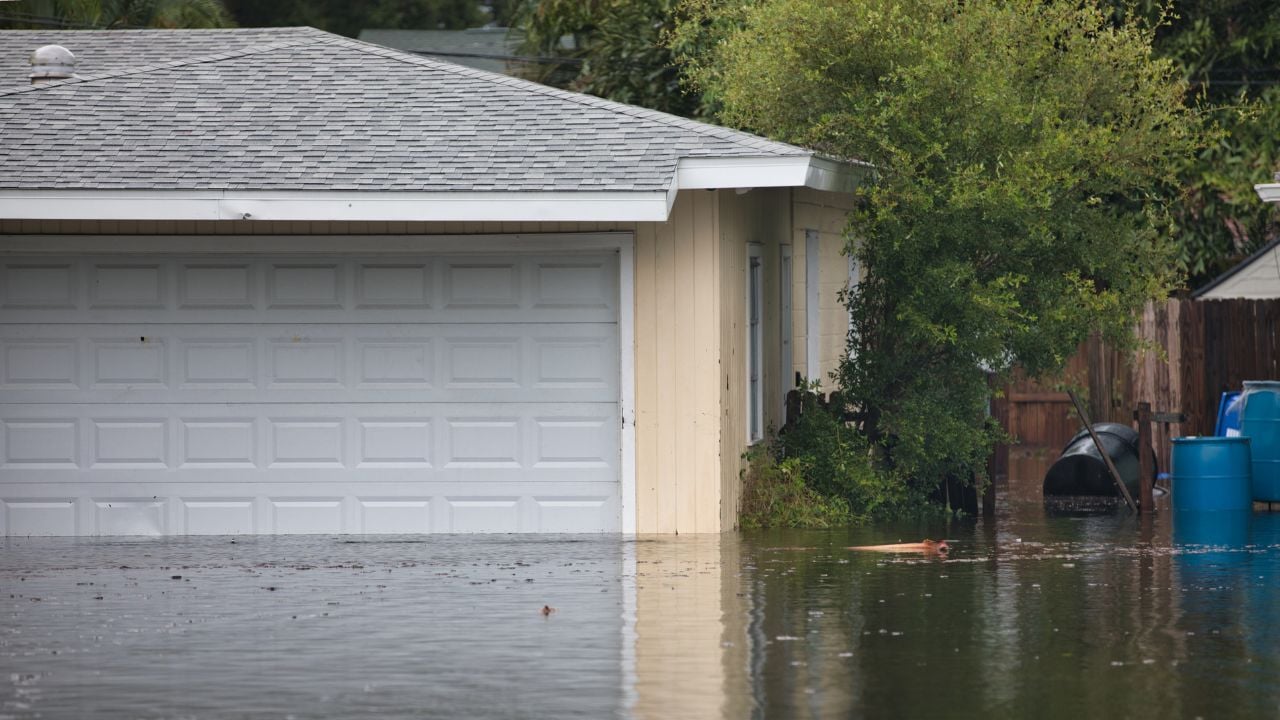
Flood insurance is so expensive in Florida because the Federal Emergency Management Agency (FEMA) now prices every policy to match each home’s full flood risk, and no state carries more flood risk than Florida.
That math arrived in late 2021, and premiums have been rising toward their full price ever since.
Add a brutal 2024 hurricane season and a state law pushing hundreds of thousands of Citizens customers to buy flood coverage, and the squeeze tightens with every renewal.
Note: This is general information, not insurance advice. Check specifics with your insurer or agent.
Why Is Flood Insurance So Expensive in Florida?
Florida sits low, drains slowly, and takes more hits from tropical systems than any other state.
Most of the peninsula rests within a few feet of sea level, right in the busiest hurricane lane in the Atlantic.
Floridians also hold about 1.8 million federal flood policies, more than any other state.
More policies in harm’s way mean more claims, and more claims mean higher prices for the whole pool.
The National Flood Insurance Program (NFIP) writes most of those policies, and Congress requires it to charge rates that reflect what each home is expected to cost.
For Florida homes, that expected cost runs high, so the premiums do too.
What Florida Homeowners Pay in 2026
Prices swing hard by address.
In parts of Pensacola, the average flood premium is set to double from $639 to $1,293 a year as the new pricing phases in.
On Key Biscayne, average premiums eventually reach as high as $7,000, per a Miami Herald analysis of the same FEMA data.
Inland homes on higher ground often pay far less.
Nationwide, FEMA’s numbers show 37% of policies for single-family homes price under $1,000 a year.
Coastal Florida rarely gets to shop in that aisle.
The gap between neighbors can shock new buyers.
A block of elevation, a canal out back, or a slab foundation instead of pilings can separate a $700 policy from a $4,000 policy on the same street.
That’s why two Floridians comparing premiums over the fence rarely hear the same number.
Flood coverage is only one line on Florida’s rising cost-of-ownership bill, and the tax collector writes another. We broke that one down in why Florida property taxes are so high.
How Risk Rating 2.0 Changed the Math
In October 2021, FEMA replaced its old zone-based pricing with a system called Risk Rating 2.0.
The old system grouped homes by flood zone and elevation, so low-risk neighbors subsidized high-risk neighbors for decades.
The new formula prices your house alone: Distance to water, foundation type, first-floor height, and the cost to rebuild it.
FEMA says about 38% of single-family policyholders already pay their full risk-based price.
Everyone else rides what FEMA calls a glide path.
A glide path means your premium rises every year until it reaches the full risk price for your home.
Federal law caps most of those increases at 18% a year.
An 18% cap sounds like protection.
Compounded, it doubles a premium in a little over four years.
So a Florida homeowner can do everything right and still watch the bill rise every single renewal until it hits full price.
Hurricane Claims Keep Piling Up
Helene and Milton struck within two weeks of each other in the fall of 2024.
FEMA expected to pay more than $10 billion in flood claims from 2024’s storms.
Premiums on hand didn’t cover it, so FEMA borrowed $2 billion from the U.S. Treasury in early 2025.
The program’s debt now sits near $22.5 billion, much of it left over from Katrina, Sandy, and Harvey.
Interest on that debt gets paid out of premiums, which means today’s policyholders help carry storms from twenty years ago.
Rebuilding costs push the same direction.
Materials and labor cost far more than they did five years ago, and your premium is priced on what it takes to rebuild your home, not what you paid for it.
A modest block house near Fort Myers might sell for less than it would cost to rebuild after a storm.
The insurance program prices the rebuild, so the premium keeps rising even when the market cools.
Psst! How much do you know about hurricanes and floods? Take our quiz and see if you can score 100%.
Quiz
Florida Storm Smarts
Answer these questions on hurricanes and floods. We bet you can’t get them all right. Prove us wrong?
Citizens Policyholders Face a Flood Mandate
The Florida Legislature added its own pressure in December 2022.
Under Florida Statute 627.715, most Citizens Property Insurance customers whose policies include wind coverage must carry flood insurance too.
The mandate phases in by home value.
Since January 1 of this year, Citizens policies insuring a dwelling for $400,000 or more need flood coverage even outside a mapped flood zone.
By January 1, 2027, the requirement reaches every Citizens personal residential policy with wind coverage, regardless of value or zone.
Condo unit-owner and renter policies stay exempt.
Proof of coverage is a renewal condition, so skipping it risks the whole homeowners policy.
So hundreds of thousands of Floridians who never bought flood coverage now shop for it, and every new buyer pays the full Risk Rating 2.0 price from day one.
How to Lower Your Flood Insurance Bill
Shop it.
Private flood carriers compete hard in Florida, and agents report private quotes sometimes beat the NFIP's price on the same house.
Citizens accepts a qualifying private policy, so the mandate doesn't chain you to the federal program.
Check your home's rating details next.
FEMA's formula leans on first-floor height, so a current elevation certificate can correct an estimate that's costing you money.
Flood vents in the foundation and machinery raised off the ground, like your AC unit and water heater, can trim the rating too.
A higher deductible lowers the premium if you can cover the gap after a storm.
And ask your agent about your city's standing in FEMA's Community Rating System, because some Florida communities earn flood discounts for every resident.
FAQ
These are the questions Floridians ask most about flood coverage.
Does Homeowners Insurance Cover Flooding in Florida?
No. A standard homeowners policy covers wind damage and rain that gets in from above, not rising water. Storm surge, an overflowing creek, or pooling rain needs a separate flood policy.
Is Flood Insurance Required in Florida?
Sometimes. Lenders require it for federally backed mortgages in high-risk zones, and Citizens policyholders fall under the state's phased mandate. Everyone else can buy it voluntarily.
How Much Is Flood Insurance in Florida Per Month?
It depends on the home. Many inland policies land under $1,000 a year, under $85 a month, while coastal and low-lying homes can run several times that.
Can I Buy Flood Insurance From a Private Company Instead of the NFIP?
Yes. Florida has one of the country's most active private flood markets, and lenders and Citizens accept qualifying private policies. Compare both before you renew.
One deadline matters more than any discount: A new flood policy usually takes 30 days to take effect, so the week a storm shows up in the forecast is too late to buy coverage.
And if you're house-hunting near the coast, ask the seller for their flood policy details and elevation certificate, because a policy written before the price reset can sometimes transfer to the buyer at its capped rate.
20 Florida Cities Ranked by How Affordable They Are in 2026
Somewhere in Florida, the mortgage math still works.
These 20 cities are ranked by what living there costs in 2026, and the winners aren't the names you'd guess.
20 Florida Cities Ranked by How Affordable They Are in 2026
7 Florida Senior Perks People Forget to Claim

Some of the best deals in Florida never sit on a shelf.
Tax breaks, premium help, and free counseling wait in county offices for the Floridians who ask.
7 Florida Senior Perks People Forget to Claim Until It's Too Late
