
5 Boston Parking Rules That Get Massachusetts Drivers Towed

Bay Staters who park on city streets can lose their car over details that are easy to overlook, especially if you aren’t from Boston.
These are the Boston parking rules that get Massachusetts drivers towed.
Note: This is general information, not legal advice. Parking rules and fees are subject to change, so confirm the current details with the Boston Transportation Department.
1. Parking on Snow Emergency Routes
Boston’s snow emergency parking page says the city will ticket and tow your car if you park on a posted snow emergency artery during a declared snow emergency.
A February 2026 Boston Police notice says parking is prohibited on both sides of all posted snow emergency routes.
The ban was set to start at 2 p.m. on a Sunday, with enforcement that included tagging and towing.
Officers would use loudspeakers to tell drivers to remove vehicles from snow emergency arteries and street corners.
The routes are listed neighborhood by neighborhood, from Allston to West Roxbury.
Among them are 11 state-owned roads, including the Jamaicaway, the Riverway and William J. Day Boulevard.
Check the signs posted on the street.
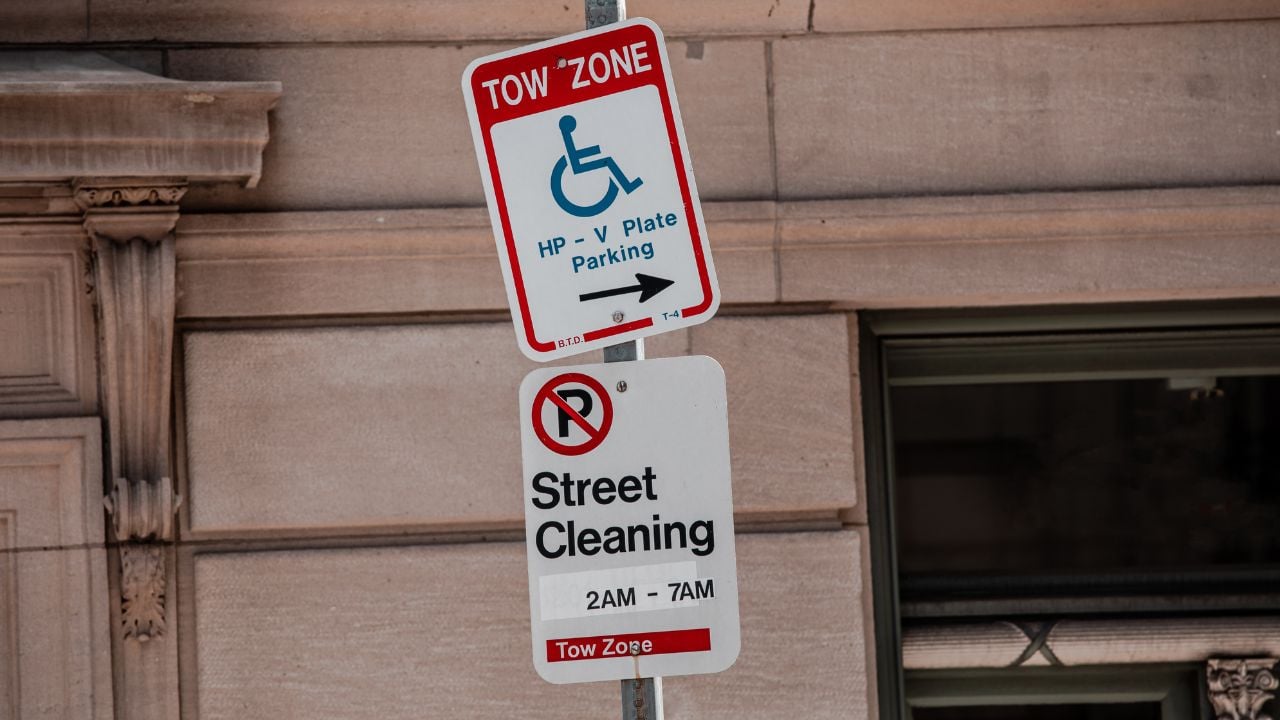
2. Street Sweeping Days
Boston’s street cleaning page says private companies working for the Transportation Department tow your car for parking in violation of the street sweeping regulations.
The Daytime Street Cleaning Program runs from April 1 to November 30 in most neighborhoods.
In the North End, the South End and Beacon Hill, daytime sweeping continues into the winter, until December 31.
The Nighttime Street Cleaning Program runs all year on main roads, arterials and commercial roads.
That means a sweeping tow can catch you in any season.
Always check the posted street sweeping sign on the street.
3. Hydrants, Fire Lanes and Other Blocked Spots
Boston Police warned in a snow emergency January 2026 notice that vehicles blocking hydrants, fire lanes, intersections, sidewalks or driveways may be ticketed and towed at any time.
The February 2026 notice repeats that sentence.
None of those five needs a snow emergency.
Don’t block sidewalks, fire hydrants, ramps, driveways or the street with your vehicle.
Whichever spot you block, you can be ticketed and towed.
Ticket Fines for Blocked Spots
Boston’s parking ticket schedule lists what you’d owe for each of these, whether or not a snow emergency is on.
A hydrant ticket costs $100, and so does a fire lane ticket.
A sidewalk ticket costs $65.
Parking within 20 feet of an intersection costs $40.
A driveway ticket costs $25, the lowest of the five.
Those amounts are for the ticket alone, and the tow lot bills you separately.
4. Overdue Parking Tickets
Boston’s towing page lists five or more overdue parking tickets among the most common reasons the city tows a car.
The city’s tow-lot page says you need to pay all of your overdue parking tickets and fees to get back a car seized over five or more unpaid tickets.
If your car was towed for parking illegally on a Boston street, you can have a walk-in hearing within five days.
You’re not eligible for that hearing if your car was towed for five or more overdue tickets.
5. Cars Left Standing for 72 Hours
The towing page says Boston can legally take possession of vehicles left standing on city streets for more than 72 hours.
That’s three days.
Check any car you leave parked on the street while you’re away.
Boston tags the cars it considers abandoned with a green sticker.
If you find a green sticker on your car, the city is treating it as abandoned.
Once the city tows an abandoned car, it may be disposed of at any time.
The city may store the car and sell it at auction after 30 days.
What a Tow Costs
Boston’s $90 tow fee is a one-time charge, so a car that spends a full day at the city lot costs $105 in total.
Storage reaches the $15 cap after five hours each day.
The lot sits at 200 Frontage Road and is open Monday through Friday from 7 a.m. to 10:30 p.m.
Automated kiosks are available for vehicle releases 24 hours a day, seven days a week.
You can pay with cash, a money order, a cashier’s check or a debit or credit card.
A 2.5 percent fee applies if you pay by card.
The tow-lot page says the state sets the maximum charge for a police-ordered tow or a tow from private property in 220 C.M.R. 272.00.
The current maximums are $132 for the tow and $35 for each day the company stores your vehicle, plus a fuel surcharge.
Psst! How ready is your car for a Boston snow emergency? Run through this checklist and see where you stand.
Space Savers
Boston’s winter parking page says you can only use a space saver when the city declares a snow emergency.
Boston’s Managing Winter and Snow winter page says that in some neighborhoods you can use one if you dig your car out of a street parking spot.
A January 2026 city release gives you 48 hours after a snow emergency ends to remove your space saver.
Space savers are prohibited at all times in the South End and Bay Village.
Public Works may collect and discard a space saver that breaks the rules, which is different from a tow.
4 Massachusetts Town Commons Nobody Can Agree How to Use
What is a town common for?
In Lexington, the argument centers on who gets to stand on the Battle Green.
4 Massachusetts Town Commons Nobody Can Agree How to Use
6 Things a Massachusetts Cranberry Bog Does During Harvest That Surprise Visitors

A visitor pulling over to a cranberry bog in October expects workers picking berries one at a time.
That isn’t what’s happening.
6 Things a Massachusetts Cranberry Bog Does During Harvest That Surprise Visitors
