
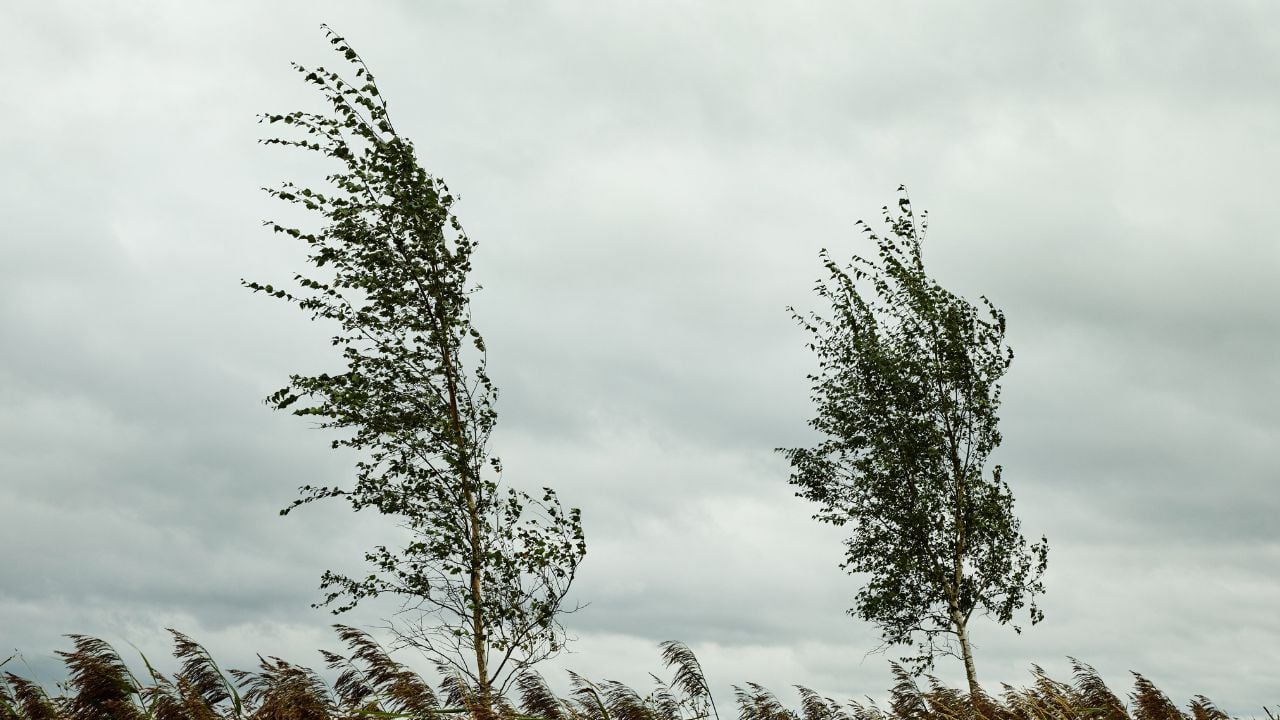
5 Things Coloradans Do When the Chinook Winds Hit the Front Range

When a chinook arrives on the Front Range, the temperature can jump 50 degrees or more.
The winds can be dangerous, too, so Coloradans have a routine when they hit.
Here’s what Coloradans do when the chinook winds hit the Front Range.
1. Joining the Alert List
Boulder County’s disaster management office says chinooks are most common from December through May.
Historically, the most severe chinooks have hit in January, when the jet stream is strongest and usually directly over the area.
If you live in the county, you can sign up for emergency messages at bocoalert.org before the next chinook.
Messages can arrive by text, email or on your cell, home or work phone.
For notifications in other languages, download the ReachWell app.
Where Chinook Winds Hit Hardest
The National Weather Service says the strongest chinooks can pass 100 mph, with the potential for widespread damage.
The service adds that winds of 60 to near 100 mph will occur in and near the foothills during these episodes, in areas such as Fort Collins, Boulder and Denver.
If you live around Boulder or Westcliffe, you’re in an area especially prone to the extreme wind episodes.
2. Tying Down Loose Objects
Chinook winds are one of the two main causes of high winds in the state during the cold season, the National Weather Service says.
When the forecast calls for high winds where you live, bring lightweight objects indoors or tie them down so they don’t become dangerous missiles.
Boulder County’s release for the December 19, 2025 red flag warning listed patio furniture, trash cans and decorations as yard items to secure.
Lock your gates with carabiners, padlocks or strong latches so they can’t blow open.
Gusts that day could reach 100 mph or more in Boulder County, especially west of Highway 36, Broadway and Highway 93.
3. Delaying Travel in High-Profile Vehicles
If you drive a lightweight or high-profile vehicle in chinook winds, the National Weather Service says to consider delaying travel.
North-south roads near the Front Range mountains can be dangerous during a high wind episode.
High winds can cut visibility with dust and overturn vehicles.
In December 2025, the Colorado Department of Transportation said high-profile vehicles, including trucks, vans and vehicles towing trailers, should avoid travel when closures or restrictions are in place.
Before you go, check COtrip.org or the COtrip Planner app, since more closures could occur.
On March 12, 2026, Highway 93 closed in both directions between Colorado 72 and Colorado 128 as downslope winds moved over the Rockies.
Interstate 25 shut down between Exit 268 near Fort Collins and the Wyoming line.
Eastbound Interstate 70 closed, too.
4. Sheltering Away From Windows
Shelter from a chinook the way you would from a tornado, Boulder County’s disaster management office says.
Indoors, that means going to the basement or, if you don’t have one, an interior room or hallway on the lowest floor, away from windows.
If you’re in a high-rise, go to the most interior rooms or hallways.
If you’re in a mobile home or trailer, move to a sturdier building or a ditch.
Stay out of structures with wide, free-span roofs, such as auditoriums and gyms.
Outdoors or in a vehicle, seek cover in a nearby building or lie flat in a ditch or ravine.
Don’t shelter under an overpass or bridge, since those spots are dangerous in strong gusts.
5. Skipping Sparks and Open Flames
Chinooks along the Front Range dry out fuels, which raises wildfire risk.
During a red flag warning, Boulder County’s disaster management office tells you to skip campfires, charcoal grills, slash burning, outdoor welding and parking in high grass.
The county’s December 2025 release added lawn mowers to the list.
If you don’t have a way to evacuate, consider leaving the risk area before the high wind event.
In some cases, safe and timely evacuation may not be possible if a fire approaches.
Wind Shifts and Temperature Jumps
If you’re outdoors when a chinook arrives, the temperature can quickly rise 50 degrees Fahrenheit or more.
A chinook usually begins with a sudden change in wind direction toward the west or southwest.
Wind speed rises fast.
Snow and ice melt rapidly, which is where the name snow eater comes from.
Boulder’s Historic Windstorms
During the chinook events of January 1982, the National Center for Atmospheric Research (NCAR) clocked 20 gusts of more than 120 mph in Boulder on January 17.
The peak was 137 mph.
An estimated 40 percent of all buildings in Boulder suffered at least minor damage.
The winds damaged about 50 homes badly enough to make them uninhabitable.
The winds also destroyed about 20 small planes at Boulder Municipal Airport.
Erosion damaged about 50,000 acres of farmland in Boulder County.
The Boulder area has had at least 16 windstorms with gusts above 100 mph since 1967, the Denver Gazette reports.
Maybe you remember December 17, 2025, when the National Weather Service listed a 109 mph gust northwest of Marshall in Boulder County, below the 137 mph of 1982.
Psst! How much do you know about Colorado weather? Take our quiz and see how many you can get right.
Quiz
Colorado Weather IQ
Answer these questions on Colorado’s wild weather. We bet you can’t get them all right. Prove us wrong?
In August 2019, a hailstone that fell northwest of Bethune set Colorado records for hail weight. How much did it weigh?
Weaker Peak Gusts in Boulder
Chinooks are downslope winds, and a 2025 study asked whether Boulder's extreme downslope winds are changing.
You may have heard that Boulder's winds aren't what they used to be.
At NCAR's Mesa Laboratory, gusts routinely topped 120 mph in the 1960s, 1970s and 1980s.
After 1995, peak gusts at the Mesa Laboratory rarely approached 100 mph.
Moving the anemometer in 1996 could account for some of that drop, but not all of it.
If you're wondering what explains the rest, the study's authors say changing atmospheric conditions appear to be a main reason.
More research is needed to explain the decrease.
9 Colorado Words and Phrases That Make No Sense to the Rest of the Country

Some phrases only make sense once you've lived in Colorado.
Check how many of them you already use.
9 Colorado Words and Phrases That Make No Sense to the Rest of the Country
9 Things That Confuse Everyone Who Moves to Colorado

Newcomers often run into the same surprises after a move to Colorado.
See which surprises tend to catch newcomers off guard first.
