
6 New York Diner Traditions That Have Disappeared Since the 1990s

Some New York diners still look a lot like the ones from the 1990s.
But a few things you used to count on are gone.
These are the New York diner traditions that have disappeared since the 1990s.
Ashtrays on Every Table
Diner counters used to keep an ashtray close at hand, by the register and along the booths.
You could finish a plate of eggs and light a cigarette without ever leaving your seat.
If you walked into a diner from that era, the smoke drifting over the counter would have been as normal as the coffee.
New York City had already gone smoke-free indoors in March 2003 under a city law.
A statewide ban on smoking in indoor workplaces and public places took effect on July 24, 2003.
The share of New York survey respondents who reported seeing someone smoke indoors during their last restaurant visit fell from 19.8% before the law to 3.1% in the months after it took effect.
Not the norm these days.
The Stainless-Steel Diner Car
A genuine diner used to announce itself the moment you saw it: A long, low building, built somewhere else and trucked in whole.
Many arrived already built, hauled to the site with the cooking equipment, dishes, and silverware in place.
Prefabricated diners in Manhattan have been disappearing as the land under them grew more valuable.
Builders like Jeremiah O’Mahony’s in the metropolitan area and the Worcester Lunch Car Company in Massachusetts made these diners in factories.
The Cheyenne Diner ran on Ninth Avenue at 33rd Street for 68 years after opening in 1940, until it closed in 2008.
A January 2009 deal sent it toward Birmingham, Alabama.
SoHo’s Moondance Diner, open since 1933 as the Holland Tunnel Diner, was pushed out by rising SoHo rents and moved to Wyoming in 2007.
In May 2005, the Munson Diner was trucked upstate to Liberty, New York, too, ending its run on a Hell’s Kitchen corner.
A 2019 National Trust for Historic Preservation story on the topic described just a handful of these prefab diners still standing in Manhattan.
Spot one in Manhattan today, and you’re looking at one of a handful of survivors.
Not many left to see.
What Makes a Diner a Diner
A diner’s factory-built pedigree runs deep: The Worcester Lunch Car Company alone produced 651 of them between 1906 and 1961, before the company stopped making them.
If you’ve ever eaten at a diner that showed up already built instead of being constructed where it stands, you’ve eaten inside a piece of that same manufacturing run.
The Henry Ford describes an authentic diner as a structure built in a factory and hauled to a site.
A restaurant built brick by brick on-site, however classic its booths look, falls outside that definition.
Frying in Trans-Fat Oil
About half of New York City’s restaurants were still using trans fat for frying, cooking, baking, or in spreads around 2006, according to a city health department official.
Switching cost money: A December 2006 Forbes report put industry-standard soybean oil at 31.5 cents a pound against upward of 60 cents for heart-healthy alternatives, and said much of the resistance to switching came from smaller, independent restaurants nationwide.
You’d never have known the difference by taste alone.
Back then, you wouldn’t have seen the oil type printed on a menu, either.
New York City’s Board of Health changed that, approving a citywide restriction on artificial trans fat in December 2006.
Restaurants had to phase it out in two steps, cutting trans fat from frying oil first and then from every other item by July 2008.
The rule covered every food service establishment in the city, diners included.
Foods sold in a manufacturer’s original sealed package were exempted under that same health code, but nothing made fresh in a diner’s kitchen was.
Same crunch, different oil.
Reading the Paper at the Counter
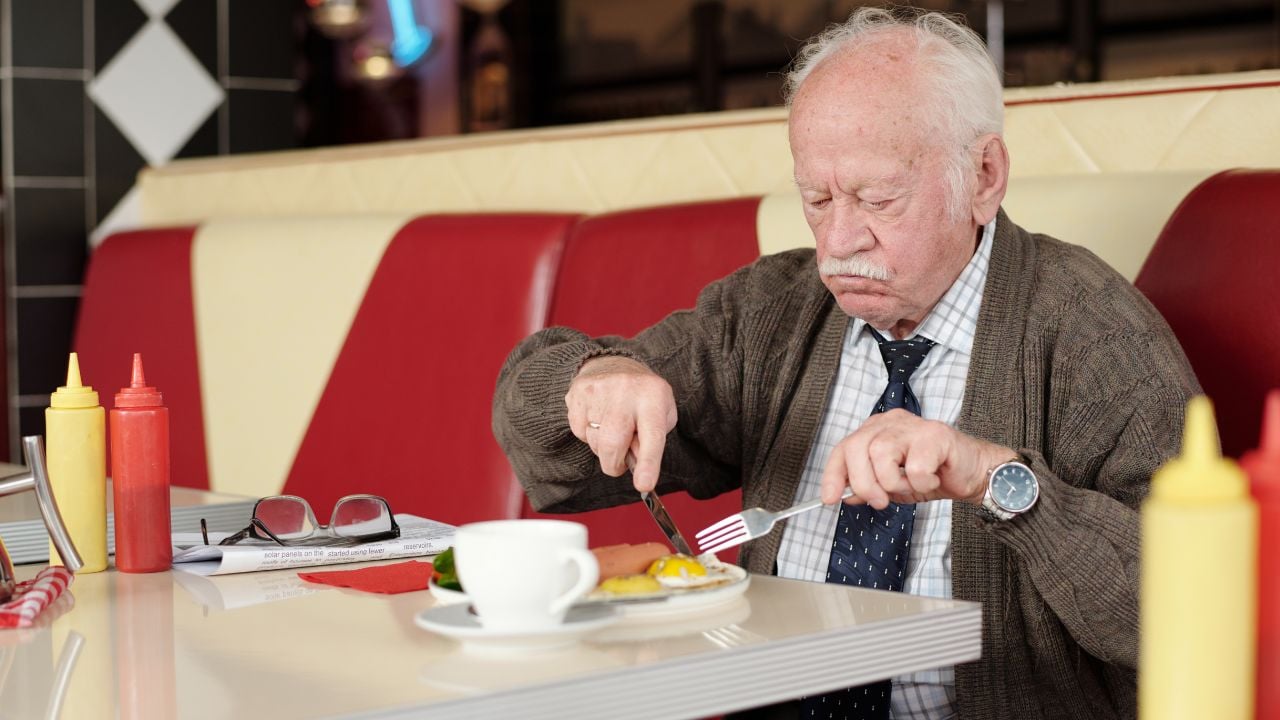
A diner counter used to come with the morning paper already folded open next to the sugar dispenser.
You’d flip to the sports page or the crossword and prop it up while you waited on your eggs.
That paper isn’t there anymore.
Weekday newspaper circulation nationwide fell from about 62.3 million print copies in 1990 to just under 21 million print and digital copies combined by 2022.
You’re more likely to see a phone propped against that sugar dispenser now than a newspaper.
Scrolling replaced the flip through the sports page.
Styrofoam Cups and Containers
Coffee at a diner counter used to come in a foam cup you could crush flat with one hand on your way out the door.
Takeout containers were foam too, the kind that kept a plate of eggs warm on the subway ride home.
New York City banned all of it, effective January 1, 2019, with enforcement starting that July.
The rule bars food-service spots from possessing, selling, or using foam cups, bowls, plates, and takeout containers, full stop.
Prepackaged food that arrives already sealed in foam is still allowed, but a diner filling your togo container straight from the grill isn’t.
Foam is banned outright now, and the city points restaurants to alternatives such as paper, plastic, aluminum, and compostable packaging.
Crushed flat, not anymore.
Psst! How much do you know about the history behind New York’s diners? Take our quiz and see how many you can get right.
Quiz
New York Diner Trivia Quiz
Ten questions on the diners that built the state. See how many you can nail.
Walter Scott’s horse-drawn lunch wagon, a forerunner of the classic diner, opened for business in 1872 in which city?
The Family-Run Diner
Many diners started as a Greek immigrant's bet on a griddle and a coffee urn, then passed from father to son for decades.
You won't find as many of those small, family-run counters as you once would have.
That pipeline is drying up.
Diner historians estimate New York City had around 1,000 diners a generation ago.
A 2015 tally of city health records found only 398 establishments that still called themselves a diner or coffee shop.
That works out to roughly 60% fewer, and the money side of the business is steep.
Rent alone ran about $25,000 a month as of that same 2015 report for an old-school spot like the Bel Aire Diner in Queens.
The father-to-son handoff that used to keep a diner in the family isn't automatic anymore.
The Bel Aire Diner generates about $3.6 million in annual revenue, per that same Crain's reporting.
That is the kind of math a diner has to clear, family-run or not.
11 Tipping Situations That Leave New Yorkers Completely Confused
A January 2026 city report says the design of Uber Eats and DoorDash tip screens has cut delivery workers' tip earnings by $554 million since the designs were implemented.
That's just one spot where the tip math gets murky, and a sit-down table isn't much clearer.
11 Tipping Situations That Leave New Yorkers Completely Confused
8 Things New Yorkers May Need Permission to Sell From Their Yard
New York's Home Processor registration exempts you from Article 20-C licensing, but it prohibits products such as sauces, salsas, marinades, mustards, and ketchups.
The folding table and the hand-painted sign are the easy part; the paperwork behind them is where the rules live.
8 Things New Yorkers May Need Permission to Sell From Their Yard
