
8 Miami Curbside Items That Could Still Legally Belong to Someone Else

Grabbed something off a Miami curb because it looked abandoned?
Miami-Dade’s property rules don’t recognize “abandoned” that easily.
One legal test decides that, not how long something’s been sitting outside.
These are the Miami curbside finds that can still legally belong to someone else, no matter how free they look.
Note: This is general information, not legal advice. Property, collection, and reporting rules can vary by circumstance and are subject to change.
1. Furniture From an Eviction
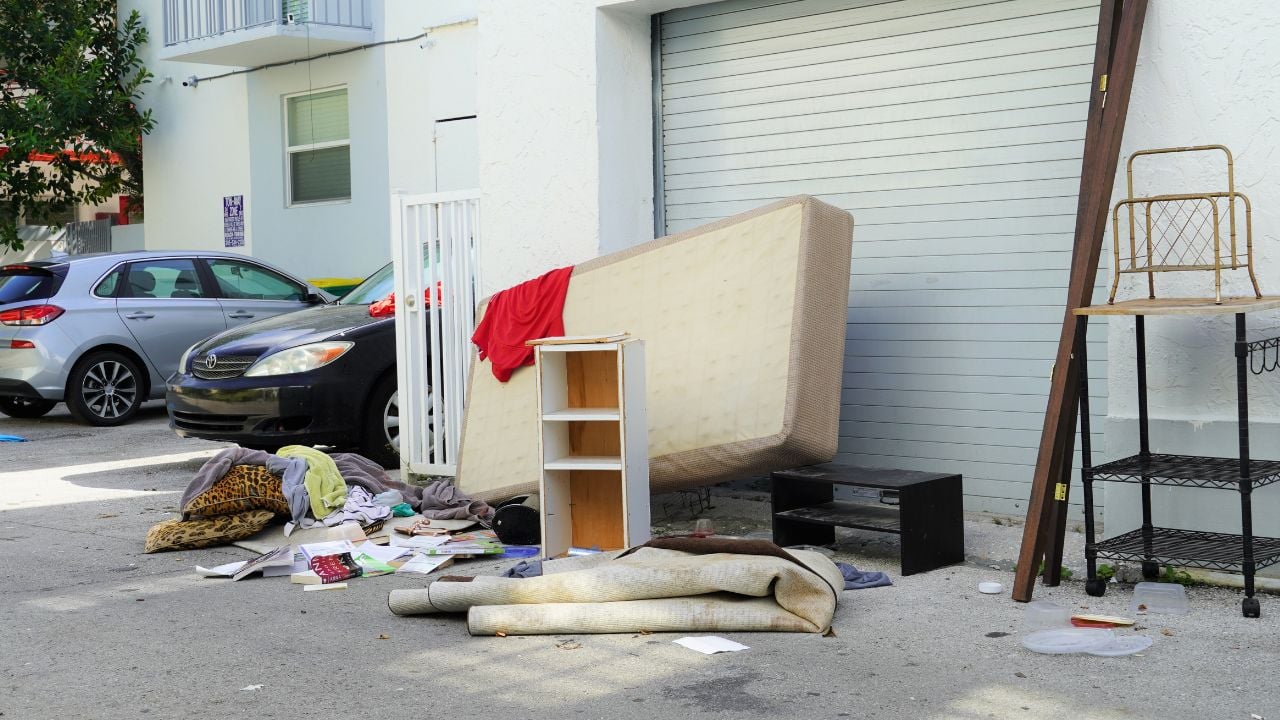
Furniture piled at a Miami curb the morning after a sheriff’s eviction looks like an open invitation.
Florida Statute 83.62 tells a different story: A landlord can move a tenant’s belongings only “to or near the property line” once a sheriff carries out a writ of possession.
That same statute shields the landlord and the sheriff from liability for whatever happens to the property after it’s moved.
It never transfers ownership to a stranger.
The couch, the mattress, the kids’ bikes stacked against a mailbox: All of it technically still belongs to the tenant a sheriff just removed.
Grab something from a pile like that in Little Havana or Hialeah, and it’s still, legally, someone else’s.
2. Boxes Left After a Move-Out
Boxes and furniture stacked at a Miami apartment’s curb the day after a lease ends look like an easy grab.
Nobody faced eviction this time.
Florida still makes a landlord wait before treating it as free.
Under Florida Statutes 715.104 through 715.109, a landlord who wants to call a former tenant’s belongings abandoned has to send written notice first, then hold everything for at least 10 to 15 days.
Anything believed to be worth more than $500 has to go to a public sale, advertised for two weeks straight, not handed to whoever’s truck is parked closest.
Under $500, the landlord can keep the property or dispose of it, but that choice still belongs to the landlord.
A dresser sitting at a Coral Gables or Westchester curb during that window is still, on paper, the old tenant’s.
3. Recyclables in the Blue Bin
Recyclables sitting in a blue bin at a Miami curb look like the least protected trash on the block.
Miami-Dade County built an ordinance around proving that wrong on purpose.
County code Section 15-2.1 makes recyclable material placed in a designated collection area the property of the county’s authorized hauler, or of the local government running the program.
Taking it without written consent is a violation.
Doing it with a vehicle turns it into a separate offense.
The rule exists because those cans, bottles, and scrap paper carry resale value, and the county doesn’t want that revenue walking off in a stranger’s cart.
A soda can pulled from a neighbor’s bin in Kendall breaks the same rule a whole truckload would.
4. Bulky Piles With No Appointment
A sofa, a mattress, and a broken bookshelf sitting at a Miami-Dade curb look ready for pickup the moment they land there.
Miami-Dade’s Bulky Appointment System only controls when a resident may set that pile out, not who ends up owning it.
Residents have to schedule a pickup date before placing anything at the curb.
The pile can go out no more than three days ahead of that date.
Put a pile out early, or without an appointment at all.
The county can issue a warning notice or a civil citation, a rule in place since April 2023.
None of that citation risk changes who owns the furniture in the meantime.
The county’s rule only regulates timing.
It never hands the sofa, the mattress, or the bookshelf to anyone else, not to the county’s hauler and not to a passerby with a truck.
Everything on an unscheduled pile is still the resident’s personal property, sitting exactly where they left it, waiting on an appointment that may not even exist yet.
Load it up on a street in Cutler Bay before that pickup happens.
Legally, someone just took their neighbor’s furniture.
Psst! Think you know Miami’s curbside finders-keepers rules? Flip each card below and see how many you call right.
5. Bikes, Tools, and Strollers
A bike leaning against a Miami mailbox, or a stroller sitting at the edge of a driveway, doesn’t always mean somebody meant to throw it out.
Florida draws a hard line between trash and something merely lost.
Under Florida Statute 705.102, anyone who finds lost property has to report its description and location to a law enforcement officer.
Keeping it instead is unlawful.
The statute calls it theft outright if a finder refuses to hand the item over when asked.
Full ownership doesn’t settle on the finder the moment they pick something up.
Florida Statute 705.103 gives a law enforcement agency 90 days to hold onto a found item before anyone decides what happens to it next.
That decision isn’t automatic, and it isn’t the finder’s alone to make.
The agency can keep the item for government use, donate it, sell it, trade it to another agency, or hand it over to the finder, whichever option it decides fits.
A serial number, a name written in marker, a kid’s name tag zip-tied to the handlebars: Any of it can turn a “free find” back into somebody’s property, weeks after it left a driveway in Pinecrest or anywhere else in Miami-Dade.
6. Cars, Boats, and Trailers
A car that hasn’t moved in months near a Miami canal swale, or a boat trailer rusting by the road in Homestead, looks abandoned enough to claim.
Florida’s legal bar for “abandoned” sits far higher than many residents assume.
Under Florida Statute 705.101, abandoned property has to have no identifiable owner and has to be wrecked, inoperative, or worthless to whoever had it.
A car with a working engine and a valid tag doesn’t clear that bar just because it’s been parked a while.
Hooking it up and driving off is still, legally, taking somebody’s car.
The lawful path runs through a law enforcement officer, the same reporting process that covers a lost bike or a lost stroller.
Nobody gets to skip that step just because the vehicle sat still long enough to gather dust.
How Miami-Dade Confirms a Car, Boat, or Trailer Is Abandoned
Miami-Dade doesn’t take a passerby’s word for it when a car, boat, or trailer looks abandoned near the curb.
State law requires an officer to run the vehicle’s identification number, or a boat’s hull number, through the state’s motor vehicle department, tracking down any registered owner or lienholder, before the county starts treating the property as unclaimed.
Florida Statute 705.101 still sets the bar itself: No identifiable owner, and wrecked, inoperative, or worthless to whoever had it.
A couch with a broken leg can clear that bar.
A car that still starts, or a jet ski with a working engine, usually can’t.
Florida sorts those into lost property instead, and a boat rusting by a Coconut Grove canal still has to run through that same finder-reporting process before anyone new can claim it.
7. AC Units Pulled for Scrap
An air conditioning unit sitting at a Miami-Dade curb looks like an easy payday at the scrapyard.
Central air units sit on the county’s list of items not accepted for curbside bulky pickup, right alongside electronics and auto parts.
That means a unit sitting at the curb didn’t go through the county’s lawful process to get there.
Somebody either dumped it illegally, or it’s still bolted to a wall or a concrete pad somewhere close by, waiting to be found missing.
Florida law backs up that second possibility with more than a hunch.
Under Florida Statute 538.19, a secondary metals recycler has to log a seller’s thumbprint, a photo, and a signed ownership statement for every single purchase.
Florida Statute 538.26 goes further for air conditioning parts.
A scrapyard can’t buy the copper condenser or evaporator coil out of a central air system unless the seller hands over a receipt, a bill of sale, or other proof it’s theirs.
Window units and anything pulled from a car are the only exceptions.
That single requirement is the law’s way of saying a central air unit off a Miami-Dade wall is presumed to still belong to whoever it was bolted to, not to whoever hauled it away.
A homeowner in Doral or a landlord in Sweetwater can be out an entire system that costs thousands to replace, all so somebody can collect a small stack of cash for the copper inside it.
8. Dressers Full of Mail
A dresser dragged out during a move in Miami sometimes comes with its drawers still loaded, old bills, checkbooks, even unopened mail nobody bothered to clear out.
The furniture might be trash.
What’s inside it usually isn’t.
Under federal law, 18 U.S.C. 1708 makes it a crime to take, keep, or use mail that belongs to someone else, no matter where it turns up.
That includes a stack of letters found in a dresser drawer at a Miami curb.
Penalties run up to five years in prison and a fine as high as $250,000.
A canceled check, an old tax form, a name and address on an envelope: None of it becomes fair game just because the furniture around it did.
10 Florida Wildlife Rules People Break Just by “Being Friendly”
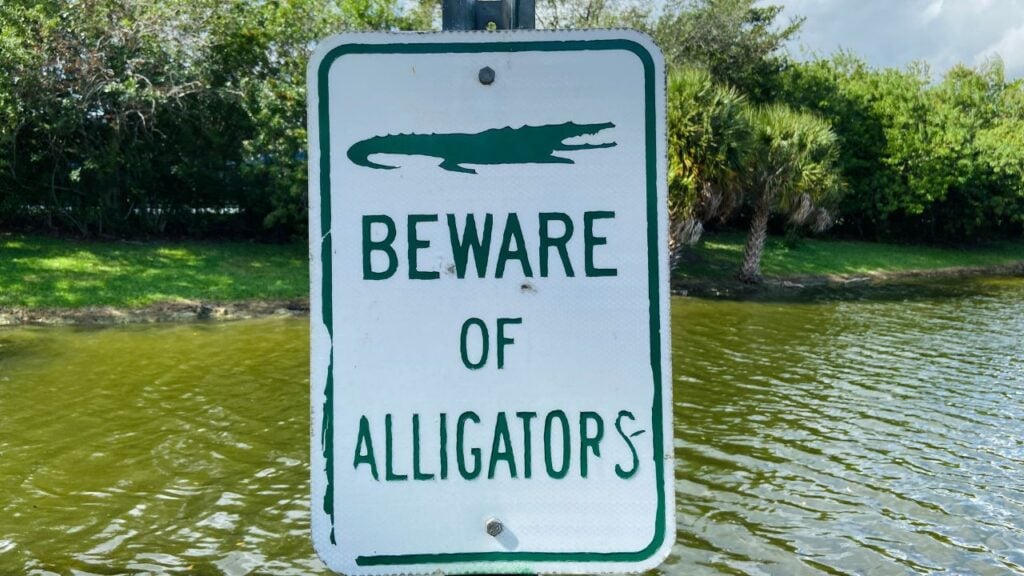
A tourist in Miami Beach once turned a stomped sea turtle nest into a felony charge and a $5,000 bond, all without meaning any harm.
Florida’s wildlife rules catch many well-intentioned people the same way, long before a fine ever crosses their mind.
10 Florida Wildlife Rules People Break Just by “Being Friendly”
9 Things That Instantly Mark You as a Florida Newcomer

By late August, a new Florida resident’s front bumper wears a gray crust they can’t identify, let alone scrub off.
Lovebugs are only the first surprise on a much longer list nobody warns newcomers about before the move.
