
8 Things South Dakotans Do in a Prairie Blizzard That Out-of-Staters Can’t Imagine

South Dakotans plan for storms that Americans from milder climates can’t picture.
Here’s what they do in a prairie blizzard that shock many out-of-staters.
Note: This is general information, not emergency or medical advice. Winter safety guidance is subject to change, so check South Dakota’s bReady site.
1. Waiting Out Closed Interstates
When a blizzard hits, the South Dakota Department of Transportation (SDDOT) can close Interstate 90 outright.
In December 2022, a winter storm shut it in both directions from Chamberlain to Rapid City.
Blizzard-like conditions in January 2023 closed I-90 from Chamberlain to Sioux Falls.
Interstate 29 shut from Sioux Falls to Brookings the same day.
That ends your trip.
If your route runs along I-90, you wait for officials to decide the road can reopen safely.
2. Heading Home Before Dark
A blizzard can send SDDOT’s plows off the road at night.
During a January 2024 storm, plows would suspend maintenance after dark in the state’s southeast corner.
Many secondary roads would then become blocked and impassable.
The December 2022 storm brought the same warning for secondary highways.
If the light is fading and you’re still out, your window to get home is closing.
Daylight is the deadline.
3. Checking 511
Many drivers check road conditions before a blizzard keeps them off the road.
Check before you go.
SDDOT points drivers to sd511.org or the 511 phone line for the latest road and weather conditions.
The same site lets you sign up for free alerts, and they reach your phone or inbox by text message or email.
In January 2023, drivers were also sent to a Winter Storm Information graphic on the homepage.
4. Packing a Survival Kit
A blizzard is the reason the state’s bReady emergency site lists a winter survival kit for your car or truck.
The list runs from blankets and a flashlight to a tow rope, jumper cables and road maps.
Cat litter?
Sand or cat litter is on the list, plus a smaller can and waterproof matches to melt snow for drinking water.
Keep your gas tank near full, too, and let a friend or relative know your travel timetable.
Psst! How much do you know about South Dakota blizzards? Take our quiz and see how many you can get right.
Quiz
Prairie Winter IQ
Answer these questions on South Dakota blizzards and prairie winter. We bet you can’t get them all right. Prove us wrong?
The January 12, 1888 “Children’s Blizzard” killed about how many people across the Northern Plains?
5. Staying in the Car
A blizzard can strand a driver, and bReady tells stranded drivers to stay in the car or truck.
The car is the shelter.
If you're stuck, run the motor about ten minutes each hour.
Open the windows a little for fresh air and make sure the exhaust pipe isn't blocked.
At night, turn on the dome light while the engine runs.
Tie a colored cloth to your antenna or door.
After the snow stops falling, raise the hood.
6. Feeding for Wind Chill
A blizzard's wind chill makes cattle burn more energy.
Once temperatures fall below 30 degrees, energy requirements rise about 13% for every 10-degree drop in wind chill, according to South Dakota State University (SDSU) Extension.
That raises feed costs.
If you run cattle, a sharp drop in wind chill raises what your herd needs to eat.
Cold costs calories.
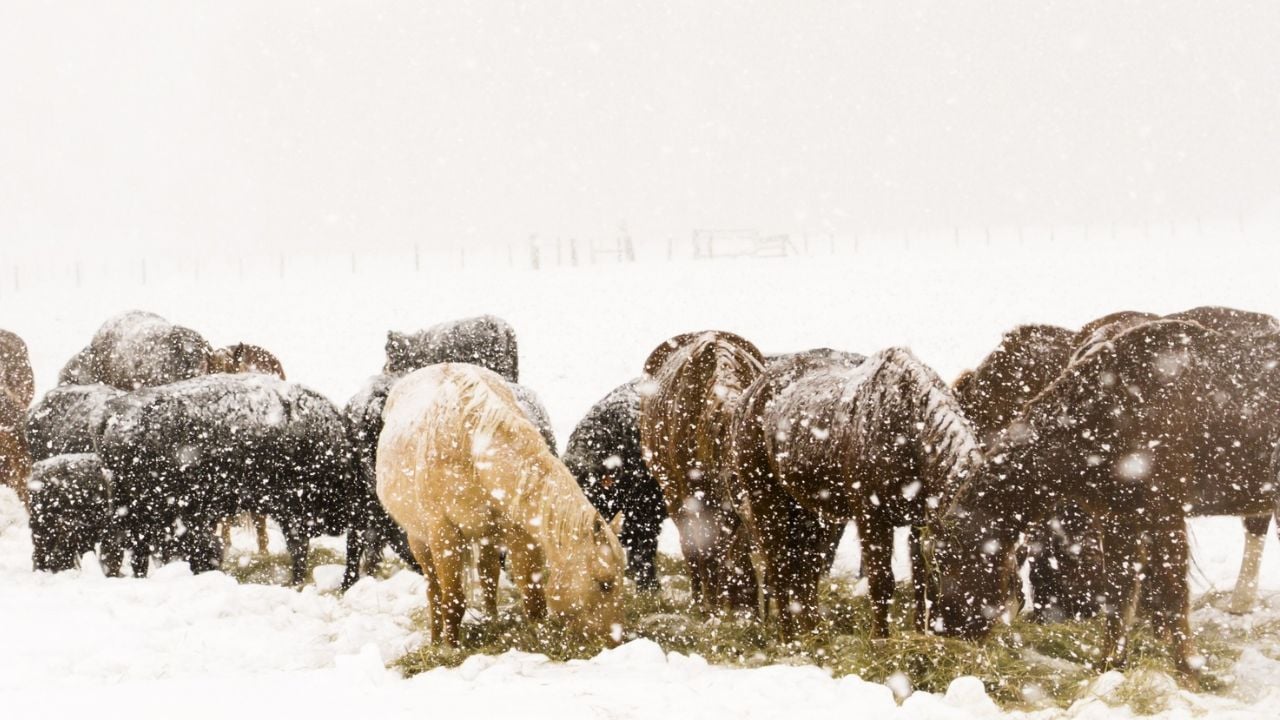
What Winter Storm Atlas Did to Ranch Country
Winter Storm Atlas was a historic blizzard that hit western South Dakota in early October 2013.
Gusts reached 50 to 70 mph.
Rapid City picked up 23.1 inches of snow.
The National Weather Service (NWS) calls livestock losses the storm's most staggering toll, with thousands of cattle, sheep, horses and even bison perishing.
Cattle that were far from shelter became hypothermic.
7. Building Windbreaks
A blizzard's wind doesn't stop at your pasture fence, so SDSU Extension says cattle in exposed areas need access to shelter.
Downwind, the protected zone reaches 8 to 15 times the windbreak's height, and wind speed there drops by about half.
If you're building one, aim for a design that's 25 to 33% open, with a 4-to-12-inch gap at the bottom.
Solid walls often drift worse at the edges.
Gaps are the point.
8. Closing Unused Rooms
If a blizzard knocks out your heat, bReady's advice starts with closing off the rooms you don't need.
After that, stuff towels or rags in the cracks under doors and cover windows at night.
Eat and drink, since food provides the body with energy and heat, and wear layers of loose-fitting, warm clothing.
The home checklist lists heating fuel, an emergency heating source and a battery-powered weather radio.
The house gets smaller.
Watch Versus Warning
Before a blizzard, the NWS may issue a winter storm watch for your area, and bReady spells out what that means.
A watch means hazardous winter weather is expected in the next 12 to 36 hours.
Examples include snow greater than 6 inches in 24 hours, winds gusting over 35 mph, or visibility under a quarter mile.
A winter storm warning means those conditions exist.
That's your head start.
What Counts as a Blizzard
A blizzard has a formal definition from the NWS.
The NWS says blizzard conditions mean sustained wind or frequent gusts of 35 mph or greater.
Falling or blowing snow also has to cut your visibility frequently to less than a quarter mile.
Those conditions have to last three hours or longer, so a storm you'd call a blizzard might fall short on paper.
Blowing snow counts.
A ground blizzard develops with little or no new snowfall.
An Arctic cold front's strong wind picks up the snow already on the ground, creating whiteout conditions with gusts often reaching 50 to 60 mph.
5 Regional Snacks That Only Make Sense at a South Dakota Gas Station

Pull off the interstate anywhere in South Dakota, and the gas station snack rack looks little like the one back home.
So what's on that rack, and why does none of it travel?
5 Regional Snacks That Only Make Sense at a South Dakota Gas Station
9 Things South Dakotans Miss Most After They Move Away

What do South Dakotans miss once they've moved away?
Some of the answers might surprise you.
