
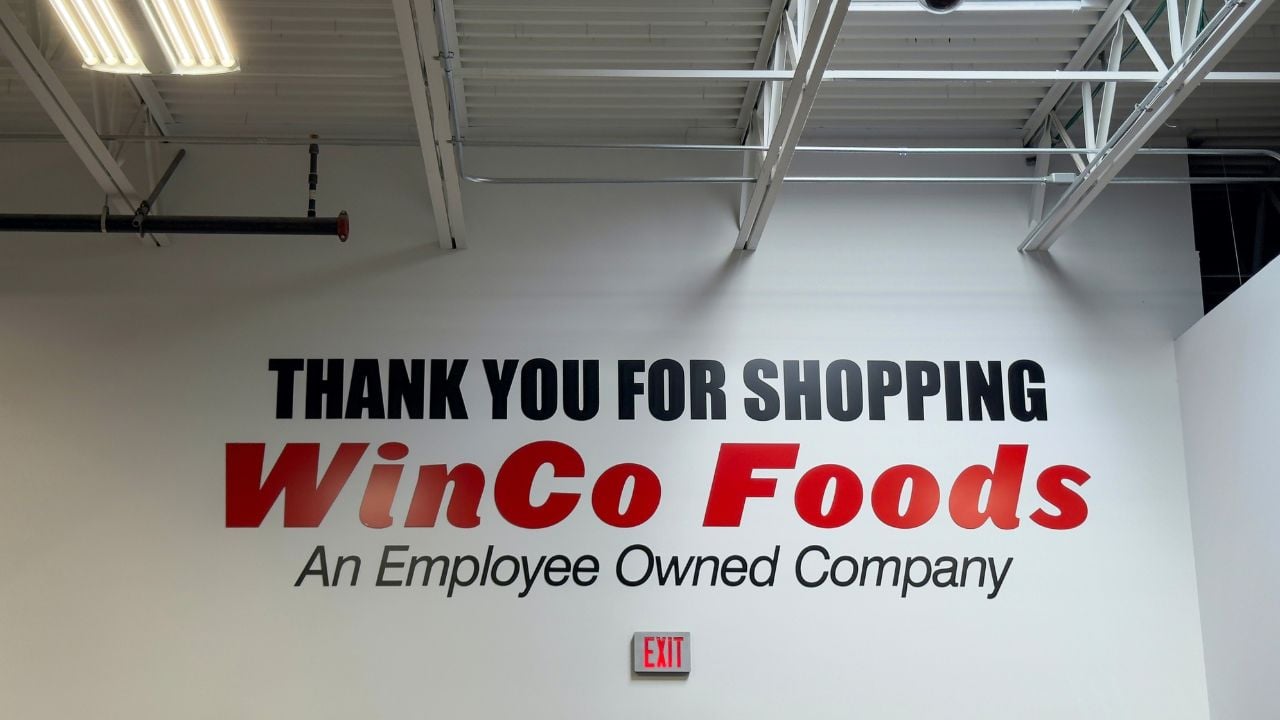
8 Things WinCo’s Employee Ownership Changes for Oregonians

More than 20,000 employees co-own the WinCo Foods where many Oregonians shop every week, according to the National Center for Employee Ownership’s national rankings.
These are the things WinCo’s employee ownership changes for Oregonians.
1. Owned by Workers, Not Wall Street
WinCo Foods is 100% employee owned through an employee stock ownership plan (ESOP).
The National Center for Employee Ownership’s Employee Ownership 100 list put WinCo at No. 2 in the country in its 2025 ranking, behind only Publix.
Publix tops that list mostly on raw size, with 260,000 workers on its payroll to WinCo’s 20,000.
WinCo’s entry on that list carries an asterisk marking full employee ownership, a marking Publix’s entry doesn’t have.
Nobody outside the company holds a share.
WinCo is privately held, so there’s no ticker symbol trading on Wall Street and no quarterly earnings call to please.
For shoppers, that means the company answering to the people stocking its shelves and running its registers, not to a fund manager in another state.
2. Years to Full Vesting
WinCo doesn’t hand new hires a stock certificate on day one.
An Oregon employee has to turn 19 and work at least 500 hours in their first six months before an ESOP account even opens.
From there, WinCo contributes about 20% of that employee’s eligible pay into stock every year, and the worker never pays a dime into it.
Full ownership of those shares, known as vesting, typically takes about six years of steady work to reach.
Patience pays here.
An Oregonian who stays at the register or in the stockroom for the long haul ends up with a retirement account, not just a paycheck.
The Math Behind WinCo’s Example
WinCo’s materials walk through a 15-year employee who received $5,000 in stock contributions every year.
Add up 15 years of $5,000 and the contributions alone total $75,000.
WinCo says that same account would be worth almost $185,000 by year 15.
The gap between $75,000 and $185,000 isn’t extra deposits.
It’s the annual appraisal pricing the shares higher as the company’s value grows, the same way a home’s worth can rise well past what an owner ever paid into it.
3. Woodburn’s New WinCo Store
WinCo Foods plows profit straight back into Oregon instead of a shareholder dividend, and a new store planned for Woodburn is where that shows up next.
WinCo has applied to build a store of about 84,000 square feet in Woodburn, Oregon, its first location in that city.
The site sits just east of Interstate 5, directly across the highway from the distribution center WinCo’s employee-owners opened in 1998.
That distribution center has restocked every Oregon and western Washington store ever since.
Construction could break ground before the end of 2026, with an opening targeted for 2027.
Woodburn gets a WinCo without waiting on someone else’s expansion budget.
4. Waremart Revival
WinCo Foods revived a retired name instead of inventing a new one.
Employee-owners themselves picked the company’s new name in 1998, when a companywide contest retired the original Waremart brand for WinCo.
Two decades later, ownership let the company bring Waremart back on purpose.
WinCo reopened the name in 2017 for a smaller-format store built for towns too small for a full-size location.
The first one filled a former Kmart in Ontario.
A second Waremart-branded store opened that same year in Keizer, built on a shuttered Haggen site east of Salem.
Independence carries the same Waremart name today on its Monmouth Street store, WinCo’s third in Oregon under the heritage brand.
WinCo answers to employee-owners, not to outside shareholders demanding one uniform look nationwide, so a name retired in 1998 could return for three stores without a fight.
Psst! How much do you know about employee-owned grocery stores? Flip these cards and see how many you get right.
5. No Membership Fee Required
WinCo doesn’t charge a membership fee, and any Oregonian can walk in and start shopping without signing up for anything.
Compare that with the warehouse club shoppers cross-shop most.
A Costco Gold Star membership runs $65 a year, and its Executive tier costs $130.
That’s cash spent before a single item rings up.
Those membership fees help fund the return Costco pays the shareholders who own its publicly traded stock.
WinCo has no public shareholders waiting on that kind of payout, so it never built a membership fee into the model at all.
6. Appraised Yearly, Never Publicly Traded
WinCo Foods prices its stock once a year, not once a second.
That stock never trades on a public exchange, so there’s no ticker symbol to check before your coffee cools off.
An independent appraisal firm sets the per-share value annually, hired by the trustee who oversees WinCo’s ESOP.
An employee-owner’s account doesn’t move with the stock market’s mood on a random Tuesday, for better or worse.
That number holds steady until the next appraisal comes around.
7. Limits on Employee Votes
WinCo’s employee-owners don’t get a ballot on next week’s sale prices.
Federal law gives ESOP participants pass-through voting rights on major matters, things like a merger, a sale of the company’s assets, or a board election.
A merger vote follows a different process than tomorrow’s sale price.
The ESOP trustee is the one who casts that vote.
Everyday decisions, like which items go on sale or how WinCo staffs a store, stay with company management instead.
Ownership here means a stake in the company’s future, not a remote control for this week’s ad.
8. Millionaire Employee-Owners
WinCo’s ownership model has turned ordinary grocery jobs into serious long-term wealth for some of the people who held them.
A 2014 Forbes profile found more than 400 frontline WinCo workers, cashiers and stockers among them, had built ESOP accounts worth $1 million or more.
Nobody handed them that money.
It built up year over year from company-funded stock contributions and decades on the job, the same slow math that plays out for an employee-owner today.
None of it happens overnight, and a new hire stocking shelves in Hillsboro or Medford this year won’t see a seven-figure account by next Christmas.
Forbes found those seven-figure accounts sitting inside ordinary titles like cashier and stocker, not inside a corner office.
8 WinCo Foods Quirks That Confuse New Oregon Residents
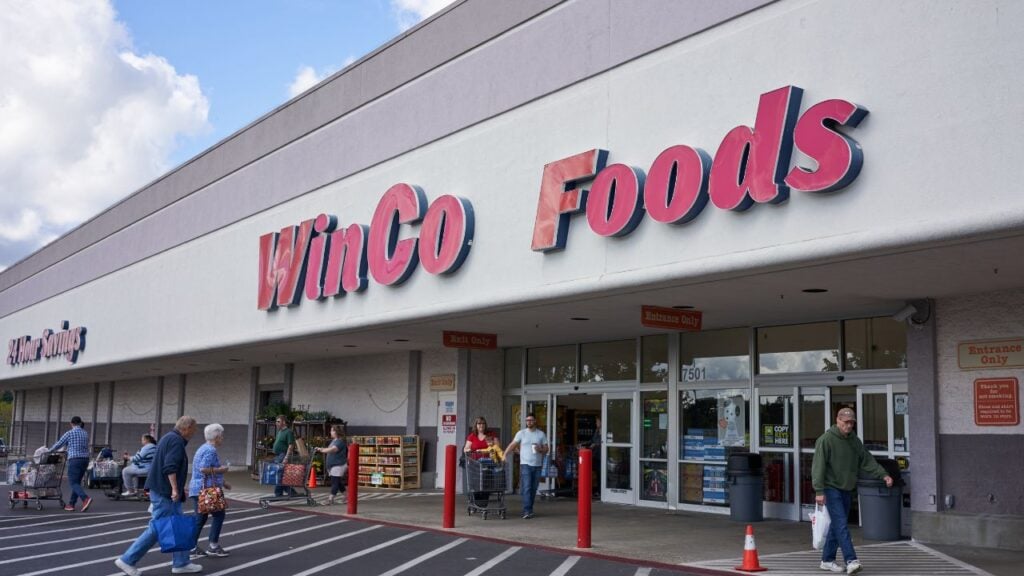
Ownership explains a lot about WinCo, but it doesn’t explain everything a new shopper runs into on a first trip.
Bagging your groceries and hauling produce out of a bulk bin catch many transplants off guard before they ever think about who owns the place.
8 WinCo Foods Quirks That Confuse New Oregon Residents
9 Oregon Foraging Rules That Could Turn a Free Meal Into a Fine

Oregon State Parks caps a forager at five gallons of wild berries, fruit, or mushrooms a day, and that limit shifts on national or state forest land.
Many Oregonians who’d never dream of shoplifting a candy bar have no idea they’re breaking a rule out on public land.
9 Oregon Foraging Rules That Could Turn a Free Meal Into a Fine
